
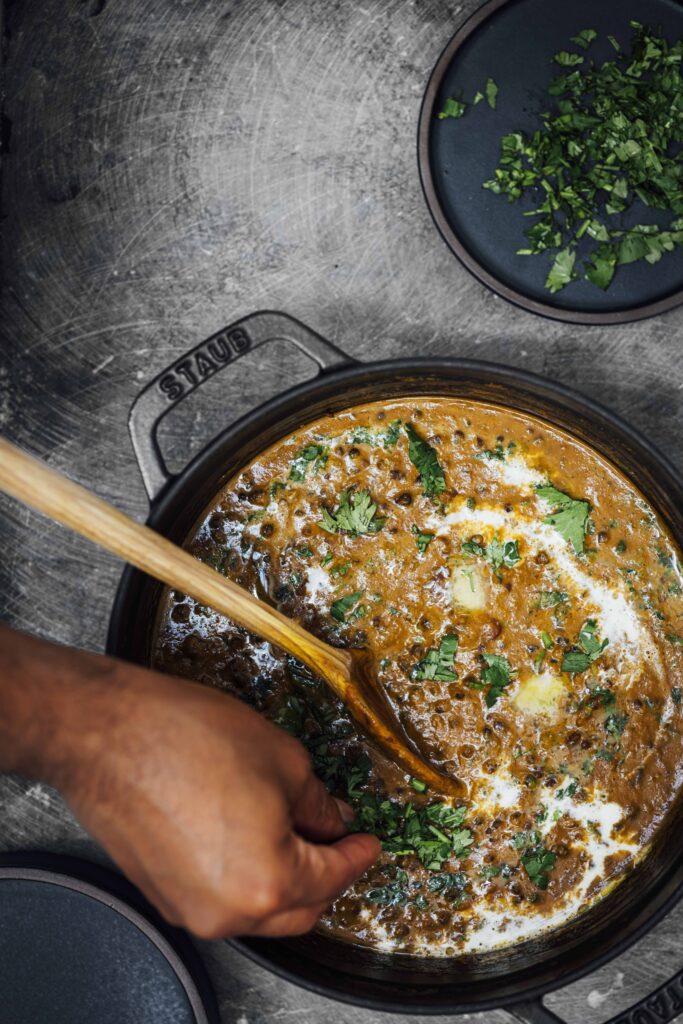
Dal Makhani
This dal makhani recipe is a dish I’ve made more times than I can count, and it still manages to feel like an occasion. There’s something about the combination of whole urad beans and kidney beans, slow-cooked until they surrender into a sauce thickened with their own starch, that reads as deeply luxurious even before you add the cream and ghee. It’s a dish that rewards patience. And it’s also a dish packed with science worth understanding, because once you know why each step exists, you stop second-guessing the process.
This recipe comes from my book [The Flavor Equation](LINK TO THE FLAVOR EQUATION), where I explore how the building blocks of flavor — richness, heat, acidity, aroma — work together to create food that genuinely satisfies. Dal makhani sits squarely in the “richness” chapter, and for good reason.
Why This Dal Makhani Recipe Works
Dal makhani achieves its famously creamy, restaurant-quality texture through three things: an overnight soak, baking soda in the cooking water, and a two-stage cooking process that builds flavor separately before bringing everything together.
- Presoaking the beans allows them to absorb water slowly and evenly, which means they cook more uniformly later.
- Baking soda softens the pectin and hemicellulose in the bean cell walls, dramatically cutting cooking time.
- The tadka (the sautéed aromatics with tomato paste) is built in a separate pan and concentrated before the beans are folded in, so every bite carries a deeply aromatic base.
- A finishing garnish of fried ginger matchsticks in ghee adds a third layer of heat and a textural counterpoint to the silky beans.
What Is Dal Makhani?
In India, the word dal refers not just to the dish but to the legumes themselves — lentils and certain beans are all considered dal. Dal makhani, which translates roughly to “buttery dal,” is one of the richest and most celebrated preparations in Indian cooking. It originates in Punjab and is made with whole urad dal (black gram, the bean of the Vigna mungo plant) and a small quantity of red kidney beans.
The defining characteristics are its dark, almost brooding color; its silky, thick consistency; and its layered heat, which in this recipe comes from both the aromatics and a hit of cayenne at the end. A good dal makhani should coat a spoon and leave a luxurious texture on the tongue — from the cream and butter, yes, but also from the beans themselves, which become almost falling-apart tender.
One note on classification: urad dal is technically not a lentil but the bean of the Vigna mungo plant. It’s often sold as black gram at South Asian grocery stores.
The Flavor Science Behind Dal Makhani
This dal makhani recipe delivers one of the most beloved Punjabi classics — and understanding the science behind it is what separates a good version from a great one.
Why Presoaking Matters
Dried beans contain oligosaccharides — complex sugars that the human gut can’t fully break down. Soaking the beans overnight in water allows these sugars and some of the excess starch to leach out into the soaking water, which you then discard. The result is beans that are easier to digest and cook more evenly, since the seed coat has had time to absorb water and soften before heat is applied.
During soaking, the seeds expand to nearly twice their original volume as water moves through the seed coat and into the cotyledons. The starch granules inside also begin to hydrate, which means they’ll gelatinize more readily during cooking and contribute to the thick, almost glossy consistency that defines dal makhani.
Why Baking Soda Speeds Up Cooking
Adding a small amount of baking soda (sodium bicarbonate) to the cooking water raises its pH, making it more alkaline. This alkaline environment accelerates the breakdown of pectin — the structural “glue” in the cell walls of legumes — as well as hemicellulose, another cell wall component. The result is beans that go from needing several hours of cooking to reaching tenderness in 30 to 45 minutes.
If you live in an area with hard water (water with a high mineral content), those dissolved minerals can actually strengthen pectin cross-links and slow cooking. Using filtered water removes that variable. You’ll notice the difference.
The Role of Ghee and Fat-Soluble Aroma
The spices in this dal are bloomed twice: once in the cooking fat when the onion paste and tomato paste are sautéed, and again in the finishing tadka of ghee and fried ginger. This matters because most of the flavor compounds in spices like garam masala and turmeric are fat-soluble. Heating them in fat doesn’t just activate their volatility — it helps the fat carry those aroma molecules throughout the dish, coating every surface they touch.
Blooming in ghee specifically adds another layer: the milk solids in ghee contribute a nutty, caramelized background note that plain oil can’t replicate. If you want extra richness, this recipe follows the restaurant tradition of finishing the dal with a few small dabs of salted butter just before serving.
Dhungar: The Optional Smoke Step
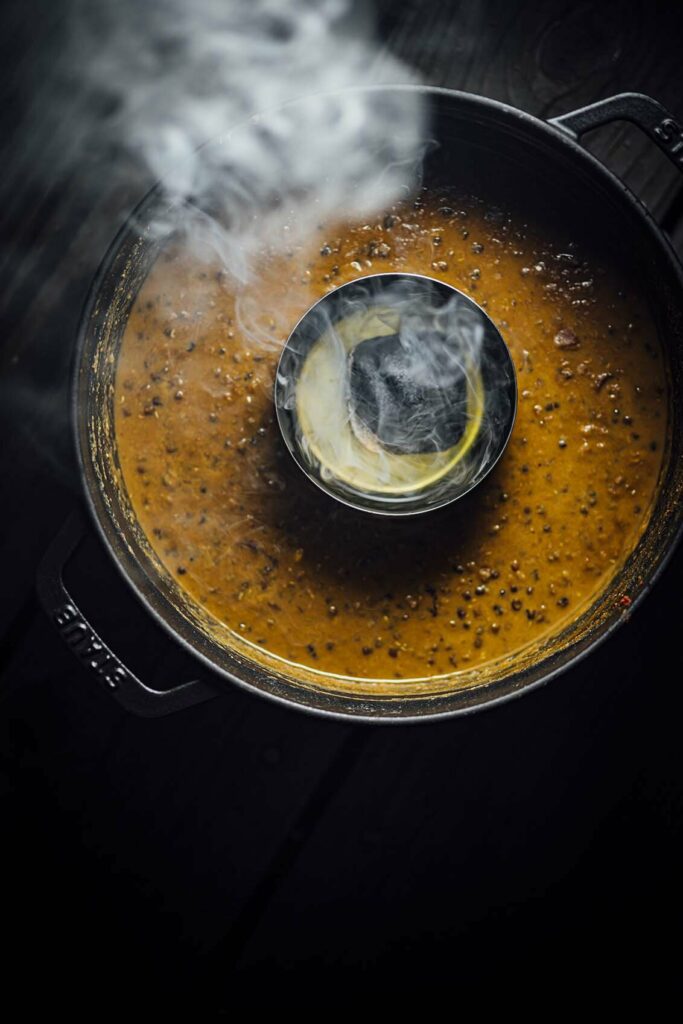
This recipe includes an optional technique called dhungar, which utilizes the principle of smoking fat and infusing it into food by trapping the smoke in a small enclosed space. A piece of live charcoal is placed in a small metal bowl set in the center of the finished dal. Ghee is dropped onto the hot charcoal, which immediately begins to smoke. A lid is placed over the pot to trap the smoke for about 5 minutes before everything is removed. Some folks also swap a hollowed out onion for the metal bowl to smoke the dal.
The result is a subtle smokiness that adds a fourth dimension to the flavor of the dal. It’s optional, but if you want to understand why restaurant dal makhani has that quality you can’t quite identify at home, this is usually the answer.
Dal Makhani Ingredient Notes
The ingredients in this dal makhani recipe are simple to source, though a few are worth seeking out for the best result.
Whole urad dal with skin: The whole, unhulled black gram bean is essential here. Split urad or hulled urad will dissolve too quickly and won’t give you the same textural contrast. Look for them at any South Asian grocery store.
Kidney beans: Only a small quantity is used — roughly a 5:1 ratio of urad to kidney beans. They’re there for color contrast and a slightly different textural note. Canned kidney beans are not recommended here since the long cooking process is part of how both beans develop flavor.
Garam masala: Homemade will give you noticeably more complexity. [You can find my recipe here.] Store-bought works, but quality varies considerably between brands.
Ghee or unsalted butter: You need enough fat to properly bloom the spices and sauté the aromatics. Ghee is traditional and preferred for the finishing tadka. Unsalted butter works for the main cooking step if ghee isn’t available.
Heavy cream or crème fraîche: Both work. Crème fraîche adds a subtle tang that cuts through the richness slightly, which I find appealing.
Tomato paste: Used here rather than fresh tomatoes, which keeps the moisture content controlled and concentrates the tomato flavor quickly. The paste should be sautéed until it darkens slightly and the fat begins to separate before the beans go in.
Make-Ahead Tips for Dal Makhani
Dal makhani is one of those dishes that genuinely improves overnight. The spices continue to bloom in the fat, the beans absorb more of the sauce, and the flavors knit together in a way that’s noticeably different from a freshly made pot. I’d argue the best version of this dal is always day two.
Make-ahead: Soak the beans the night before (or up to 24 hours ahead). The cooked dal — without the cream — can be refrigerated for up to 3 days before finishing.
Storage: Leftovers keep in an airtight container in the refrigerator for up to 4 days. The dal thickens considerably when cold; add a splash of water when reheating.
Freezing: Dal makhani freezes well for up to 3 months. Freeze without the cream and add it fresh when reheating for the best texture. Thaw overnight in the refrigerator and reheat gently over low heat.
From the Book: The Flavor Equation
This dal makhani recipe comes from The Flavor Equation, my James Beard-nominated book that takes a scientific approach to understanding why food tastes the way it does. The dal is featured in the “Richness” chapter, alongside a deep dive into how fats carry flavor, why cream behaves the way it does under heat, and how techniques like dhungar leverage basic chemistry to create complexity.

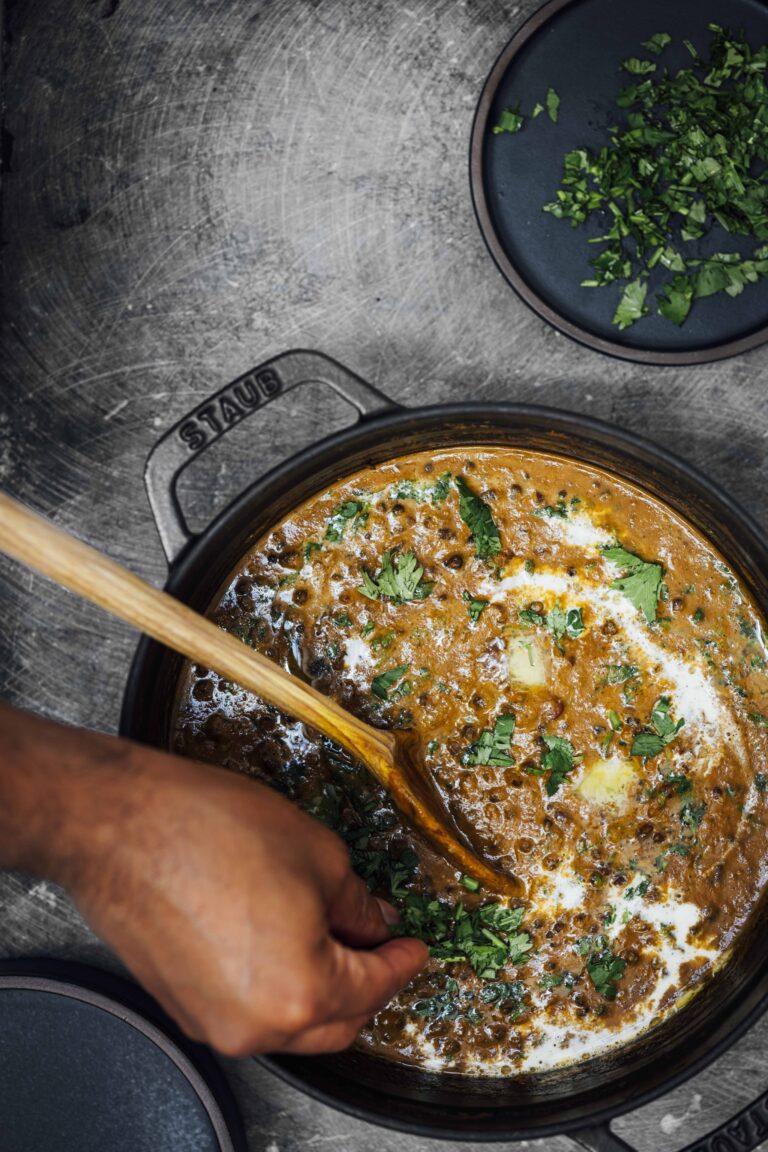
Dal Makhani
In India, the word dal is an all-encompassing term that includes not only the dish but also lentils and some beans. Dal is a staple in many Indian homes across the world; it’s easy to make, comforting, and a great source of protein. One of the things I love about dal is that regardless of the lentil or bean you cook it with, it’s a blank slate for flavor. You can use my simple flavor guide to build and layer flavors into your own dal recipes at home; feel free to tweak it and make your own combinations of flavors. Technically, urad dal is not a lentil but the bean of the Vigna mungo plant, sometimes sold as black gram. You will need to plan a day in advance to soak the beans.
- Yield: 4 to 6
Ingredients
1 cup [200 g] whole urad beans with skin
½ cup [60 g] kidney beans (optional)
1/8 tsp baking soda
1 medium white onion (9% oz [260 g])
6 garlic cloves, peeled
2 in [5 cm) piece fresh ginger, peeled and cut in half
¼ cup [55 g] ghee or unsalted butter
1 tsp garam masala, homemade or store-bought
½ tsp ground turmeric
¼ cup (55 g] tomato paste
¼ tsp cayenne powder
2 Tbsp heavy cream or crème fraîche
2 Tbsp loosely packed chopped cilantro leaves, for garnish (optional)
Instructions
- Pick through the beans and discard any dirt or stones; transfer to a medium bowl and rinse under running tap water, then add enough dean water to cover the beans by 1 in (2.5 cm] and soak overnight.
- The next day, discard the water.
- Place the beans in a medium saucepan or Dutch oven. Add 4 cups (960 ml] of water and the baking soda and bring the contents to a rolling boil over high heat. Lower the heat to a simmer, cover with a lid, and cook for 30 to 45 minutes, until the beans are tender and almost falling apart. Remove from the heat and transfer the beans with the liquid to a large bowl. Rinse the saucepan and wipe it dry.
- Quarter the onion and add it with the garlic in a blender. Mince half of the ginger, add it to the blender, and pulse until it forms a smooth paste. If needed, add a bit of the water from the dal to the blender to help things move around.
- Melt 2 Tbsp of the ghee in the saucepan over medium-high heat. Add the garam masala and turmeric and cook for 30 to 45 seconds, stirring constantly, until the spices start to release their aroma. Add the tomato paste and sauté for 2 to 3 minutes.
- Turn the heat to medium-low, stir in the onion mixture, and cook for 10 to 15 minutes, stirring occasionally, until most of the liquid has cooked away and the ghee separates from the mixture. Return the cooked beans with their liquid to the saucepan and stir in the cayenne. Season with salt. Increase the heat to high and bring the contents to a boil. Stir occasionally to prevent the beans from sticking to the bottom of the saucepan. Lower the heat to a gentle simmer. Stir in the cream and remove from the heat.
- Make the tadka. Melt the remaining ghee in a small, dry saucepan over medium-high heat. Cut the remaining ginger into matchsticks and fry them in the hot ghee for about 1 minute, until the strips just start to turn golden brown. Pour the fried ginger and ghee over the dal.
- Garnish with the cilantro, if using, and serve hot.
The Dhungar Method
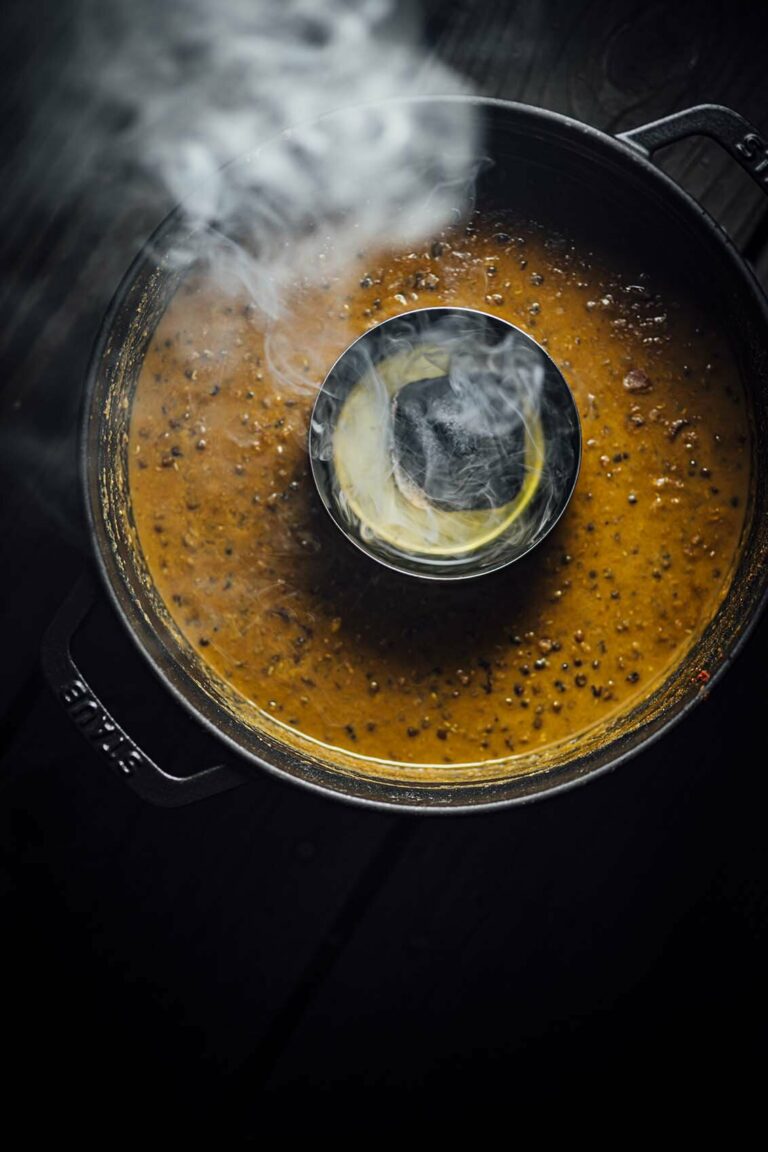
This optional method is used by some to add a smoky aroma to the dal (and other dishes). Do this after the cream is added to the dal, then proceed with fried ginger step. Don’t forget to switch the stove off while doing this.
The density of the dal will keep the onion or bowl afloat, and it wont sink.
- Yield: 4 to 6
Ingredients
A small, shallow metal bowl or a medium onion, hollowed out in the center
1 to 2 in [2.5 to 5cm] piece charcoal
1 Tbsp ghee
Instructions
- Place the metal bowl or onion in the center of the dal. Using a pair of tongs, burn the charcoal over a flame until it turns red hot. Carefully place the live charcoal in the center of the bowl and drop the ghee on the hot charcoal. It will start to smoke.
- Cover the saucepan with a lid to trap the smoke and let it sit for 5 minutes. Remove the lid, the wire rack (if using), and the bowl or onion and safely discard the charcoal. Proceed with the fried ginger in the recipe.
Notes
- Some folks also swap the metal bowl and use a hollowed out onion filled with the ghee and burning charcoal to smoke the dal.

From the book
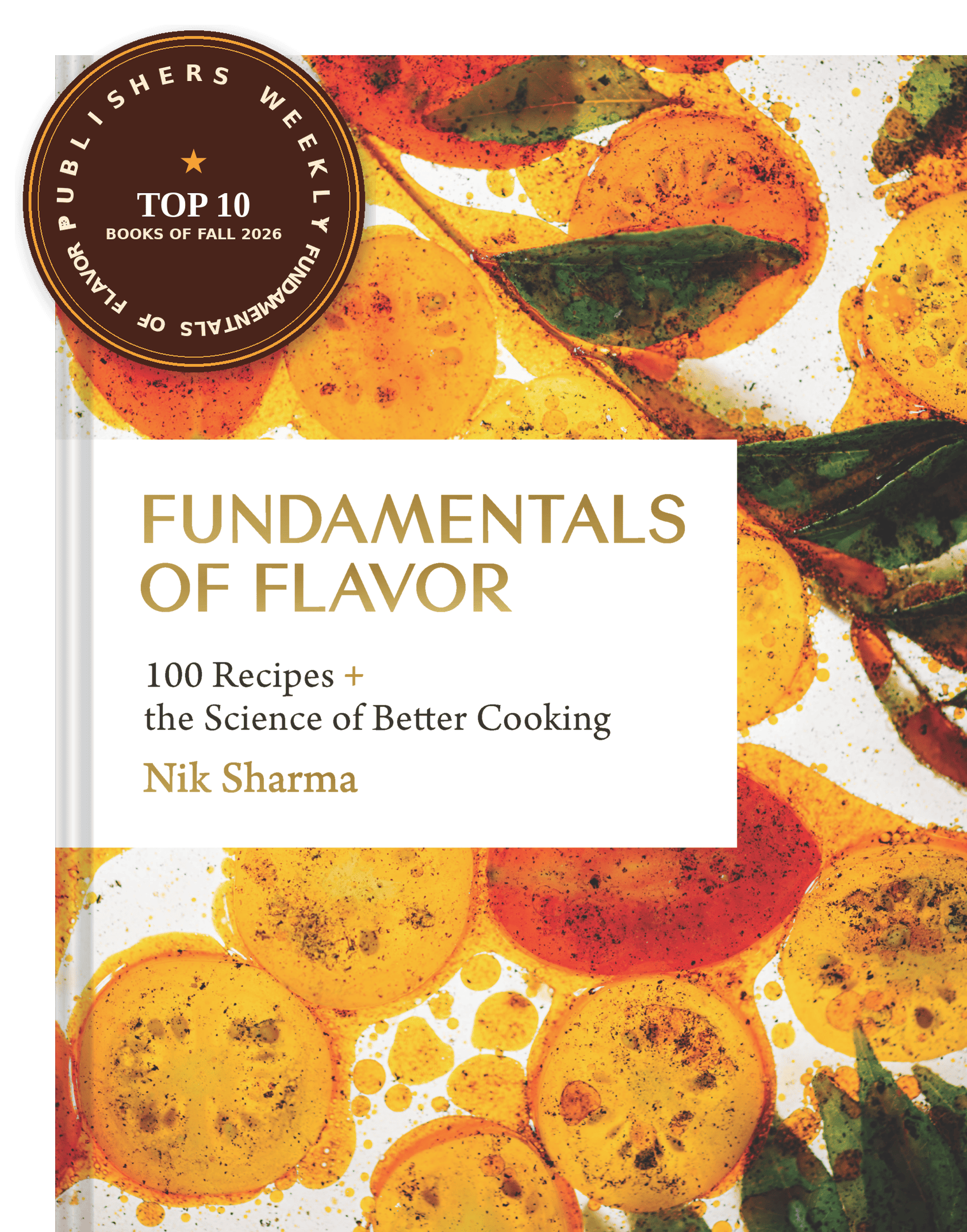
Fundamentals of Flavor: Preorder Now
If you’ve cooked through The Flavor Equation and want to go deeper, my next book arrives September 22, 2026.
Where The Flavor Equation explored the science behind specific dishes, Fundamentals of Flavor goes further: 100 recipes organized around the elemental building blocks of flavor, with the techniques and principles behind each one explained in full. It’s a book about learning to cook, not just following instructions.
Preorder Fundamentals of Flavor →100 recipes · Science-backed techniques · September 22, 2026
Complete Your Table
If the depth of flavor in this dal makhani appeals to you, these recipes belong on the same table:
- Garam Masala: Make the spice blend that anchors this dal from scratch.
- Basmati Rice: The science of cooking perfectly separate, fluffy grains every time.
- Butter Chicken (Murgh Makhani): Another Punjabi classic built on the same technique of concentrating tomato paste in fat.
- Kachumber Salad: A crisp, bright salad that cuts through the richness of a creamy dal.
- Homemade Naan: The flatbread for scooping up every last bit of sauce.
- Palak Paneer: A creamy spinach and paneer dish that pairs beautifully with dal makhani for a full Punjabi spread.
Frequently Asked Questions
Why does dal makhani turn creamy without blending?
The whole urad beans release starch as they cook, and that starch — combined with the fat from ghee and cream — creates the thick, emulsified consistency. Blending isn’t necessary and would actually disrupt the textural contrast between the tender whole beans and the sauce.
Can I make dal makhani without an overnight soak?
You can use a quick-soak method: cover the beans with water, bring to a boil, turn off the heat, and soak for 1 hour before draining. The texture of the finished dal is slightly less uniform than an overnight soak, but it works in a pinch.
What if I don’t have charcoal for the dhungar method?
Skip it entirely. The dal is excellent without the smoke step. The dhungar is purely a finishing technique for those who want that restaurant-quality smokiness. It doesn’t affect the fundamental flavor of the dish.
Is dal makhani vegan?
Not as written — it uses ghee or butter and heavy cream. You can substitute neutral oil for the ghee and full-fat coconut milk for the cream. The flavor profile will shift, but the dish is still very good.

3 Responses
Please clarify:
/ tsp baking soda
(9% oz [260 g]) what?
Sorry, the widget cut that halfway through. That is the weight of the onion.
How much baking soda? It’s currently just a “/“