Bhindi Masala (Braised Okra with Spices)
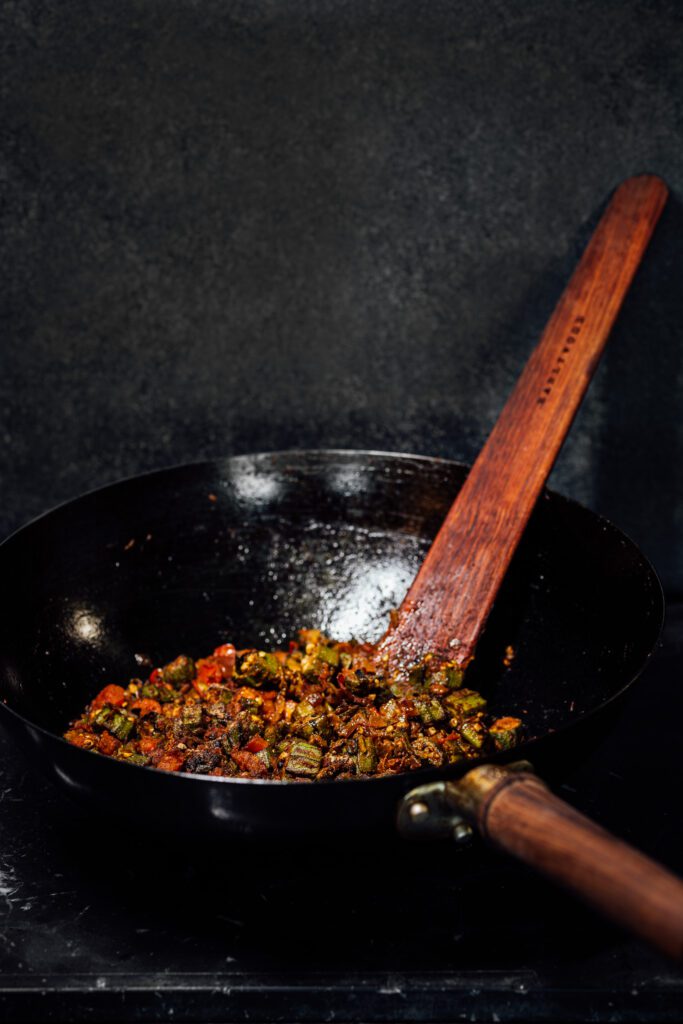
Bhindi masala is one of the most loved okra dishes in Indian cooking, and one of the most misunderstood. I grew up with it on the table, softened by heat, slicked with spice, caramelized just enough to catch the light.
I grew up with it on the table, softened by heat, slicked with spice, caramelized just enough to catch the light. In Indian kitchens, okra is bhindi, often called lady fingers: sliced carefully, dried with care, cooked patiently so the edges brown and the center turns silky rather than slippery. It appears on everyday plates and festive ones alike, proof that comfort and intention can coexist.
But okra’s story is far bigger than any one kitchen table.
Bhindi Masala: Why Okra Deserves More Respect
Across West Africa, okra is foundational, pounded, stewed, and stretched into soups that thicken naturally, binding ingredients together the way memory binds people to place. In Creole and Cajun kitchens, it becomes gumbo’s quiet architect, lending body and depth without ever demanding attention. In all of these cuisines, okra isn’t an oddity. It’s infrastructure. It does work.
What people call okra’s “slime” is actually its superpower.
The Science of Okra Mucilage
The slippery quality of okra comes from a complex matrix of polysaccharides called mucilage. These compounds swell in the presence of water and heat. When treated with care, they create silkiness, cohesion, and structure. When mistreated, they rebel, which feels fair.
The same quality cooks have managed intuitively for generations is now being studied in modern food science, and the applications are genuinely surprising.
1. Food Texture Engineering
Okra mucilage is being explored as a natural thickener and stabilizer in sauces, soups, and plant-based foods, especially where synthetic gums are being phased out.
2. Edible Films and Coatings
Researchers are using okra mucilage to create biodegradable, edible coatings that help preserve fruits and vegetables by slowing moisture loss and oxidation.
3. Medical and Pharmaceutical Uses
Because it forms gels and slows digestion, okra mucilage is being studied as a drug-delivery medium and to moderate glucose absorption, particularly relevant in diabetes research.
4. Water Purification
In some regions, okra mucilage has been tested as a natural flocculant, helping bind impurities in water so they can be removed more easily. A humble plant solving serious problems.
5. Sustainable Packaging and Biomaterials
Scientists are experimenting with okra-derived polysaccharides for compostable plastics and bio-based materials, offering alternatives to petroleum-derived polymers.
How to Cook Bhindi Masala Without the Slime
In the kitchen, the magic is simpler. A few rules govern everything:
Dry the okra completely. Wash and pat the pods dry before you cut them. If they’ve been refrigerated, let them come to room temperature first; condensation is the enemy. Moisture triggers mucilage release before the heat even gets involved.
Skip the salt at the start. Salt pulls water from the okra. Adding it too early means you’re cooking in a pool of released liquid rather than browning properly. Hold it until the masala is built.
Sear first, season later. Okra cooked over medium-high heat without salt will brown at the edges and turn silky at the center. That caramelization is where the flavor lives.
Finish with acid. A sprinkle of amchur (dried green mango powder) or a squeeze of lemon at the end snaps everything into focus. The acidity also helps neutralize any residual stickiness.
What Is Bhindi Masala?
Bhindi masala is a dry, spiced okra dish built around these exact principles. The okra is cooked first, without salt, until tender and lightly caramelized. A masala base of onion, ginger, tomato, and ground spices is built separately, then the two are combined and braised together until the flavors meld. Amchur powder finishes the dish with a gentle fruity acidity.
It’s a dish that rewards care. It also teaches a set of techniques that transfer directly to other vegetables: moisture management, spice sequencing, the role of acid at the end. These are principles, not just steps.
This dish appears on everyday plates and festive ones in India. Once you understand how to cook okra properly, it becomes indispensable.
The Full Recipe for Bhindi Masala
The complete bhindi masala recipe, with all the technique spelled out, detailed step-by-step instructions, and my cook’s notes, is available in my paid newsletter, The Flavor Files. Paid subscribers get a new recipe every week alongside the flavor science behind it.
If you’d like to cook along, subscribe here to access the full recipe. Your first issue arrives immediately.
Complete Your Table
If the science here resonated, you’ll love these other Indian vegetable dishes from the site:
- Aloo Gobi: The dry potato and cauliflower sabzi that teaches the same moisture and spice sequencing principles. A perfect pairing.
- Egg Bhurji: Indian-style scrambled eggs built around fast spice work in a hot pan. Bhindi masala leftovers served alongside these are one of the best breakfast plates I know.
- Kachumber Salad: A crisp, acidic cucumber and tomato salad that balances the warmth of a spiced okra dish beautifully.
- Perfect Basmati Rice: The ideal grain to serve alongside, cooked using the technique that actually produces separate, fluffy grains.
- Homemade Naan: For scooping.
FAQ
Why does okra get slimy when cooked? The sliminess comes from mucilage, a network of polysaccharides that swells when it comes into contact with water and heat. Keeping the okra completely dry before cooking, avoiding early salting, and using high enough heat to brown rather than steam the okra all reduce or eliminate the effect.
Can I use frozen okra for bhindi masala? Fresh okra gives the best texture here, but frozen works if you thaw it completely and pat it very dry before cooking. Frozen okra releases significantly more moisture, so you may need to cook it longer to evaporate the excess before the browning can happen.
What is amchur and can I substitute it? Amchur is dried, powdered unripe mango. It adds a fruity, slightly tart acidity that’s different from citrus. If you can’t find it at an Indian grocery store or online, substitute 2 Tbsp of fresh lemon juice added off heat at the end.
What does bhindi mean? Bhindi is the Hindi and Urdu word for okra. It’s used across much of South Asia. Lady fingers is another common name for the vegetable, a reference to the long, tapered shape of the pods.
Is bhindi masala vegan? Yes. The dish is naturally vegan and gluten-free.
What spices go into bhindi masala? The spice base typically includes cumin seeds, ground coriander, garam masala, turmeric, and optionally Kashmiri chili powder and asafoetida. The sequence matters: whole cumin goes into hot oil first, ground spices bloom into the onion-tomato masala later.