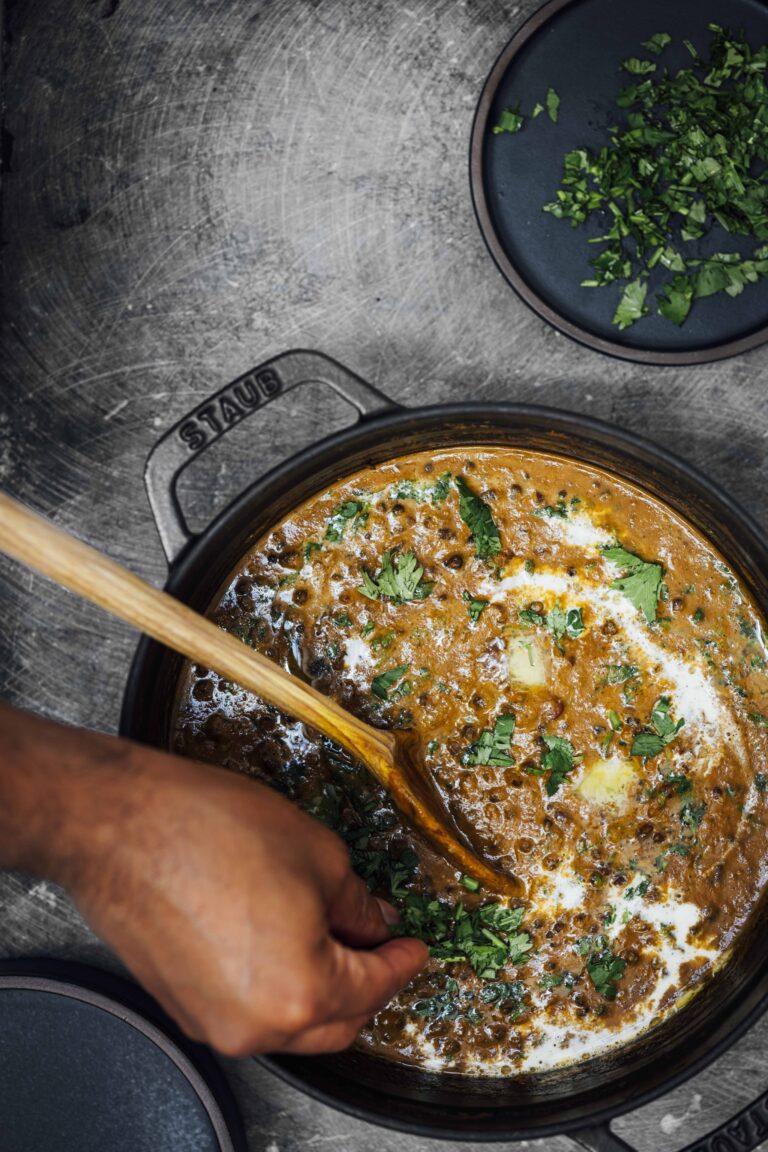
Ingredients
1 cup [200 g] whole urad beans with skin
½ cup [60 g] kidney beans (optional)
1/8 tsp baking soda
1 medium white onion (9% oz [260 g])
6 garlic cloves, peeled
2 in [5 cm) piece fresh ginger, peeled and cut in half
¼ cup [55 g] ghee or unsalted butter
1 tsp garam masala, homemade or store-bought
½ tsp ground turmeric
¼ cup (55 g] tomato paste
¼ tsp cayenne powder
2 Tbsp heavy cream or crème fraîche
2 Tbsp loosely packed chopped cilantro leaves, for garnish (optional)
Instructions
- Pick through the beans and discard any dirt or stones; transfer to a medium bowl and rinse under running tap water, then add enough dean water to cover the beans by 1 in (2.5 cm] and soak overnight.
- The next day, discard the water.
- Place the beans in a medium saucepan or Dutch oven. Add 4 cups (960 ml] of water and the baking soda and bring the contents to a rolling boil over high heat. Lower the heat to a simmer, cover with a lid, and cook for 30 to 45 minutes, until the beans are tender and almost falling apart. Remove from the heat and transfer the beans with the liquid to a large bowl. Rinse the saucepan and wipe it dry.
- Quarter the onion and add it with the garlic in a blender. Mince half of the ginger, add it to the blender, and pulse until it forms a smooth paste. If needed, add a bit of the water from the dal to the blender to help things move around.
- Melt 2 Tbsp of the ghee in the saucepan over medium-high heat. Add the garam masala and turmeric and cook for 30 to 45 seconds, stirring constantly, until the spices start to release their aroma. Add the tomato paste and sauté for 2 to 3 minutes.
- Turn the heat to medium-low, stir in the onion mixture, and cook for 10 to 15 minutes, stirring occasionally, until most of the liquid has cooked away and the ghee separates from the mixture. Return the cooked beans with their liquid to the saucepan and stir in the cayenne. Season with salt. Increase the heat to high and bring the contents to a boil. Stir occasionally to prevent the beans from sticking to the bottom of the saucepan. Lower the heat to a gentle simmer. Stir in the cream and remove from the heat.
- Make the tadka. Melt the remaining ghee in a small, dry saucepan over medium-high heat. Cut the remaining ginger into matchsticks and fry them in the hot ghee for about 1 minute, until the strips just start to turn golden brown. Pour the fried ginger and ghee over the dal.
- Garnish with the cilantro, if using, and serve hot.