
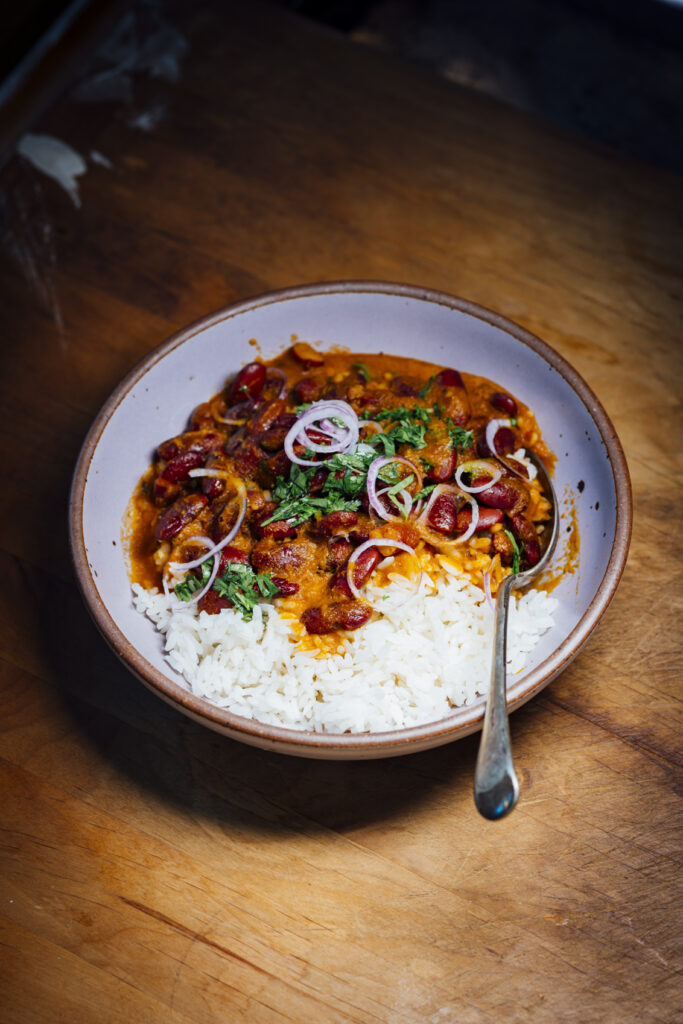
There is a very short list of dishes I associate with pure, uncomplicated comfort, and rajma recipe is at the top. A pot of red kidney beans simmering slowly in a deeply spiced tomato-based masala, perfuming the kitchen with the warm fragrance of cumin, garam masala, and kasoori methi. It is the kind of meal that makes you feel taken care of.
I grew up eating rajma with plain steamed basmati rice —rajma chawal with a side of plain yogurt. If you have never tried it, perhaps an apt description that I think of is American-style chili, but without any meat. Rajma is deeply savory, gently spiced, and improves with a day in the refrigerator.
What Is Rajma?
Rajma is a North Indian kidney bean stew, most closely associated with the Punjab region, though variations of this recipe appear across the subcontinent. The name simply means “kidney bean” in Hindi. Don’t be surprised to see both the dried legume and the finished dish referred to as rajma; the latter is a slow-cooked masala of onion, garlic, ginger, tomato paste, and seasoned with a concert of spices.
Unlike a Western-style bean soup or chilli that relies on stock or cream for body, rajma is built differently. The richness comes entirely from technique: caramelizing the onion until they turn deeply golden, cooking the tomato paste until the fat separates from the masala—a technique called bhuna or bhunao—and using a portion of the beans’ own starchy cooking liquid to create a thick, glossy, concentrated-flavored sauce.
A Brief History: Rajma and the Long Journey of the Kidney Bean
Here’s something that might surprise many people: kidney beans (Phaseolus vulgaris) are not native to India. Kidney beans originated in the Americas. Historically, lentils, chickpeas, split peas, and mung beans formed the backbone of Indian legume cooking. And then came kidney beans, introduced to the subcontinent by Portuguese traders in the 16th century and later widely cultivated under British colonial agriculture.
What happened next is a clear example of Indian kitchens adopting new ingredients and adapting them to work in their homes. Kidney beans were folded into evolving masala frameworks, particularly in North India. In these kitchens slow-cooked legume dishes built on onions, spices, and, after their own introduction, tomatoes. Thus came about the birth of the iconic rajma recipe built through the judicious use of ingredients from a global pantry.
By the 20th century, rajma had earned a permanent place in Punjabi homes, where cooks now treat it as a defining comfort food and a staple. From there, this dish traveled with the diaspora, finding devoted followings in communities from Delhi to London to Toronto. Hey, it’s a dish I make in Los Angeles whenever the craving for Indian comfort food kicks in, and I am not Punjabi! I absolutely love it.
Rajma Recipe Science
1. Why Baking Soda Matters in this Rajma Recipe
In this rajma recipe, I add a small amount of baking soda to both the soaking water and the cooking water for the beans. Baking soda raises the pH of the water (making it alkaline), which weakens the pectin in the beans’ cell walls, helping them cook to a tender, almost creamy texture without requiring hours on the stove. The result is beans that hold their shape but fall apart softly when pressed, which is exactly what you want in rajma.
One more thing worth knowing: never eat undercooked kidney beans. Phaseolus vulgaris contains high levels of a lectin called phytohaemagglutinin (PHA). This protein binds carbohydrates and can cause significant digestive distress if the beans are raw or insufficiently cooked.
Lectins are found in many plants, but kidney beans are unusual in how concentrated this particular lectin is. The good news is that it’s easily destroyed by heat. Boiling the beans vigorously until they are fully cooked renders them safe to eat.
What matters is the cooking temperature. Beans cooked at too low a temperature, such as in some slow cookers, may not reach a high enough heat to fully inactivate the lectin. For this reason, always bring kidney beans to a full boil during cooking.
There’s no reason to avoid kidney beans. But there is every reason to cook them properly.
2. Is It a Curry, a Sauce, or a Stew?
People sometimes ask whether rajma is a curry. I see it as a bean stew, more precisely: beans simmered in a rich onion-based sauce. It is not a dal. The distinction matters because the cooking approach is different. Dal relies on the legume itself to thicken and meld. While rajma is built around a separately cooked masala base into which the beans are folded.
A note on onions in this rajma recipe: I use white or yellow onions here, not red. Most American red onions leave a slightly bitter aftertaste when cooked, something I have not experienced with red onions in India. White and yellow onions are sweeter and more neutral once browned, which makes them better suited for a sauce base like this one. Take your time with them. The onions are the foundation of the entire dish, so pay attention to them.
On the tomato paste: my mother uses fresh tomatoes when she makes rajma, and that version is lovely. However, I prefer tomato paste because it’s already concentrated, an easy shortcut to get that flavor, and it gives the sauce a deeper, more robust color. It is a slight departure from her method, but it makes it easy to incorporate into a weeknight menu.
3. The Science of Caramelizing Onions
In this recipe, the onions are cooked until golden brown; you don’t want them translucent. And the difference is significant in how it affects the flavor of this rajma. As onions cook and lose water, the caramelization and Maillard reactions kick in. These are the same browning reactions responsible for the crust on seared meat and the depth of flavor in roasted vegetables. Deeply browned onions contribute a sweetness and savory complexity to the rajma that translucent onions simply cannot provide. Do not rush this step.
4. Cooking Out the Masala in this Rajma Recipe
After the tomato paste and spices go in, the instructions call for cooking and stirring until the fat separates from the ingredients. This is a core technique in Indian cooking called bhuna or bhunao. As the moisture evaporates, the spices cook in the residual fat, and their fat-soluble aroma molecules concentrate and deepen. That visible ring of separated fat against that onion mixture is your clear indication that the masala is ready.
5. The Role of Kasoori Methi
Kasoori methi is dried fenugreek leaves, and to be honest, it adds something that’s difficult to replace: a slightly bitter, herbaceous note that rounds out the richness of the masala. It contains the same molecule sotolon, which gives maple syrup its sweet scent. Add kasoori methi toward the end of cooking the masala base, where gentle heat releases its volatile compounds, such as sotolon, without burning them off. If you cannot find it, omit it rather than substituting fenugreek seeds or fresh fenugreek, as they’re too aggressive here.
You can find kasoori methi at Indian grocery stores or online. Once you have it in the pantry, you will find yourself reaching for it regularly. It is a key aromatic in Butter Chicken and Palak Paneer, so a single bag goes a long way.
6. Why Kashmiri Chilli?
Kashmiri chilli is mild in heat but is prized for its bright red, rich color that comes from pigments such as capsanthin and capsorubin. It provides warmth without intensity, which is why rajma is deeply colored without being aggressively spicy. This makes it a dish that works for a wide range of heat tolerances, including children. If you want more heat, add a fresh green chilli at the end. If you don’t have any Kashmiri chilli at home, use this substitute: for every 1 tsp of Kashmiri chilli powder, use 3/4 tsp ground smoked paprika with 1/4 tsp of ground cayenne.
Why This Rajma Recipe Works
Rajma contains two components: the beans and the masala. Cooking them separately gives you careful control over each. The beans cook to the right degree of soft creaminess without the risk of over-seasoning. The masala has time to develop its flavors fully without the beans sitting in it absorbing spice unevenly. When they come together, the bean cooking liquid acts as a natural thickener due to the starches, pulling the masala mixture into a uniform, glossy sauce.
This recipe is also naturally vegan and gluten-free. Using ghee adds a distinct richness and a slightly nutty undertone, but extra-virgin olive oil works equally well if you prefer to keep it fully plant-based.
Tips for the Best Rajma
On soaking the beans: An overnight soak in salted, slightly alkaline water shortens the cooking time considerably and maintains even texture throughout. Do not skip it if you are using dried beans.
On canned beans: If you need to make this faster, canned kidney beans work well. Drain and rinse them, then start at step 3. The dish will be ready in about 30 minutes.
On the lemon juice: Add the lemon juice at the end. Heat destroys the delicate aromatic compounds in citrus, so keeping it off the heat preserves that clean, fresh acidity.
On leftovers: Like many stews and curries, rajma is a dish that I find improves overnight. The beans continue to absorb the masala as it sits. The flavors knit together in a way that the freshly made version cannot quite match. The beans also freeze well for up to one month. Store in an airtight container and thaw overnight in the refrigerator before reheating.
Extra Flavor for This Rajma Recipe
A few things worth trying once you have the base recipe down.
Stir in 1 to 1 1/2 tsp of chaat masala just before garnishing for a sharp, tangy layer of complexity. If you go this route, hold back on the salt when seasoning. Chaat masala contains kala namak (Indian black salt) and will season the dish on its own.
For the garnish, thinly sliced raw shallots are the standard, but pickled or crispy fried shallots are equally good and add a completely different texture. Crispy-fried capers, extremely unconventional as they are, work surprisingly well here, too.
Is Rajma High in Protein?
Yes, and it is one of the reasons rajma is such a satisfying meal. A single cup (about 175 g) of cooked kidney beans contains roughly 15 grams of protein, making it one of the more protein-dense plant-based foods you can cook with.
Yes, and it is one of the reasons rajma is such a satisfying meal. A single cup (about 175 g) of cooked kidney beans contains roughly 15 grams of protein. This makes it one of the more protein-dense plant-based foods you can cook with. However, kidney beans are incomplete proteins. They do not contain all nine essential amino acids on their own. When rajma is paired with steamed basmati rice, as seen in the classic rajma chawal combination, it is more than tradition and taste. Rice supplies the amino acids that beans lack, particularly methionine, creating a more complete protein profile. I always find it fascinating that generations of home cooks arrived at this intuitively, long before nutritional science had the language and tools to explain why it worked.
Rajma is an excellent anchor for a high-protein meal. A single bowl of rajma with rice can deliver anywhere between 20 to 25 grams of protein, depending on portion size, with no meat required.
Print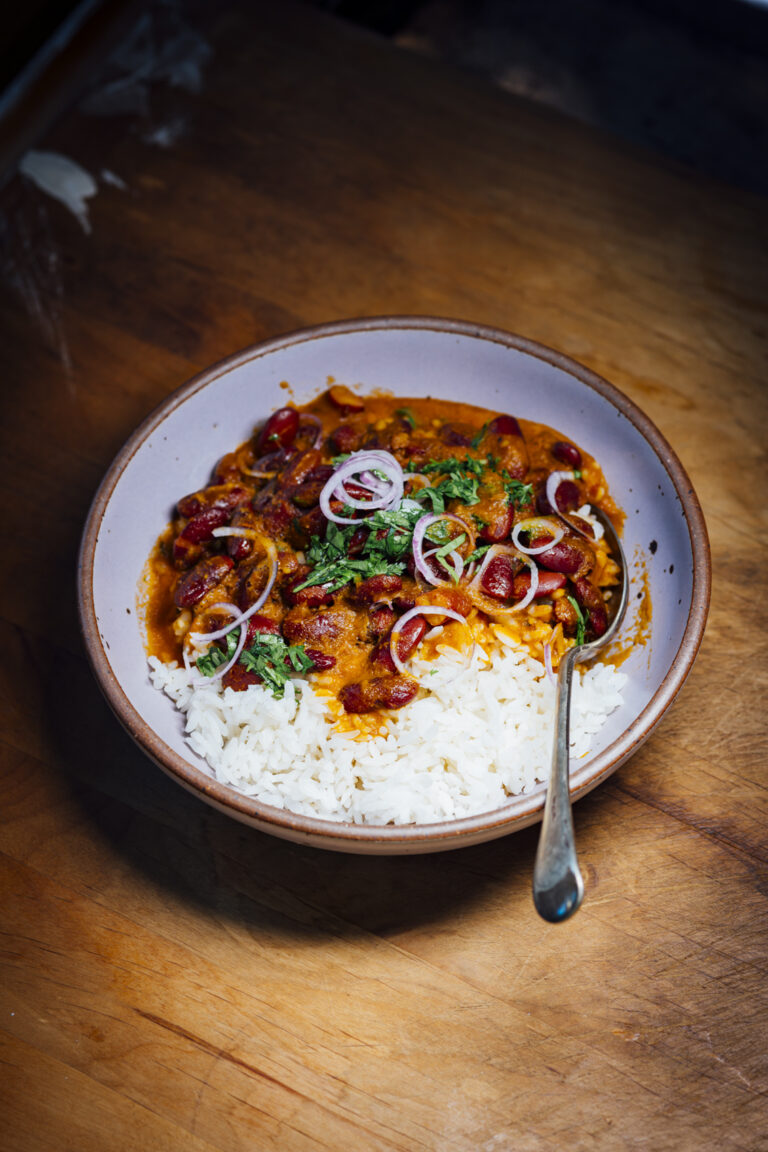
Rajma/Indian Kidney Bean Stew
Rajma is Indian comfort food, and a warm, simmering pot of these red kidney beans on the stove is a treat on a cool day. I love to eat it with plain rice or a flatbread like roti, but you can eat it with naan, too. I prefer to cook the kidney beans and the sauce base separately because it makes things much easier. You can also use canned beans and make this shorter.
- Yield: 4
Ingredients
2 cups/340 g dried kidney beans
¼ tsp + 1/8 tsp baking soda
2 Tbsp ghee or extra-virgin olive oil
2 large/total weight about 600 g, white or yellow onions, minced
12 garlic cloves, grated
3 Tbsp grated fresh ginger
¼ cup/60 g tomato paste
1 bay leaf
1 1/2 tsp ground coriander
1 tsp whole cumin
1 tsp ground Kashmiri chilli
1 tsp garam masala, homemade or store-bought
1 tsp kasoori methi
1/4 tsp ground turmeric
1/4 cup/60 ml fresh lemon juice
1 shallot, thinly sliced
2 Tbsp chopped cilantro
Instructions
- Clean the beans and pick for any stones or debris. Rinse the beans under running tap water and cover with 4 cups/945 ml of water. Stir in 1 tsp salt and 1/4 tsp baking soda and leave overnight.
- The next day discard the soaking water and rinse the beans. Transfer the beans to a medium saucepan or Dutch oven. Add 4 cups/945 ml water, 1 tsp salt, 1/8 tsp baking soda, and bring to a boil over high heat. Reduce the heat to low and cook until the beans are completely tender and falling apart, 30 to 40 minutes.
- While the kidney beans cook, heat the ghee in a medium saucepan or Dutch oven over medium-high heat.
- Add the onions and sauté until they turn golden brown; the cooking time will vary.
- Stir in the garlic and ginger and sauté for 1 minute until fragrant.
- Stir in the tomato paste, bay leaf, coriander, cumin, Kashmiri chilli, garam masala, kasoori methi, and turmeric. Cook and stir often until the fat separates from the ingredients, about 5 to 6 minutes.
- Fold in the beans with 2 cups/480 ml of the cooking liquid. Increase the heat to high and bring to a boil. Lower heat to medium-low and cook for 15 to 20 minutes, until the beans almost fall apart and the sauce thickens slightly. Stir in the lemon juice. Taste and season with salt. Remove from the heat and garnish with the shallot and cilantro.
- Leftovers can be stored in an airtight container for up to 4 days in the refrigerator or frozen for up to 1 month.
Notes
- If using canned kidney beans, use about 1.5 lb/700 g of drained beans start with step 3.
- I don’t do this every time I make rajma but when I’m making it for a celebration or dinner party, I’ll fry thin strips of julienned fresh ginger in ghee and pour it over the rajma before serving.
- You can drizzle a few tablespoons of fresh cream or creme fraiche over the rajma before serving.
- There is no good substitute for kasoori methi, the aroma is very different and mellow. Neither fenugreek seeds nor fresh fenugreek can be used here, their aromas are way too intense and they will make the dish taste bitter. Leave it out, if you don’t have kasoori methi.
Complete Your Table
If you loved this rajma recipe, here are a few more dishes from my Indian At Home series to round out the meal:
- Perfect Basmati Rice: Rajma chawal is a classic pairing. Learn the technique for perfectly fluffy, separate grains every time.
- Homemade Naan: Tear and scoop is the right approach here. Master the naan technique for the ideal companion to a bowl of rajma.
- Aloo Gobi: Another Punjabi staple to add to your table. Potatoes and cauliflower braised in a spiced masala with turmeric and cumin.
- Kachumber Salad: A crisp, bright, acidic crunch that cuts through the richness of the beans beautifully.

6 Responses
I don’t have any Kasoori Methi – could I substitute Fenugreek? I’ve never seen Kasoori Methi in the shops I go too but I could get it online.
Leave it out if you can’t find it. There is no proper substitute for it and fenugreek seeds and fresh leaves taste very different, their smell will destroy the dish.
Outstanding. Used Rancho Gordo ayacote morado beans.
This was absolutely delicious! I started to make it and realised I didn’t have any cumin left and no Kasoori methi. It still had so much flavour! I was very impressed. I served it with cauliflower rice and added chilli flakes for an extra kick! Will be my new go to! Super easy to make, love it.
Fantastic. Wondering if you would recommend adding asafoetida, and using Amchur instead of lemon juice.
Thank you. I had misgivings about all of the tomato paste rather than whole tomatoes, but they were not justified. Used fenugreek seed instead of kasoori methi. Like Cathy, I love amchoor, but lemon juice was grand.