
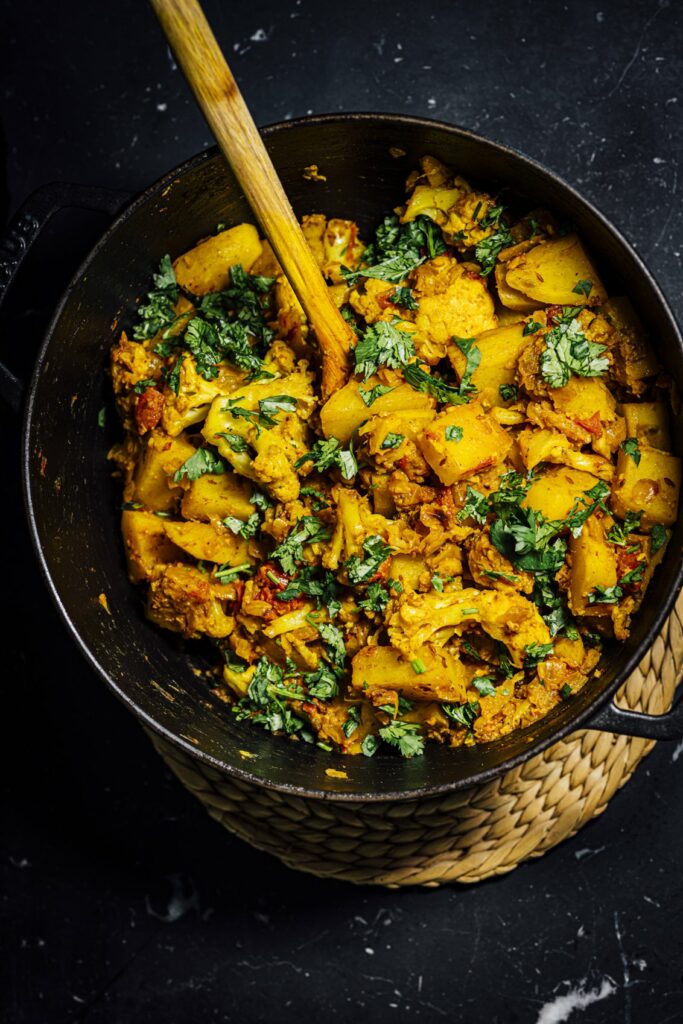
Aloo Gobi: The Science, History & Flavor of India’s Classic Dish
This aloo gobi recipe (Indian potato and cauliflower) is a dry, spiced vegetable dish where tender potatoes and cauliflower absorb a deeply aromatic masala. It’s one of the most popular vegetarian dishes in Indian cooking—and a great example of how simple ingredients can deliver complex flavor.
If your aloo gobi turns out mushy, bland, or watery, the issue usually comes down to moisture control, spice sequencing, and heat management.
Why This Aloo Gobi Recipe Works
Aloo Gobi is naturally vegetarian, vegan, and gluten-free, but it also teaches a kitchen principle that’s useful far beyond Indian cuisine: aroma molecules are fat-soluble. When you bloom spices in oil, the fat carries that flavor throughout the vegetables and directly to your palate. It is the perfect balance of starch from the potatoes, subtle sweetness from the cauliflower, and the foundational aromatic trifecta of onion, ginger, and garlic.
This aloo gobi recipe version focuses on techniques that keep the vegetables tender yet structured. The spices stand out beautifully.
- Cooking with a tight lid traps steam, allowing gentle braising without excess water.
- Tempering spices in oil (tadka) releases fat-soluble aroma compounds.
- Adding garam masala at the end preserves delicate volatile flavors
What Is Aloo Gobi?
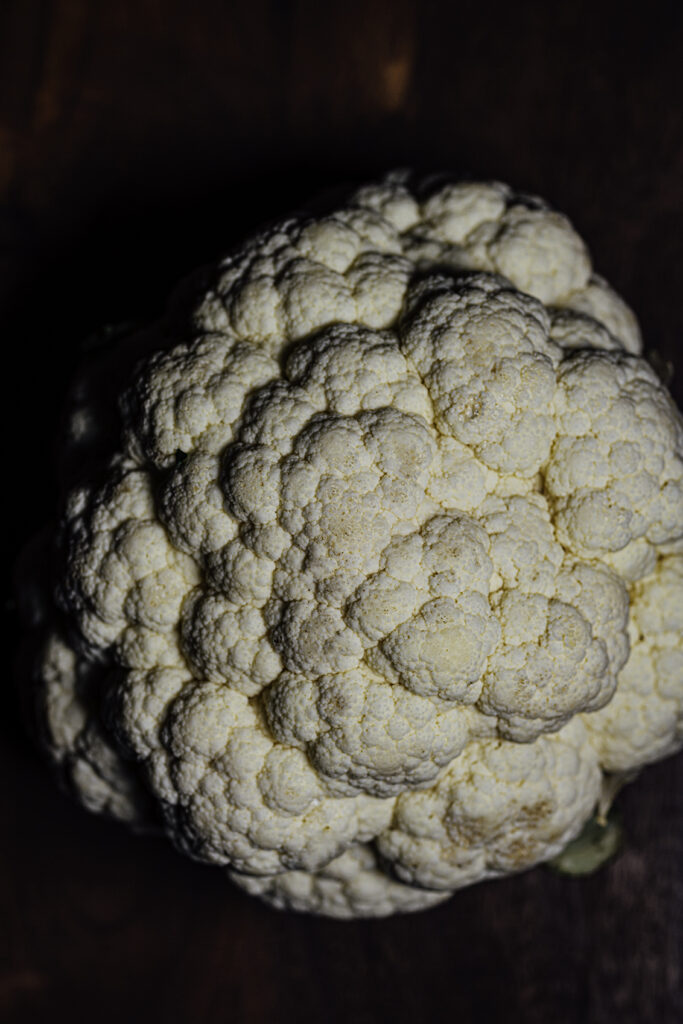
At its core, aloo means potato, and gobi refers to cauliflower. Together, they form a dry, aromatic sabzi (a vegetable dish) that’s earthy, slightly sweet, and gently spiced.
This isn’t a saucy curry, but a braised dish where the potatoes and cauliflower cook slowly, holding their shape while absorbing the concentrated flavors of the masala.
It’s also a great way to introduce kids to new flavors. If you’re looking for a reliable, flavorful aloo gobi recipe, this version focuses on technique to deliver consistent results.
A Brief History: From Mughal Influence to Modern Staple
Aloo Gobi is a testament to India’s rich culinary evolution, blending local tradition with centuries of international trade.
- The Arrival of Potatoes: While cauliflower has been grown in India for centuries, potatoes were introduced in the 17th century by Portuguese traders.
- Mughal & Colonial Influence: During the Mughal era (1526–1857), culinary techniques from Persia blended with local Indian traditions. This exchange helped refine the spice usage and texture control we see in dishes like Aloo Gobi today.
- Regional Variations: While it’s most strongly associated with Punjabi comfort food, every region brings its own subtle spin—from sweeter Gujarati versions to the extra-crispy “Dhaba-style” found at roadside eateries.


The Flavor Science Behind this Aloo Gobi Recipe
This aloo gobi recipe works because of how spices interact with fat, heat, and moisture.
1. How Spices Shape Flavor
Indian spices aren’t simply used to add heat; they are more about layering complexity:
- Turmeric: Provides the signature golden hue and earthy warmth, powered by curcumin compounds.
- Cumin Seeds: Release essential oils when toasted in hot oil, creating a nutty, fragrant base.
- ouisvuitton
- Garam Masala: Adds complex top notes. I add this only at the end to ensure the delicate aroma molecules don’t burn off during the long braise.
This sequencing, the tempering spices (Tadka) before adding vegetables, is intentional in this aloo gobi recipe. It is science. Hot oil dissolves and carries volatile flavor molecules deeper into the vegetables than dry-spice mixing ever could.
2. Mastering Texture
In this aloo gobi recipe, I cook the potatoes and cauliflower with a tight lid (I prefer a heavy Dutch Oven) that traps steam. This allows for a gentle braise that builds umami without turning the vegetables into mush. By avoiding excess water, you keep the spice concentration high, creating a rich, “clingy” masala. This makes every bite satisfying.
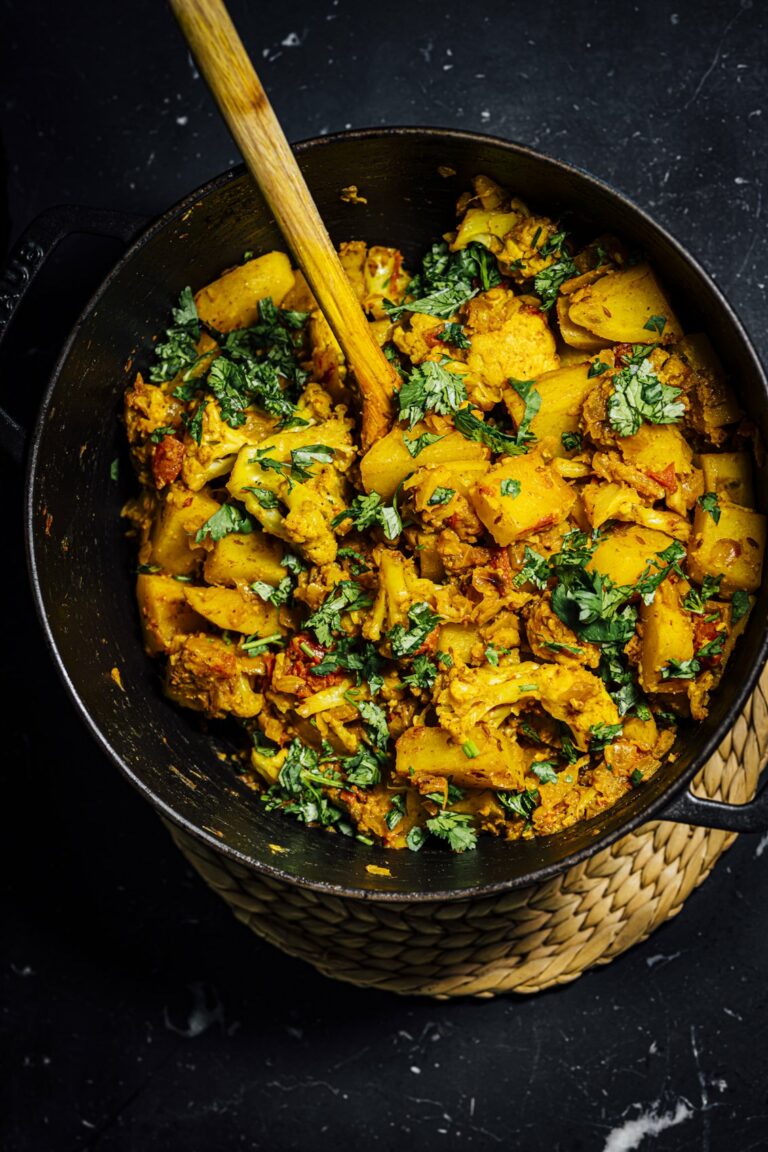
Aloo Gobi
Aloo gobi remains one of the most popular vegetable recipes in Indian kitchens. The tender texture of potatoes and cauliflower is achieved via braising with tomatoes and a mild dose of spices. If you’re making this for kids, leave the green chilli out. Serve warm with plain rice or flatbread like roti or parathas.
- Yield: 4
Ingredients
3 Tbsp/45 ml neutral oil such as grapeseed
1 tsp cumin seeds
½ tsp ground turmeric
1 large/300 g white or yellow onion, diced
1 green chilli such as jalapeno, serrano, or bird’s eye, thinly sliced
2 Tbsp garlic, grated
2 Tbsp fresh ginger, peeled and grated
2 small/each about 140 g tomatoes, diced
2 large/each about 320 g Russet potatoes, peeled and diced, 1 in/2.5 cm cubes
10 oz/280 g cauliflower florets, broken into bite-sized pieces
1 Tbsp fresh lemon juice or 2 tsp amchur (unripe dry mango powder)
½ tsp garam masala, homemade or store-bought
2 Tbsp chopped fresh cilantro, tender stems and leaves
Instructions
- Heat the oil over medium-high heat in a medium saucepan or Dutch oven. Add the cumin and turmeric, and sauté until fragrant and sizzling for 30 to 45 seconds. Add the onion and sauté until translucent, 4 to 5 minutes. Add the green chilli, and sauté for 30 seconds. Add the garlic and ginger and sauté, until fragrant, about 1 minute.
- Fold in the tomatoes, potatoes, and cauliflower, season with salt, cover with a lid, and cook until the potatoes and cauliflower are tender enough to be easily pierced by a fork or knife, occasionally stir to prevent burning, 30 to 45 minutes. If the vegetables start to burn, add 1 to 2 Tbsp of water as needed. Drizzle the lemon juice and garam masala over the vegetables, remove from the heat and taste, and season with salt if needed. Serve hot or warm, garnished with cilantro. Leftovers can be stored in the refrigerator for up to 4 days in an airtight container.
Notes
- I find more success braising these vegetables in a Dutch oven than in a saucepan. The heavy lid of a Dutch oven traps the steam much more nicely than a stainless-steel saucepan; the vegetables don’t dry out as quickly, cook faster, and don’t burn. Sealing the steam in with a tight lid ensures the potatoes cook tender during braising. Cutting the potatoes to size and adding a few Tbsp of water also helps. Some folk like to parboil the potatoes before using them in this recipe.
- Both lemon juice and amchur work well here, but I prefer the fruity sourness of amchur in this recipe.

From the book
Love cooking vegetables?
One of the biggest lessons I’ve learned as a cook is that vegetables become extraordinary when you understand how flavor is built. Aloo Gobi relies on spices, heat, and careful cooking to transform humble ingredients into something memorable.
In Fundamentals of Flavor, you’ll find recipes like Roasted Asparagus with Orange-Miso Dressing, Thai-Inspired Roasted Sweet Potatoes, Salt-Baked New Potatoes with Gochujang Vinaigrette, Carrots with Pomegranate Molasses, and many more dishes that celebrate the power of vegetables.
Alongside every recipe, I share the techniques and flavor principles that help you cook with more confidence and creativity.
Preorder Fundamentals of Flavor →100 recipes · Science-backed techniques · September 2026
Complete Your Meal
If you enjoyed the spice science and this recipe for Aloo Gobi, you’ll love these other staples from my Indian At Home series:
- Dal Makhani: The ultimate creamy lentil counterpoint to the dry, spiced cauliflower. Get the recipe in my book, The Flavor Equation.
- Homemade Naan: Master the technique for the perfect flatbread to scoop up your sabzi.
- Kachumber Salad: A crisp, bright, and acidic crunch to balance the earthy warmth of the potatoes.
- Basmati Rice: Learn the science of achieving perfectly fluffy, separate grains every time.
Why bloom spices first?
Hot oil dissolves fat-soluble flavor compounds, helping spices coat the vegetables evenly.

28 Responses
I have heard that many Indian cooks use ginger and garlic paste. I’m going to make this with fresh ginger and garlic tomorrow. What are your thoughts on using prepared pasted from an Indian grocery store? This would be a time saver on a busy weeknight. Thanks! I love your recipes!
It’s a time saver for sure but it isn’t necessary. I don’t use ginger garlic paste in my cooking.
Thank you! We all loved this. I let the potatoes cook for a little while before I threw in the cauliflower. Also, my kids asked me to increase the cauliflower to potato recipe next time. I’m making it again this week. So good! Thanks again for sharing.
Years ago I had something like this at a church pot luck and have been searching for a similar recipe ever since. The only difference in your recipe to the one I had that there was cabbage in it also. Is there a different dish like this with cabbage? I will be making this.
How lovely! That’s a different dish but a similar method of preparing it.
It most likely was the green part of the califlauer. A lot of Indian Restaurants I have eaten at will use the good part of that also in the mix. It is perfectly edible.
I made this last night and it was so delicious! With leftovers this morning, I topped it with a fried egg and a quick sauce of cilantro-mint-serrano pepper. Thanks for another great recipe!
YAY! I am so happy to here this. My husband loved it for breakfast with an egg too.
Added Deggi Merch to make things interesting and loved the extra spiciness
I am accustomed to toasting all my spices but the garam masala is addd at the end here. Why isn’t it toasted?
Because the spices are already toasted before grinding them to make garam masala.
When do you add the Amchur?
It’s listed in step 2 at the end and is used as a lemon juice substitute.
I am cooking for 15. Can I triple this recipe or should I make separate batches? Thank you.
Yes, both method will work
Delicious
I add more ingredients to the dry sauce: mustard seeds, methi leaves, chili powder and I add a third vegetable, green peas. I like how the flavors of the spices mix with the sweet flavors of the vegetables. This is one of my favorite Indian recipes. Served it with white rice and mung beans. Delicious!
Can this be made in the insta pot?
This was exactly what I had been imagining. Mine came out super spicy, as I used a green Serrano pepper (not recommended) and some Chinese chili oil…but luckily my man could handle it, heh. I did par-boil the cut potatoes. Great recipe, Thanks Nic!
Need to par boil potatoes or roast prior to combining with cauliflower.
Can i use left over roast potatoes?
Absolutely love this idea, a great way to upcycle!
This was a lovely recipe and my family asked me to save it so it can appear again soon on our table. I did add 1 tsp of black mustard seed and 5-6 curry leaves to the dry spices. I followed another person’s advice and first cooked the potatoes until they were slightly softened before adding the cauiflower.
I made this recipe and really really liked it. It’s full of flavor and all of Nik’s recipes are really on point! Happy to see he’s now part of America’s Test Kitchen and I can watch him on Netflix!
Just stumbled on this website, though I have heard your name before. I love (vegetarian) Indian food and Aloo Gobi is my favorite! Before making this, and it looks like your recipe is very detailed, you don’t say to turn the heat down during the covered braising part. Is this correct? Seems like things will burn (although you do say to check for this and add water).
Thanks so much in advance for clarifying!
Hi Lauren, I prefer this method because it gives the vegetables better browning, and they also retain more of their own water. That being said, use a heavy lid that fits the pot well to trap moisture and help braise the vegetables. You can reduce the heat to medium-low and slowly cook them but I’ve noticed it can become soupy. Adding water as needed ocassionally is helpful
I think I’ve had a light bulb come on in my understanding of Indian food preparation and that is all down to your instruction! I made your Aloo Gobi yesterday but I was hungry so I was rushing and failed to really understand the details. And at the end, when I was sitting there with my bowl dissatisfied…. I was looking over your recipe while I was eating, and I could taste every single step I did unmindfully. So thank you for your commitment share about the science of these flavors and textures. I’m inspired to keep trying!
This made my day! Thank you for sharing this; you captured the essence of why I love cooking and sharing these recipes.