
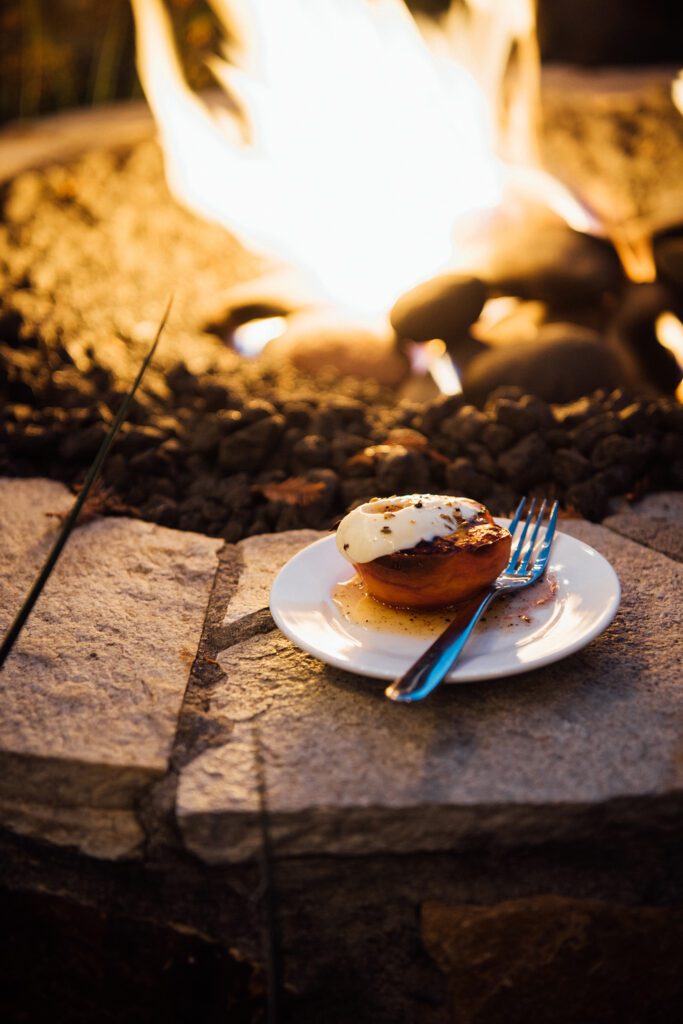
If you’ve ever pulled a peach off the grill and been surprised by how deeply savory it tasted — almost smoky, almost meaty — you weren’t imagining things. That flavor isn’t just caramelized sugar. It’s the result of overlapping chemistry between fruit, fire, and heat-driven reactions that turn a piece of stone fruit into something that pairs naturally with pork, steak, and smoked foods.
Here’s what’s actually happening.
The Two Key Molecules: Guaiacol and Lactones
Two important groups of aroma compounds are at work when you grill a peach.
The first is guaiacol, a smoky phenolic molecule strongly associated with smoked brisket, peaty Scotch whisky, roasted coffee, and charred foods. It’s one of the compounds our brains most strongly associate with the smell of fire-cooked food. When you encounter it, your brain says: smoke, char, heat.
The second group is lactones — specifically gamma-decalactone, one of the primary aroma compounds responsible for the creamy, fruity smell we associate with ripe peaches. As peaches heat up, these lactones become more volatile and more pronounced. They don’t disappear under heat; they deepen, taking on richer, more buttery, almost caramel-like qualities.
The combination of these two compound families is where the “steak-fruit” illusion begins.
Where the Smokiness Actually Comes From
You might assume the smoky flavor in a grilled peach comes entirely from the fruit itself. In fact, peach flesh contains relatively little lignin — the rigid structural polymer found in woody plant tissue — so the fruit contributes only a small amount of guaiacol directly through thermal breakdown.
The more important source is the smoke itself. When wood or charcoal combusts on a grill, it generates a range of smoky phenolic compounds — guaiacol among them — that rise with the smoke and deposit directly onto the surface of whatever you’re cooking. This is the same mechanism that gives smoked meats, cheeses, and fish their characteristic flavors.
A peach sitting over live fire is, in effect, absorbing smoke. The fruit’s moist, sticky surface makes it especially good at capturing these compounds.
What Happens When Peach Meets Fire
When a peach hits the intense, direct heat of a grill, several reactions occur simultaneously:
- Sugars caramelize, producing hundreds of new flavor compounds including furans, diacetyl, and maltol — all associated with toasted, nutty, and buttery aromas.
- Maillard reactions develop on the cut surface, the same browning chemistry that gives seared steak and toasted bread their depth of flavor.
- The fruit chars slightly at the edges, adding bitterness and complexity.
- Smoky phenolic compounds from the combustion deposit onto the peach’s surface
- Heat amplifies the fruit’s own lactones, making them smell richer and more concentrated.
Together, these reactions build a flavor profile that overlaps significantly with roasted and smoked savory foods. The peach still registers as sweet — your brain knows it’s fruit — but it now carries many of the same aromatic cues associated with barbecue, roasting, and smoke.
Why Grilled Peaches Pair So Well With Savory Foods
This is where the chemistry comes into play. Grilled peaches and pork are a classic pairing. There is a contrast between sweet and savory, with shared aromatic compounds.
When a grilled peach is paired with smoked ribs, prosciutto, or a seared steak, the fruit and the meat speak the same flavor language: smoke, bitterness, caramelized depth, buttery richness. The sweet-savory contrast is layered over a surprisingly deep aromatic harmony.
This is also why grilled peaches work so well in vinaigrettes, salsas, and relishes served alongside grilled or smoked proteins. The char on the fruit mirrors the char on the meat. The lactones in the peach echo the fat-derived aroma compounds in the protein.
Science Tip: No Grill? Try Smoked Salt
If you don’t have access to a grill, smoked salt can approximate part of that fire-roasted effect. The smoky phenolic compounds absorbed into the salt during smoking — including guaiacol — contribute aromas similar to those deposited by grill smoke. The salt also draws moisture to the fruit’s surface through osmosis, helping seasoning adhere more evenly and concentrating flavor at the surface.
It won’t fully replicate the intense surface chemistry of live fire, but it can create a convincing smoky illusion — especially useful in winter or when cooking indoors.
I explore ideas like this every week in the Flavor Files — subscribe here.