
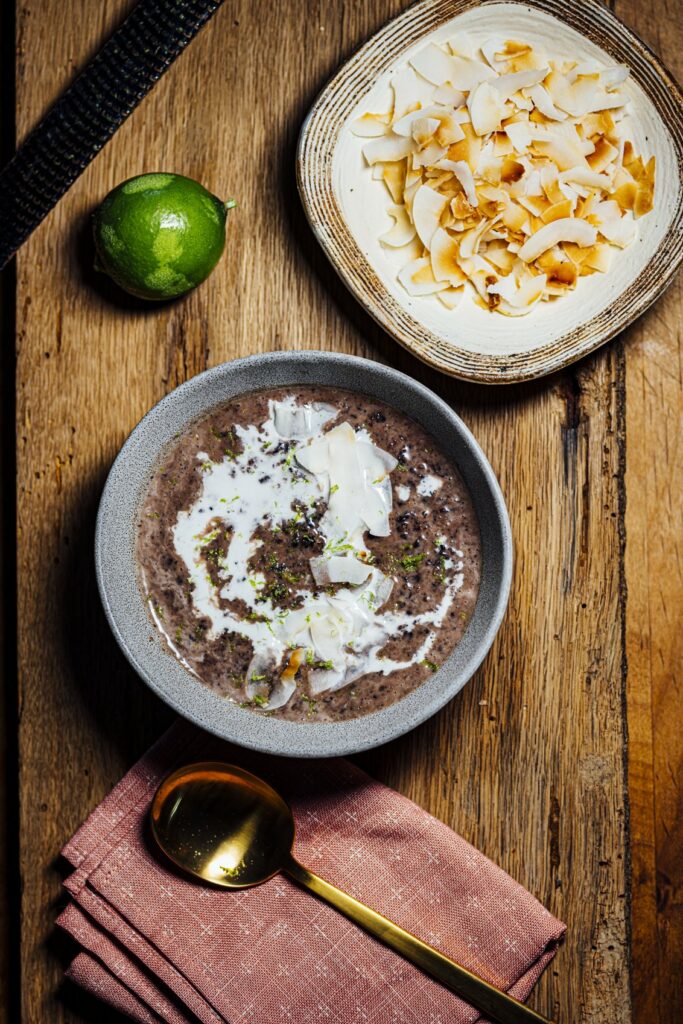
Rice puddings are my comfort food, and sometimes my breakfast. This black rice coconut milk pudding is inspired by the creamy, fragrant Thai-style sticky rice pudding, but built with black (forbidden) rice and sushi rice instead of glutinous rice. The result is a deeply colored, velvety pudding sweetened with jaggery or brown sugar and perfumed with cardamom, coconut milk, and fresh lime zest.
What Is Black Rice Coconut Milk Pudding?
Black rice pudding is a dessert found across Southeast and South Asia. This version draws most closely from the Thai preparation, where rice is cooked low and slow in coconut milk until it becomes thick and creamy. In Thailand, the pudding is traditionally made with black glutinous (sticky) rice, which releases starch as it cooks to build its characteristic texture.
This recipe uses black rice (also called forbidden rice) paired with a smaller portion of sushi rice. The name “forbidden rice” reportedly traces back to ancient China, where the grain was reserved for royalty because of its rarity and nutritional density. Today it is widely available and is one of the most beautiful grains to cook with — its deep purple-black hue comes from anthocyanins, the same pigment family found in blueberries and red cabbage.
The Flavor Science Behind Black Rice Pudding
1. Why Blend Part of the Rice?
The key technique in this recipe is blending a portion of the cooked rice with water before returning it to the pot. This is the same principle used in dals and legume soups, where part of the mixture is blended to thicken the liquid. When you blend cooked rice, you break apart the physical structure of the grains and release the starch inside. Those starch granules then disperse through the liquid and thicken it as the pudding cooks — without any added thickeners. The result is a consistency that is creamy and cohesive, not watery or gluey.
Black rice and sushi rice behave slightly differently in the pot. Black rice has a firm bran layer that stays relatively intact even after cooking, giving the pudding texture and visual contrast. Sushi rice is higher in amylopectin (a short-chain starch) and contributes to a stickier, more cohesive base. Together, they balance texture and structure well.
2. Coconut Milk and Fat-Soluble Flavor
Coconut milk carries fat-soluble aroma compounds throughout the pudding, which is why the coconut scent in this recipe feels so present. The fat in coconut milk also contributes to the smooth, slightly rich mouthfeel that distinguishes this pudding from versions made with water alone. Adding coconut milk off the heat (rather than simmering it aggressively) helps preserve those volatile aroma compounds, which can cook off under prolonged heat.
3. Cardamom and Aromatic Pairing
Green cardamom is the primary spice here, used in place of the pandan leaf common in Thai preparations. Both contribute a floral, slightly sweet aromatic note, but cardamom brings an additional warmth and a faint eucalyptol quality that pairs particularly well with coconut and rice. The lime zest added at the end functions as a brightening agent — its volatile citrus oils cut through the richness of the coconut milk and make the pudding taste lighter than it actually is.
4. Sweeteners: Jaggery vs. Brown Sugar vs. Muscovado
Jaggery, a minimally refined cane or palm sugar common across South Asia and parts of Southeast Asia, has an earthy, slightly mineral sweetness that is more complex than refined white sugar. Dark brown sugar or muscovado are closer substitutes than white sugar and work well here. The choice of sweetener affects the depth of flavor in the finished pudding — jaggery will give a more nuanced, slightly caramel-like result; muscovado the most intense.
Why This Black Rice Pudding Recipe Works
- Blending part of the cooked rice creates the creamy texture without any starch slurry or thickener.
- Using sushi rice alongside black rice adds a gentle stickiness that helps the pudding hold together.
- Cardamom and lime zest balance the richness of the coconut milk with warmth and brightness.
- Adding coconut milk off the heat preserves its aroma and keeps the pudding from tasting flat.
- Soaking the rice overnight reduces cook time and ensures even, tender texture throughout.
Ingredients
A few notes before you start preparing this black rice pudding:
Black rice (forbidden rice): Look for it at most well-stocked grocery stores, health food shops, or online. It should not be confused with black glutinous (sticky) rice, which is a different variety and has a more extreme sticky texture. Black rice has a firm outer bran and will always retain some chew even when fully cooked — that is normal and desirable.
Sushi rice: Any short-grain Japanese-style white rice labeled “sushi rice” works here. Its higher amylopectin content is what provides the stickiness and cohesion in this pudding.
Coconut milk: Full-fat, unsweetened coconut milk gives the best result. I prefer Aroy-D for its clean coconut fragrance. For a richer pudding, reduce the coconut milk to 1/2 cup (120 ml) and add 1 cup (240 ml) of coconut cream instead.
Jaggery: Available at Indian grocery stores or online. Dark brown sugar or muscovado are good substitutes.
Toasted coconut: Unsweetened shredded or flaked coconut, toasted until golden. This adds texture and a concentrated coconut flavor that fresh or untoasted coconut does not provide.
Step-by-Step Instructions For This Black Rice Pudding
Step 1: Soak the rice. Rinse both rices together and soak them in a large bowl with enough cold water to cover by about 2 in (5 cm). Soak overnight (at least 8 hours). The next day, discard the soaking water.
Why soak? Soaking hydrates the outer bran of the black rice before cooking, which reduces cook time and helps both varieties cook to a similar level of tenderness. Black rice has a tougher bran than white rice and benefits most from this step.
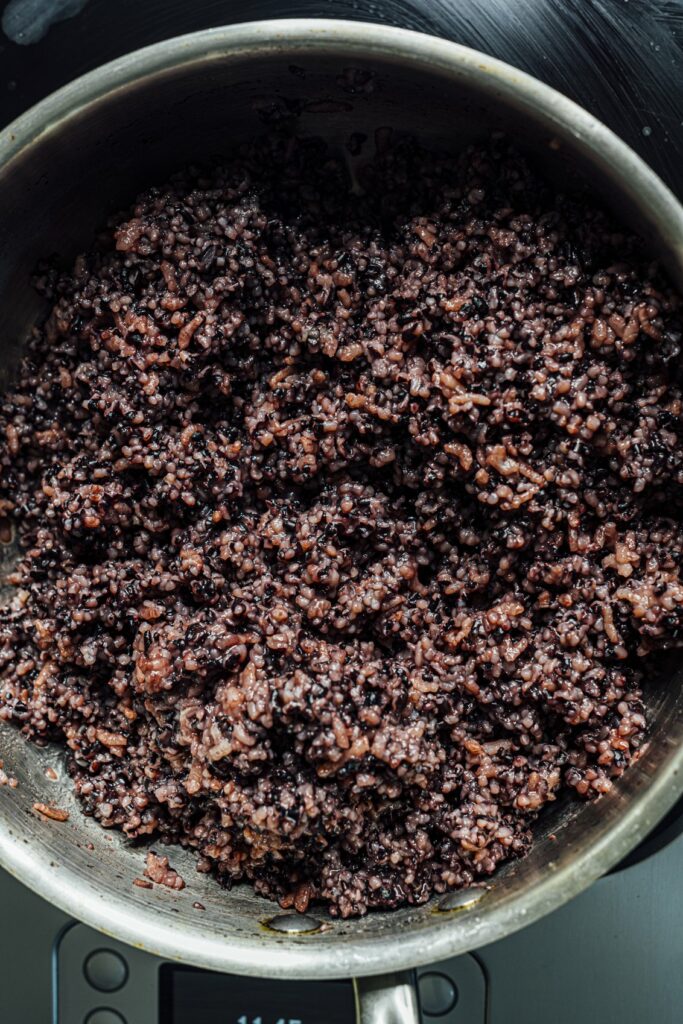
Step 2: Cook the rice. Add the soaked rice and 4 cups (960 ml) of water to a large saucepan and bring to a boil over medium-high heat. Reduce to a simmer and cover loosely. Stir often to prevent the rice from sticking to the bottom and burning. Cook until the rice is tender, 25 to 30 minutes. Remove from heat.
Step 3: Blend a portion. Transfer 2 cups of the cooked rice and 1/2 cup (120 ml) of water to a blender or food processor. Pulse until smooth and velvety. If it needs help to move, stir in a few more tablespoons of water and blend again. Pour the blended mixture back into the pot with the remaining rice.
Step 4: Sweeten and spice. Add the brown sugar or jaggery and ground cardamom to the rice mixture. Cook over low heat, stirring occasionally to prevent scorching, until the sugar is fully dissolved.
Step 5: Finish with coconut milk. Remove the saucepan from the heat. Pour in 1 cup (240 ml) of the coconut milk. Stir to combine. Taste and add more sugar if needed.
Step 6: Serve. Spoon the pudding into bowls, warm or at room temperature. Top with fresh lime zest and toasted coconut. Serve the remaining 1/2 cup (120 ml) of coconut milk alongside for drizzling.
Tips for the Best Black Rice Pudding
- Both types of rice can be soaked together in the same bowl , there is no need to soak separately.
- Stir the rice frequently as it cooks. Black rice releases a lot of color and starch into the liquid, and the bottom of the pot can scorch quickly on lower-quality burners.
- The lime zest is not optional — it makes a real difference. Add it right before serving so the volatile oils stay bright.
- This pudding thickens considerably as it cools. If making ahead, stir in a splash of water or extra coconut milk when reheating.
- Leftovers keep well in the refrigerator in an airtight container for up to 3 days.


Variations
Richer pudding: Swap 1 cup (240 ml) of the cooking water for an equal amount of coconut milk. The flavor will be more intensely coconut.
Pandan variation: If you can find fresh or frozen pandan leaves, tie one or two into a knot and simmer them with the rice. Remove before blending. This brings the black rice pudding closer to the Thai original.
Fruit topping: Sliced mango, fresh berries, or poached stone fruit (peaches, plums) all pair beautifully with the coconut and cardamom base.
Sweeter finish: A drizzle of honey or palm sugar syrup over the top at serving adds a pleasant gloss and a different sweetness layer.
Black Rice Coconut Milk Pudding
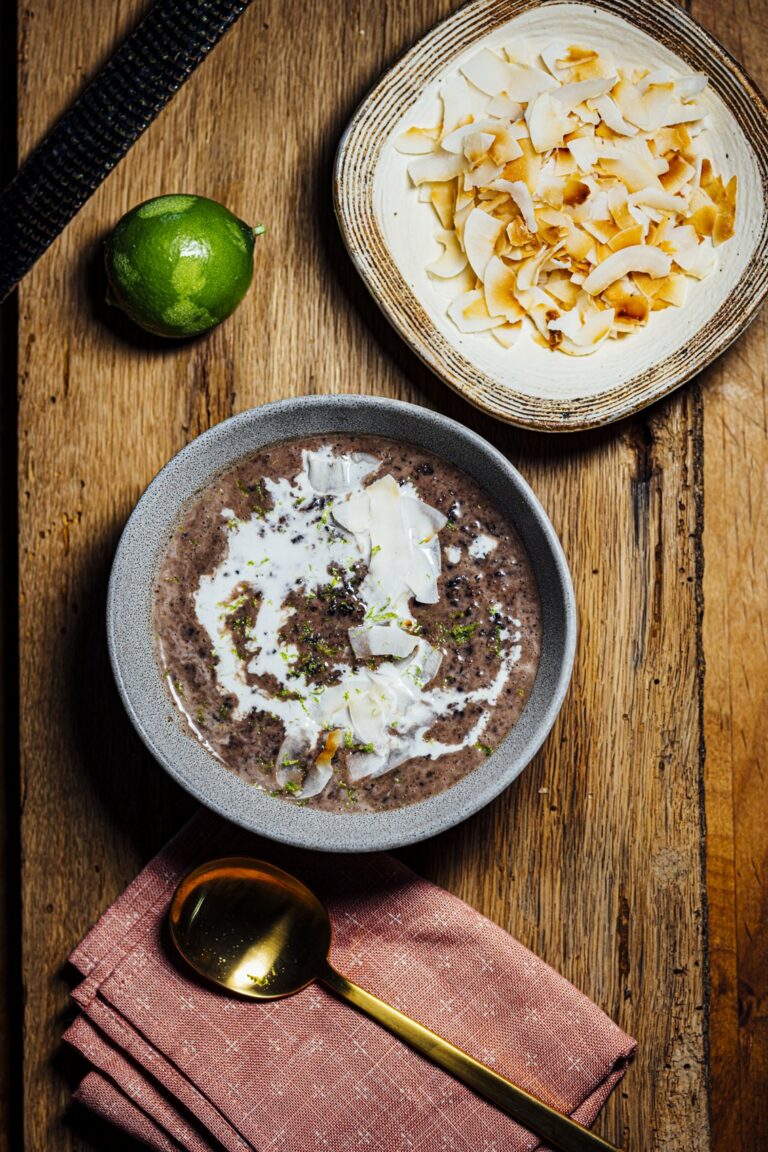
Rice puddings are my comfort (and sometimes breakfast) food. This rice pudding is based on the traditional Thai sticky rice pudding with a few differences. It doesn’t use sticky rice or pandan/kewra. Instead, I use black/forbidden rice along with sushi rice. To achieve a similar creamy and thick texture from the starch, a portion of the rice is blended with water to create a smooth liquid that forms the base of the pudding. Coconut milk and cardamom add a wonderful scent, along with a dash of fresh lime zest and toasted coconut.
- Yield: 4 to 6
Ingredients
1 cup/200 g black rice, cleaned
¼ cup/50 g sushi rice, cleaned
4 ½ cups/1 L water
¾ cup/150 g packed brown sugar or jaggery
1 tsp ground green cardamom
1 ½ cups/360 ml unsweetened coconut milk
Zest of 1 lime
½ cup/50 g unsweetened toasted coconut
Instructions
- Rinse the rice and soak them in a large bowl with enough water to cover them by 2 in/5 cm. Soak overnight. The next day, discard the soaking water.
- Add the rice and 4 cups/960 ml of water to a large saucepan and bring to a boil over medium-high heat. Reduce to a simmer, cover the pan loosely with a lid, stir often to prevent the rice from sticking and burning, and cook until the rice is tender, 25 to 30 minutes. Remove from the heat. Transfer 2 cups of the cooked rice and ½ cup/120 ml water to a blender or food processor, and pulse until smooth and velvety. If it needs help to move, stop the blender, stir in a few more tablespoons of water, and blend. Pour the liquid back into the rice. Add the brown sugar and cardamom to the rice mixture. Cook over low heat until the sugar is dissolved, occasionally stirring to prevent scorching. Remove the saucepan from the stove and pour in 1 cup/240 ml of coconut milk. Taste and add more sugar if needed.
- Serve the rice pudding warm or cool, topped with fresh lime zest and toasted coconut, and with the remaining ½ cup/120 ml coconut milk on the side.
Notes
- Both types of rice can be soaked together or separately; it won’t make a difference.
- My favorite brand of coconut milk is Aroy-D, the smell is heavenly. For a richer texture, reduce the volume of coconut milk to ½ cup/120 ml and add 1 cup/240 ml of coconut cream.

From the book
Love the flavors of coconut and cardamom?
This black rice pudding works because of a careful balance of starch, fat, and aroma. Blending part of the cooked rice creates the creamy texture, coconut milk carries the fragrance, and cardamom adds warmth that lingers long after the last bite.
In Fundamentals of Flavor, I explore the science behind these flavor relationships through 100 recipes — including desserts, rice dishes, and the techniques that make both work.
You’ll learn how ingredients like fat, starch, acid, and aromatics work together so you can build deeper flavor in any dish.
Preorder Fundamentals of Flavor →100 recipes · Science-backed techniques · September 2026
Complete Your Table
- Mango Lassi — a cooling, fruity counterpoint to the richness of the pudding
- Cardamom Rice Kheer — the classic Indian rice pudding in the same flavor family
- Coconut Semolina Cake — for anyone who loves a coconut dessert with a firmer texture
Frequently Asked Questions
Can I use only black rice and skip the sushi rice?
You can, but the texture will be less creamy. The sushi rice contributes amylopectin starch that helps bind and smooth the pudding. Without it, the texture will be thinner and the blended portion will not thicken as effectively.
Can I make this without soaking overnight?
Yes, but the black rice will take longer to cook and may not reach the same even tenderness. A minimum of 2 hours soaking is a reasonable shortcut if you’re pressed for time.
Is this recipe vegan and gluten-free?
Yes on both counts. All the ingredients in the base recipe are plant-based and naturally gluten-free.
Can I serve this cold?
Absolutely. It works well cold, warm, or at room temperature. Cold, it firms up to a thick, spoonable pudding. Warm, it is looser and more fluid.
Where can I find jaggery?
Indian grocery stores carry it reliably. You can also find it online. Look for it in block or granulated form — either works here, though granulated dissolves more quickly.

2 Responses
I finally caught COVID and am feeling sorry for myself, so I made this as a little breakfast treat to cope. Absolutely delicious and so comforting! I had a similar dessert at a restaurant recently and this version was so much more full-flavored. I think next time I’d add slightly less brown sugar, as it ended up slightly on the sweet side for my taste.
I made only one tweak: Since the recipe as written doesn’t use a full can of coconut milk, in the step that calls for adding 120 mLs water to two cups rice in the blender, I instead added 50 mL of coconut milk and 70 mL water.
A note for you, Nik: I think you have two versions of the same instruction in Step 2: “Remove the saucepan from the stove and mix half the coconut milk. Taste and add more sugar if needed. Remove the saucepan from the stove and pour in 1 cup/240 ml of coconut milk. Taste and add more sugar if needed.”
Thanks for catching that, I’ve fixed it.