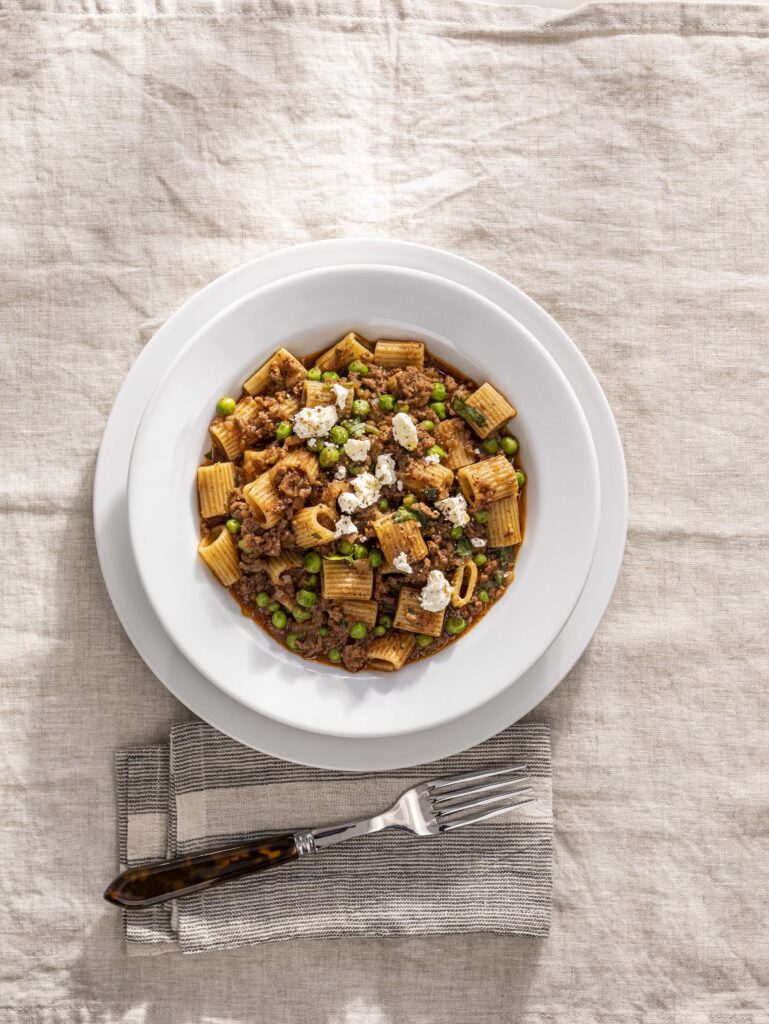
There’s a category of dishes I think about often: the ones that shouldn’t work on paper but are completely irresistible on the plate. Goan Keema (Kheema) Pasta is exactly that. Indian-spiced ground meat sauce meets Italian pasta, and the result is a 40-minute weeknight dinner that is bolder, more complex, and more satisfying than either dish would be on its own.
I developed this recipe for America’s Test Kitchen, and it’s one I’m particularly proud of. The full recipe — with exact measurements and step-by-step instructions — is available exclusively at America’s Test Kitchen (link below). But I want to walk you through the thinking behind it: where keema comes from, why it works so well with pasta, and what makes this version taste the way it does.
What Is Keema — and Where Does It Come From?
South Asian cooks have made keema (sometimes spelled kheema) for centuries. The word simply means minced or ground meat. The word itself comes from the Turkish “kıyma,” meaning minced meat, which traces the dish’s lineage through the Mughal empire and its Persian culinary influences into the Indian subcontinent.
Goan-style keema is its own distinct expression of this tradition. Goa’s 450 years of Portuguese colonial influence created a cuisine unlike anywhere else in India — one where vinegar, Catholic spice traditions, and local Indian ingredients collide in the most delicious way. Malt vinegar appears in this recipe, and its presence is unmistakably Goan: that subtle tang at the end of the sauce is the flavor fingerprint of the region.
Why Goan Keema Pasta Works
The pairing seems unconventional at first, yet it’s grounded in solid culinary logic. Keema is already a thick, rich, deeply savory meat sauce. Functionally, it’s exactly what a good pasta sauce is. The same qualities that make it incredible spooned over rice make it a natural partner for a sturdy, tube-shaped pasta that can hold its own against bold flavors.
Mezzi rigatoni or paccheri are the right shapes here. Their ridges and hollow centers trap the sauce, so every bite delivers the full depth of the spiced meat. Spaghetti or linguine gets lost in this sauce.
The Goan Keema Pasta Flavor Architecture
This sauce builds in careful layers, and the sequence matters:
- Cook the ground beef (or lamb) until all moisture evaporates and the meat sizzles in its own fat. This is the Maillard reaction at work, building the savory, toasty base that everything else builds on.
- Add onion, ginger, and garlic next, letting them soften and sweeten in those rendered fats.
- Bloom the tomato paste directly in the pan, concentrating its natural sugars and umami before any liquid goes in.
- Add garam masala and Kashmiri chile powder with the tomato paste. Cooking spices in fat rather than liquid is what makes Indian food taste like Indian food. Fat carries volatile flavor molecules in a way water simply cannot.
- Deglaze with chicken broth, lifting all the browned bits, and let the sauce simmer for five minutes to meld.
- Add frozen peas at the very end, just long enough to warm through so they stay bright and sweet rather than turning grey and mushy.
- Finish with butter and malt vinegar. The butter adds richness and gloss; the vinegar cuts through with that signature Goan brightness.
Ingredient Spotlight: Kashmiri Chile Powder
Kashmiri chile powder is one of the most underused spices in Western kitchens, and this recipe is a perfect introduction to it. What sets Kashmiri chile apart from regular cayenne or chili powder is its color. The hue is a vivid, deep brick-red, and the heat is surprisingly gentle. It brings visual drama to a dish without blowing out the heat level.
The recipe calls for 1 to 1½ teaspoons — use the smaller amount for a mild, beautifully colored sauce, the larger for a sauce with some genuine heat. If you can’t find it, the recipe notes a substitute of cayenne plus paprika, but I’d encourage you to seek it out. It’s increasingly available online and in South Asian grocery stores, and once you have it in your pantry you’ll find yourself reaching for it constantly.
On the Feta: An Unconventional Finishing Touch
Crumbled feta over keema pasta is not traditional — the recipe acknowledges that directly. But it’s one of those additions that just works. The salty, tangy creaminess of feta cuts through the richness of the spiced meat sauce in exactly the way a squeeze of lemon or a dollop of yogurt would in a traditional Indian context. It’s cross-cultural thinking applied with precision, and it makes the dish.
Skip it if you prefer, or substitute a spoonful of plain yogurt or labneh for something closer to the Indian tradition. But try it with the feta at least once first.
A Weeknight Dinner That Doesn’t Taste Like One
What I love most about this recipe is what it proves: that deeply complex, layered flavor doesn’t require hours of cooking. The entire dish comes together in 40 minutes, mostly in a single Dutch oven. The secret is technique — specifically, knowing when to add each ingredient and why, and understanding that the Maillard reaction and spice blooming can do in minutes what braising takes hours to achieve.
This is the kind of weeknight cooking I believe in: fast, unfussy, but never boring.
Get the Full Recipe for My Goan Keema Pasta at America’s Test Kitchen
The complete recipe — with exact measurements, step-by-step instructions, and all the test kitchen tips — is available exclusively at America’s Test Kitchen:
→ Goan Keema Pasta — America’s Test Kitchen
Quick Notes Before You Cook
- Ready in 40 minutes — one of the fastest weeknight dinners in this ATK series
- Use mezzi rigatoni or paccheri — the ridges and hollow centers hold the sauce properly
- Ground beef or lamb both work; lamb has a slightly richer, more mineral flavor that pairs beautifully with the Goan spices
- Kashmiri chile powder is available at most South Asian grocery stores and online — it’s worth having in your pantry
- Reserve that pasta water — a splash at the end adjusts the consistency perfectly
- The feta is optional but highly recommended; labneh or plain yogurt also work
More from My Kitchen
If the spice science in this dish resonates with you, here are four more recipes worth exploring:
- Aloo Gobi the same garam masala logic applied to potatoes and cauliflower in a classic Indian dry braise
- Homemade Garam Masala — understand the spice blend that anchors this dish, and learn why making your own changes everything
- Goan Kheema — the traditional dish that inspired this pasta
- Homemade Naan — the perfect thing to serve alongside, for scooping up every last bit of sauce from the bowl