Salmon Tikka Masala: A Science-Backed Spin on a Classic
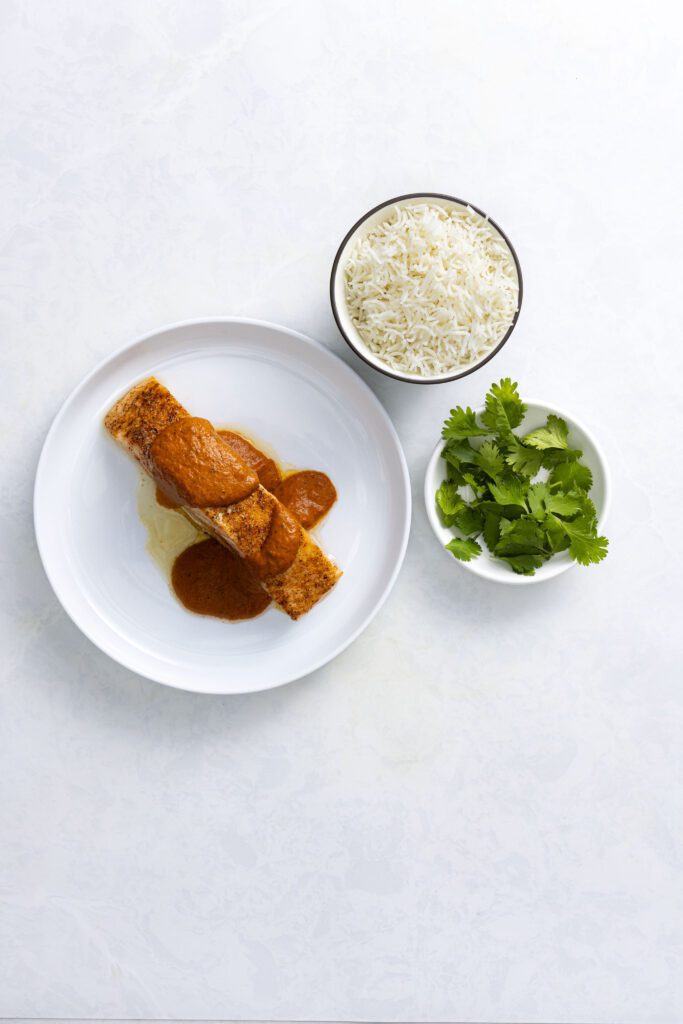
Salmon tikka masala swaps the traditional chicken for a protein that rewards careful, low-and-slow heat, yielding moist, silky salmon draped in a velvety, creamy, spiced tomato sauce that clings to every flake. I developed this recipe as part of my work with America’s Test Kitchen, where the full recipe is hosted. In this post, I walk you through the flavor science and technique behind it, so when you cook it, you understand exactly what you are doing and why.
Get the full Salmon Tikka Masala recipe at America’s Test Kitchen →
What Is Tikka Masala?
Tikka masala is one of the most beloved dishes in the Indian culinary diaspora. “Tikka” refers to pieces of meat or fish, traditionally marinated and cooked in a tandoor (a high-heat clay oven), while “masala” simply means a spiced sauce or mixture. Together, tikka masala describes those fire-kissed morsels served in a rich, creamy, tomato-based sauce.
Chicken tikka masala became enormously popular across the UK and the United States, but the format is endlessly adaptable. Paneer, prawns, cauliflower, and now salmon all make compelling tikka masala candidates. What matters is the underlying architecture of the sauce: deeply caramelized aromatics, layered warm spices, and the right balance of fat and acid to carry all of that flavor.
This version uses salmon in place of the more traditional chicken and swaps the tandoor for a smarter oven technique that achieves similar results: a firm, slightly rendered exterior and a translucent, just-cooked center.
A Brief History of Tikka Masala
The origins of tikka masala are contested. Some food historians point to the tandoor-cooked meats of Mughal royal kitchens, where marinated meats were roasted at high heat and served with richly spiced sauces. Others argue the dish as we know it today, with its creamy tomato base, was refined or even invented in Britain by South Asian restaurant cooks adapting to local palates.
What’s less disputed is the Indian foundation. The tandoor, a cylindrical clay oven that reaches temperatures well above 800°F (425 °C), is central to North Indian cooking traditions. The intense, dry, radiant heat chars the exterior of marinated meat in a way that no conventional oven quite replicates. The masala sauce, built on a base of onion, ginger, garlic, tomato, cream, and warm spices, is a descendant of Mughal-era korma and curry traditions that blended Persian techniques with local Indian ingredients.
Kashmiri chile powder, which gives tikka masala its characteristic deep brick-red color and mild-but-complex heat, comes from dried Kashmiri chilies grown in northern India. The spice became central to restaurant-style tikka masala because it delivers vivid color without overwhelming heat.
The Flavor Science Behind Salmon Tikka Masala
Why Kashmiri Chile Works So Well Here
Kashmiri chile powder is low in capsaicin (the compound responsible for sharp heat) but high in pigment-producing carotenoids, particularly capsanthin. Those carotenoids are fat-soluble, which means when you bloom the chile powder in ghee, the fat extracts and carries the color and flavor molecules throughout the sauce in a way that water-based cooking never could. The result is that signature, deeply saturated red-orange sauce.
If you can’t find Kashmiri chile powder, a blend of 3/4 teaspoon paprika and 1/4 teaspoon cayenne per teaspoon is a reasonable substitute. The paprika covers the color and mild sweetness; the cayenne provides the gentle heat.
Garam Masala: When You Add It Matters
Garam masala is a blend of warm, aromatic spices (typically cardamom, cloves, cinnamon, black pepper, and cumin) that have already been toasted and ground. The key volatile aroma compounds responsible for its complex fragrance are heat-sensitive. Added at the beginning of a long braise, they dissipate. In this recipe, garam masala is used in two places: a small amount is applied directly to the salmon as part of the spice rub before roasting, and more goes into the sauce early, where the tomato puree and cream moderate the cooking temperature enough to preserve a good portion of those aromatics.
Kasoori Methi: The Finishing Note
Kasoori methi, dried fenugreek leaves, has a flavor that sits somewhere between maple, celery, and bitter herb. Just a teaspoon stirred into the sauce near the end adds a distinctive savory-sweet dimension that signals “restaurant tikka masala” to anyone who grew up eating it. The drying process concentrates the aroma compounds, so a small amount goes a long way. If you can’t find it, the sauce is still excellent without it.
The Hybrid Oven Method: Science of Gentle Heat
Salmon is high in fat relative to chicken, which is both its strength and its challenge in this context. The fat keeps the fish moist, but salmon overcooks fast: the proteins begin to tighten and extrude moisture at relatively low temperatures. A broiler or high-heat grill, the methods used to approximate a tandoor for chicken, leave almost no margin for error with salmon.
The solution here is a hybrid oven approach. You preheat the oven to 500 degrees F (260 degrees C) and load a rimmed baking sheet on the lowest rack so it gets scorching hot. Just before the salmon goes in, you lower the temperature to 275°F (135°C). The retained heat in the baking sheet sears the bottom of the fillets and renders a little excess surface fat, mimicking the firming effect of the tandoor. But then the low ambient oven temperature takes over, cooking the interior slowly and gently, targeting 125 degrees F (52 degrees C) at the center for a medium-rare result.
This is the difference between salmon that’s glossy and barely set in the center versus salmon that’s chalky and tight throughout. Temperature control is everything.
Why This Salmon Tikka Masala Recipe Works
A few key decisions separate this recipe from a generic tikka masala with fish:
Caramelizing the onion slowly in ghee builds a sweeter, more complex base. Rushing this step produces a sharper, more raw-tasting sauce.
Tomato paste before tomato puree gives you concentrated, slightly caramelized tomato flavor layered beneath the brighter flavor of the canned puree. The paste browns in the oil; the puree simmers down to develop body.
Heavy cream stirred in at the end keeps the sauce from breaking. Adding cream to an already-boiling acidic sauce risks curdling; warming it gently with the sauce off or at low heat gives you a smooth, velvety result.
Blending the sauce is optional, but it produces a noticeably smoother, more restaurant-style texture. An immersion blender works perfectly here.
Brushing the salmon with spiced ghee rather than a wet marinade means the spices stay on the surface during roasting, forming a flavorful crust rather than steaming off.
Key Ingredients in Salmon Tikka Masala
Ghee: Clarified butter with the milk solids removed, giving it a higher smoke point than whole butter and a deeply nutty flavor. You can substitute a neutral vegetable oil, but ghee adds a richness to the sauce and salmon that’s hard to replicate.
Kashmiri Chile Powder: Mild, fruity, and deeply red. Central to the color and gentle heat of tikka masala. Find it at South Asian grocery stores or online.
Garam Masala: A pre-toasted warm spice blend. Quality varies significantly between brands. I prefer to make my own, and you can find my recipe [here].
Kasoori Methi (Dried Fenugreek Leaves): A finishing herb that elevates the sauce from good to unmistakably authentic. Available at South Asian grocery stores.
Center-Cut Salmon Fillets: Uniform thickness matters here. Center-cut pieces, about 1 to 1 1/2 inches (2.5 to 4 cm) thick, cook evenly at the low oven temperature. Avoid thin tail pieces, which will overcook before the sauce is ready.
Make-Ahead and Storage
The tikka masala sauce can be made up to three days ahead and stored covered in the refrigerator, or frozen for up to two months. Reheat it gently over medium-low heat, adding a splash of water if it has thickened too much. The salmon is best cooked and served immediately; leftover roasted salmon can be stored in the refrigerator for up to two days and flaked into the reheated sauce.
Get the Full Recipe
The complete recipe for this salmon tikka masala, with detailed instructions, measurements, and the full technique breakdown, is over at America’s Test Kitchen. Head there to get everything you need to make it.
Get the full Salmon Tikka Masala recipe at America’s Test Kitchen →
Complete Your Table
If the spice science here caught your attention, these posts from my Indian At Home series will take you further:
- Homemade Garam Masala: Making your own takes fifteen minutes and the result is noticeably more aromatic than anything from a jar.
- Perfect Basmati Rice: The ideal base for this sauce. Learn the science of getting every grain separate and fluffy.
- Kachumber Salad: A bright, crisp cucumber and tomato salad that cuts through the richness of tikka masala beautifully.
- Homemade Naan: For scooping up every last bit of sauce.
Frequently Asked Questions
Can I use frozen salmon for this recipe? Yes. Thaw it completely in the refrigerator overnight and pat it very dry before brushing with the spiced ghee. Excess surface moisture will steam the salmon rather than sear it on contact with the hot pan.
What can I substitute for Kashmiri chile powder? A mix of 3/4 teaspoon sweet paprika and 1/4 teaspoon cayenne pepper per teaspoon of Kashmiri chile powder is the closest substitute. The paprika provides the color and mild sweetness; the cayenne provides the heat.
Can I use another fish instead of salmon? Thick, fatty fish like steelhead trout or swordfish work well with the same hybrid oven method. Leaner, more delicate fish like cod or tilapia will cook faster and may dry out more easily.
Do I have to blend the sauce? No. The sauce will have a chunkier texture from the onion and tomato, but the flavor will be the same. Blending simply produces a smoother, more restaurant-style result.
Is tikka masala gluten-free? This recipe is naturally gluten-free. Double-check your spice blends, as some commercial garam masala blends contain anti-caking fillers.
What does kasoori methi taste like? Kasoori methi (dried fenugreek leaves) has a savory, slightly bitter, maple-adjacent flavor that’s unmistakable in restaurant-style Indian curries. It’s a finishing herb, not a base spice, and a little goes a long way.