

Goan Pea Curry (Chanya Ros): The Science, Flavor & History of a Coastal Indian Classic
I’ll be honest about something: I don’t love the English name for this dish. “Dry pea curry” sounds miserable. The Goan pea curry — known locally as chanya ros — is far more evocative, and far more accurate to what this dish actually is: a deeply fragrant, coconut-rich masala built around dried peas that have been slowly coaxed into something extraordinary.
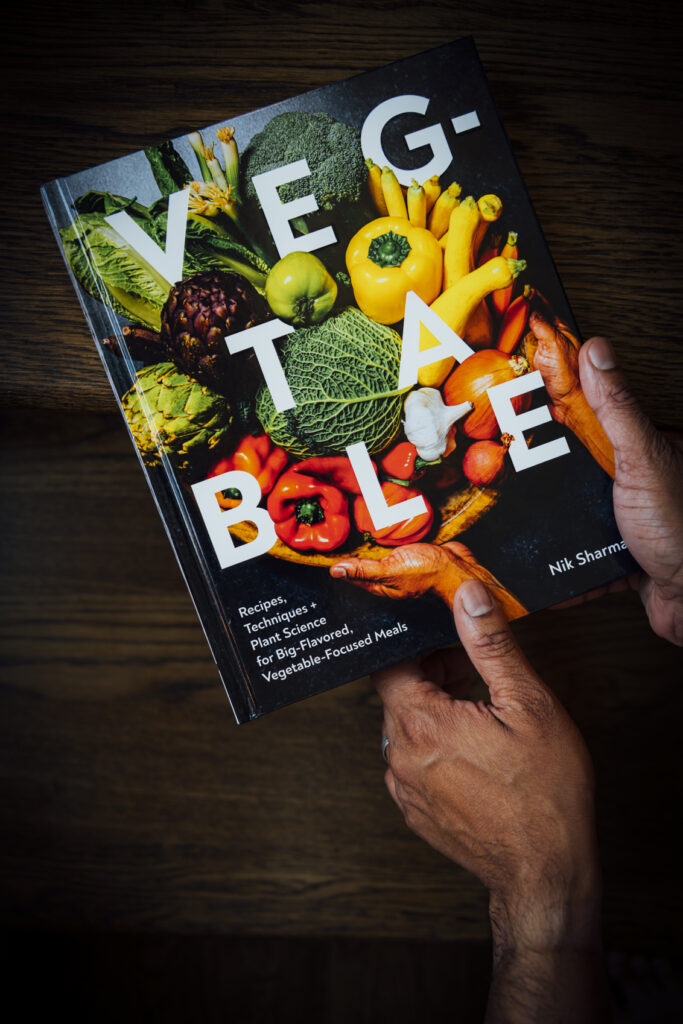
This Goan pea curry comes from my cookbook Veg-Table, and it is one of my personal favorites in the book. It is the kind of dish that rewards patience — the dried peas take time, the masala needs to cook until the fat separates — but what you get at the end is a depth of flavor that a quick weeknight curry simply cannot replicate.
What Is Goan Pea Curry?
Goan pea curry, known locally as chanya ros or vatana curry, comes from Goa, a small state on the western coast of India with a culinary tradition shaped by its geography. Coconut grows abundantly along the coast, and it forms the backbone of much of Goan cooking — used fresh, dried, or as oil, depending on the dish.
This version uses dried yellow or white peas rather than fresh. Fresh peas are too tender for this preparation — they break down before the masala has time to develop. Dried peas hold their shape through the long cook, absorbing the spiced coconut sauce while maintaining enough texture to make each bite satisfying.
The History Behind Goan Pea Curry
Goa’s culinary identity is unlike anywhere else in India. Centuries of Portuguese colonial influence — from 1510 to 1961 — layered European techniques and ingredients onto an already complex regional cuisine. The result is a food culture that is simultaneously distinctly Indian and unlike any other regional Indian cooking.
Chanya ros predates the colonial period and reflects the older Konkani culinary tradition of the Goan coast — coconut-forward, spice-forward, and built around the legumes and grains that sustained coastal communities long before refrigeration made fresh produce available year-round. This Goan pea curry is filled with history as it is with flavor.
The Flavor Science Behind Goan Pea Curry
Why use dried peas instead of fresh?
Dried peas are chemically different from fresh ones. The drying process concentrates their starch content and firms their cell walls, which means they can withstand a long braise without dissolving. Fresh peas, by contrast, have a high water content and thin cell walls; they cook through in minutes and would turn to mush in this preparation long before the masala has developed its full depth.
Soaking the dried peas overnight rehydrates them gradually, allowing water to penetrate the cell walls evenly. This produces a more uniform texture than trying to cook them from dry, and it shortens the cooking time significantly.
Why add baking soda to the cooking water?
A small amount of baking soda — just ⅛ tsp, goes into the water when cooking the peas. Baking soda raises the pH of the water, which weakens the pectin in the pea cell walls and speeds up softening. It is the same principle used when cooking dried beans. Too much and the peas become mushy and this Goan pea curry will turn into a soupy texture; the tiny amount here just nudges them toward tenderness without sacrificing texture.
Why blend the coconut and onion into a paste?
The coconut masala in this recipe is not added whole — it is blended with sautéed onions, ginger, garlic, Kashmiri chilli, garam masala, and water into a smooth paste before cooking. This step is about surface area. A smooth paste exposes more of the coconut’s fat and flavor compounds to the hot oil than a coarsely chopped mixture would, and it integrates into the sauce more completely. The result is a masala that tastes like it has been cooking for hours rather than minutes.
Why cook until the fat separates?
One of the instructions in this recipe — cook until the mixture starts to pull away from the sides of the pan and the fat begins to separate — is not only a visual cue. I think of it as a flavor milestone. When the fat separates from the masala, it signals that most of the water has evaporated and the spices and coconut solids have fully cooked through. Stopping before this point leaves a raw, starchy taste in the sauce. Cooking past it to separation gives you a masala that is concentrated, fragrant, and fully developed.
Why does Kashmiri chillies matter here?
Kashmiri chilli powder is not interchangeable with regular chilli powder or cayenne. It has a lower heat level but an intensely fruity, almost paprika-like flavor and a vivid red color that comes from its high concentration of carotenoid pigments. In this curry it contributes color and complexity without overwhelming the coconut’s natural sweetness. If you cannot find it, the closest substitute is ¾ tsp smoked sweet paprika combined with ¼ tsp ground cayenne — that approximates both the color and the mild heat.
Tips for Getting This Goan Pea Curry Right
Do not rush the pea-cooking stage. Depending on how old your dried peas are, cooking time can range from 45 to 75 minutes. Older dried peas have lost more moisture and take longer to rehydrate and cook through. Taste them at 45 minutes — they should be completely tender with no chalky center before you proceed.
The skins that rise to the surface of the cooking water are harmless. Leave them if the texture doesn’t bother you; skim them off with a slotted spoon if it does. Either way, do not discard the cooking liquid — it goes into the curry and carries a lot of starch that thickens the final sauce.
For a deeper coconut flavor, use coconut oil in place of neutral oil for the masala. It amplifies the coconut character of the blended paste without adding any additional ingredients.
Can You Make This Ahead?
Yes — and this Goan pea curry is one of those dishes that genuinely improves overnight. The spices continue to meld in the refrigerator, and the peas absorb more of the masala as it sits. Reheat gently over low heat, adding a splash of water if needed to loosen the sauce. This Goan pea curry keeps refrigerated for up to three days and freezes well for up to one month.
What to Serve with Goan Pea Curry
Serve hot with plain basmati rice or a flatbread like roti or paratha. The sauce is thick enough to eat with bread without everything running off.

Goan Pea Curry
This dish comes from the western coastal state of Goa in India and is made from dried peas (fresh peas are too tender to use here). Frankly, I don’t like the way the English name of this dish translates—dry pea curry sounds.miserable. I prefer referring to the dish by its Goan name, chanya ros (it also goes by vatana curry or chanya ros).
- Yield: 4 to 6
Ingredients
4 1/4 cups/1020 ml water
1 1/2 cups/300 g dried yellow or white peas (dried green peas can be used too), soaked overnight, rinsed and drained
1/8 tsp baking soda
4 Tbsp/60 ml neutral oil with a high smoke point, such as grapeseed
3 medium/total weight about 900 g yellow or white onions, halved and thinly sliced
2 Tbsp fresh ginger, peeled and grated
6 garlic cloves, grated
1/2 cup/40 g fresh, frozen, or desiccated unsweetened shredded coconut
1 1/2 tsp garam masala, homemade or store-bought
4 Tbsp chopped cilantro
1 tsp ground Kashmiri chilli powder
2 Tbsp tomato paste
1 tsp sugar
Instructions
-
In a medium saucepan, bring to a boil over high heat 3 cups [720 ml] water; peas, 1 tsp fine sea salt; and baking soda. Lower the heat to a simmer, cover, and cook until the peas are completely cooked and tender, 45 to 75 minutes. Remove from the heat and set aside the peas with the cooking liquid. No need to remove the skins that will have risen to the top, but if you must, use a slotted spoon to skim them out.
-
In a medium skillet, warm 2 Tbsp neutral oil over medium heat. When the oil is hot, add 2 medium/600 g yellow or white onions, halved and thinly sliced. Sauté until they start to brown, 4 to 6 minutes. Add ginger and garlic. Sauté until warmed and fragrant, 30 to 45 seconds. Add the coconut. Sauté until the coconut begins to darken slightly, 1 to 2 minutes. Remove from the heat and transfer to a blender or food processor.
-
To the blender, add garam masala; 2 Tbsp chopped cilantro; Kashmiri chilli powder; and 1 cup [240 ml] water. Pulse until smooth.
-
Clean the saucepan and warm 2 Tbsp neutral oil over medium-high heat. Add the remaining 1 onion, and sauté until light brown, 4 to 5 minutes. Lower the heat to medium, then stir in the ground coconut mixture and cook until it starts to bubble, 1 to 2 minutes. Stir in the tomato paste, sugar, and 1/4 cup [60 ml] water. Once the mixture begins to bubble again, lower the heat to a simmer. Continue to cook, stirring, until the mixture starts to pull away from the sides of the saucepan and the fat begins to separate, 5 to 8 minutes.
-
Fold in the peas with the cooking liquid. Taste and season with fine sea salt. Bring to a boil over high heat to warm the peas through, and then remove from the heat. Garnish with 2 Tbsp chopped cilantro.
-
Serve hot or warm with plain rice or flatbread. Leftovers can be stored in an airtight container for up to 3 days and frozen for up to 1 month in a freezer-safe airtight container.
Notes
- Dried white, green, or navy peas can be found online or in Indian grocery stores. They will be labeled as vatana or dried peas.
- For a deeper coconut aroma, use coconut oil.
- When boiled, the peas will release their skins, which will accumulate on the surface of the water. You can leave them in if the texture doesn’t bother you; otherwise, skim them off with a slotted spoon and discard.
- Substitute: 1 tsp ground Kashmiri chilli powder or 3/4 tsp smoked sweet paprika + 1 /4 tsp ground cayenne);
Love this Goan Pea Curry? More from Veg-Table
Chana Masala Pumpkin Pots — another legume-forward dish from Veg-Table where the fat-separation technique appears again in the chana masala. Roasted sugar pie pumpkins make it a showstopping centerpiece.
Golden Za’atar Onion Rings with Buttermilk Caraway Dipping Sauce — the same spice-blooming-in-fat principle from the Goan curry masala shows up in the onion ring batter. A completely different dish, the same underlying science.
Both recipes are from Veg-Table by Nik Sharma, published by Chronicle Books.
2 Responses
When I say this could be my favorite dinner, I’m not exaggerating. Perfect comfort dish for a cold day, lots of great fiber, and amazing flavor. Can’t wait for my leftovers and I should have doubled it and froze some! Thanks for the most amazing recipe! ❤️
I am so happy you loved this recipe, it’s one of my personal favorites too!