


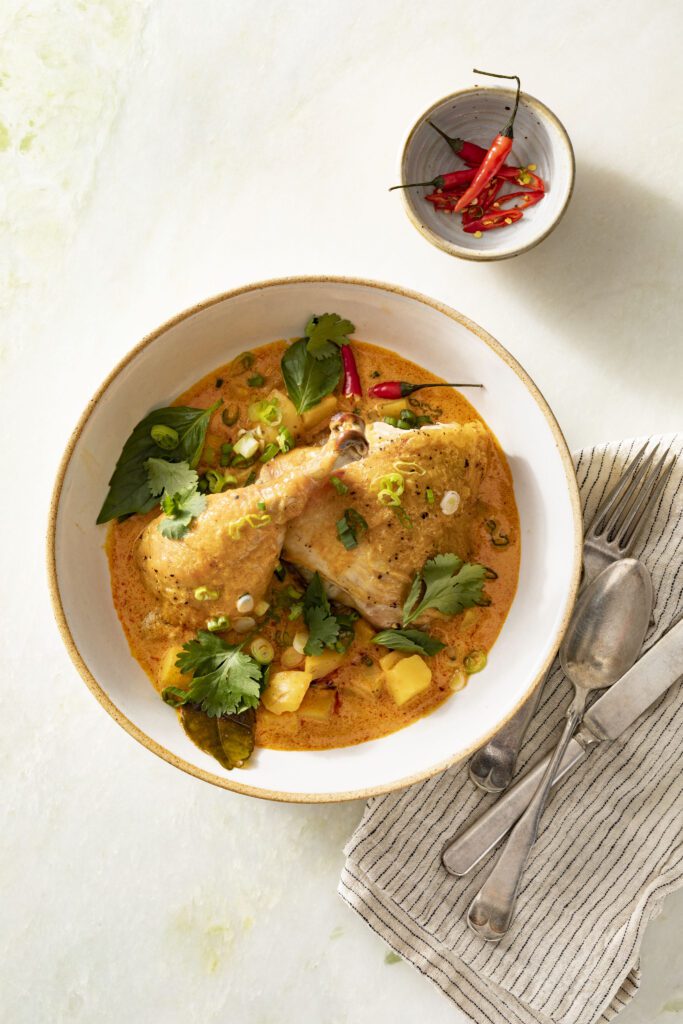
There are dishes that feel like a weeknight shortcut, and there are dishes that feel like an event. This one manages to be both. When America’s Test Kitchen asked me to develop a recipe that combined the drama of a roasted spatchcocked chicken with the soul-warming richness of a Thai red curry, I knew exactly what I wanted on the plate: crispy, golden skin, tender roasted vegetables, and a sauce so fragrant and coconutty you’d want to drink it straight from the pan.
The result: Spatchcocked Chicken with Thai Red Curry, Squash, and Potatoes is one of those recipes that will immediately earn a permanent spot in your rotation. The full recipe is available exclusively at America’s Test Kitchen, but I want to walk you through the ideas behind it: why it works, what makes it special, and what you need to know before you cook it.
What Is Spatchcocking and Why Does It Matter?
Spatchcocking (also called butterflying) is the technique of removing a chicken’s backbone so the bird can lie flat. It sounds dramatic, but it’s one of the most practical moves you can make in the kitchen. A flat chicken has uniform thickness, which means the breast and thigh meat cook at the same rate; no more dry breast while you wait for the thighs to catch up.
But the real magic here is what spatchcocking allows us to do on the stovetop first. By pressing the flattened chicken skin-side down into a hot skillet and using the weight of a Dutch oven filled with water to press it perfectly flat — we get deep, even, crackly-brown skin in just 6 to 8 minutes. No oven required for that step. That kind of browning is almost impossible to achieve with a whole bird.
The Science of the Sear: Why a Dutch Oven Lid Changes Everything
The Maillard reaction is the browning reaction responsible for deeply savory, complex flavor and it requires direct, sustained contact between the protein and a hot surface. Any part of the skin that curls or pulls away from the pan is a part that stays pale and flabby.
By using the Dutch oven as a press, we solve this problem entirely. Every square inch of skin stays in contact with the pan. The result is an even, mahogany-brown crust that you simply cannot achieve any other way without specialized equipment. It’s a technique borrowed from restaurant kitchens, and it translates beautifully at home.
The Vegetables: Giving Potatoes and Squash a Head Start
One of the trickiest parts of any roasted chicken-and-vegetable dinner is timing. Chicken needs high heat and a relatively short roast. Root vegetables need more time. The solution in this recipe is elegant: we cook the Yukon Gold potatoes and kabocha squash briefly in the same rendered chicken fat left in the skillet before the chicken even goes back in.
The chicken then sits on top of them in the skillet, and a splash of water added to the pan creates steam. That steam gently finishes the vegetables from below while the chicken roasts from above, all in about 30 to 35 minutes at 450°F [230°C]. Everything is done at the same time. It’s the kind of precision you’d expect from a professional test kitchen or restaurant and when applied at home, it makes a big difference.
The Spatchcock Thai Curry : Layers of Aroma, Built in Order
While the chicken roasts, the sauce comes together on the stovetop. And this is where the recipe really sings. Thai red curry paste is already a powerhouse: a concentrated blend of dried chiles, galangal, lemongrass, and shrimp paste — but we’re not just opening a jar and calling it done.
First bloom the paste in hot oil first, then build on it with:
- Fresh makrut lime leaves, which contribute an intensely floral, citrusy perfume that dried lime juice simply can’t replicate
- Freshly grated ginger for bright heat and warmth
- Fresh lemongrass, pounded and minced, for its grassy, citrus-forward aroma
- Garlic, cooked just long enough to lose its bite but keep its depth
Coconut milk, chicken broth, fish sauce, brown sugar, and a final hit of lime juice round out a sauce that is simultaneously rich, fragrant, spicy, and bright. It’s poured over the roasted potatoes and squash at the very end, so the vegetables absorb every drop.
Ingredient Spotlight: Makrut Lime Leaves
If you’ve never cooked with makrut lime leaves before, this recipe is an excellent introduction. They look like two leaves fused end to end, and their flavor is unlike anything else intensely aromatic, floral, and citrusy all at once. Fresh leaves have the most potent flavor (look for them at Asian grocery stores or online), but dried ones work too. Don’t skip them; they’re the soul of this sauce. I grow some in my backyard and they’re a source of constant inspiration.
Kabocha squash is the other ingredient worth calling out. It has a slightly denser, nuttier sweetness compared to butternut squash, and it holds its shape beautifully during roasting. The texture reminds me of chestnuts. The recipe notes that butternut squash works as a substitute if kabocha is hard to find but if you can get it, it’s worth seeking out.
The Finish: Herbs, Heat, and Contrast
The dish is finished with sliced scallions, Thai chiles, fresh cilantro, and Thai basil; a bright, herbaceous, slightly spicy garnish that cuts right through the richness of the coconut curry. Don’t skip the garnishes. They’re not decoration; they’re the final layer of flavor that makes every bite feel alive.
Serve with lime wedges on the side. The acidity is essential.
Get the Full Recipe for my Spatchcock Thai Chicken Curry at America’s Test Kitchen
The complete recipe — with exact measurements, step-by-step instructions, and all the tips from the test kitchen — is available exclusively at America’s Test Kitchen. Head there to get everything you need to make this dish at home:
→ Spatchcocked Chicken with Thai Red Curry, Squash, and Potatoes — America’s Test Kitchen
Quick Notes Before You Cook
- Allow 1.5 hours total — about 45 minutes active, 35 minutes hands-off roasting
- A 12-inch oven-safe skillet is essential; cast iron or stainless both work
- The Dutch oven press trick works best with a heavy pot — the heavier, the better
- Fresh makrut lime leaves are available at most Asian grocery stores and on Amazon
- Butternut squash is a good substitute for kabocha if needed
- Leftovers reheat beautifully — the sauce only gets better overnight
More from My Kitchen
If the layered spice science of this dish resonates with you, here are a few more places to explore:
- Roasted Squash with Pineapple and Honey-Lime Dressing — kabocha squash as the star, with the same Thai basil and bright acidity running through it
- Peach and Thai Basil Clafoutis — Thai basil in a completely unexpected dessert context
- Aloo Gobi — classic Indian potato and cauliflower with bloomed spices and garam masala
- Homemade Naan — the perfect flatbread to serve alongside any curry