Rocky Road Bars
Rocky road has always felt like a dessert built from joy and improvisation.
Its origins stretch from 19th-century Australia, where chocolate, nuts, and marshmallows were mixed to make use of imperfect ingredients, to its rise as a beloved ice cream flavor in the United States during the Great Depression, when texture and generosity turned restraint into indulgence. However it traveled, rocky road became shorthand for comfort, abundance, and that playful feeling that anything delicious could happen in one bite.
These bars keep that spirit alive while quietly sharpening the flavors through science.
Why These Rocky Road Bars Work
Rocky road is one of those desserts that feels nostalgic and indulgent at the same time, but what makes these bars really special is how many different flavor and texture mechanisms are happening in one bite. This is a dessert built on contrast, and contrast is one of the most potent drivers of deliciousness.
Here is what is happening under the hood.
1. Dark Chocolate as the Flavor Backbone
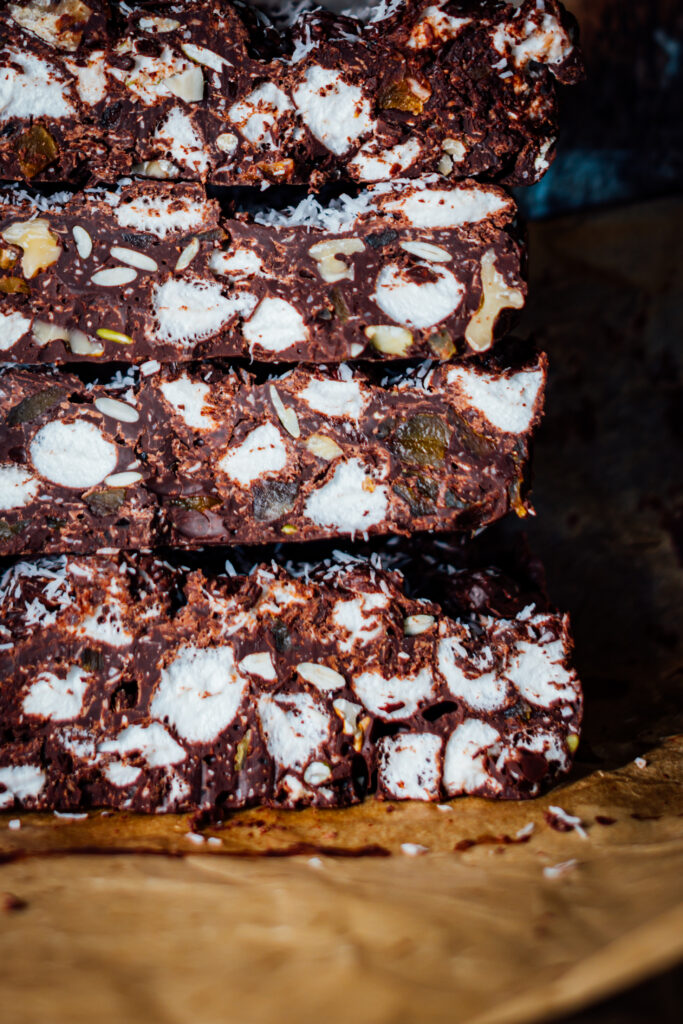
Using 70% dark chocolate gives these bars structure, bitterness, and depth. Dark chocolate is rich in polyphenols, the compounds responsible for its bitter, complex flavor. That slight bitterness is essential because it keeps the bars from tasting flat or overly sweet, makes the fruit taste juicier and brighter, and allows the sugar in the marshmallows to feel balanced instead of cloying.
The small amount of butter added during melting acts as a fat emulsifier. It softens the final snap of the chocolate so the bars stay sliceable straight from the fridge rather than shattering.
2. Marshmallows: Sweetness and Structure
Marshmallows are mostly sugar stabilized with gelatin and air. When folded into warm chocolate, they add direct sweetness without adding more fat, and their springy texture creates an elastic contrast against the firm chocolate. Once chilled, the marshmallows set into soft pockets that interrupt the dense chocolate, making each bite feel lighter than it actually is.
3. Why Dried Fruit Tastes Brighter Than Fresh
The dried apricots and pineapple bring acidity and concentrated fruit sugars. Drying removes water but leaves behind organic acids that sharpen flavor, natural sugars that are now more concentrated, and aromatic compounds that read as richer and more tropical. The pineapple adds a sharp, tangy spike while the apricot brings rounder, honeyed notes. Together, they counteract both the bitterness of the chocolate and the richness of the fat.
4. Nuts and Seeds: The Crunch Equation
The walnuts and pepitas deliver what I think of as delayed-texture pleasure. They resist the teeth just enough to create a second wave of sensation after the chocolate melts. Walnuts contribute a slight bitterness and fat that amplifies the chocolate’s flavor. Pepitas bring a clean, green nuttiness and a sharper crunch. This interplay is what keeps the bars from feeling monotonous.
5. Coconut’s Aromatic Role
Unsweetened coconut plays a quiet but crucial role. Coconut is rich in lactones, aromatic compounds that read as creamy and tropical even without added sugar. A small amount folded into the bars reinforces the fruit notes, while the sprinkle on top adds a dry, toasty aroma right before the chocolate hits your tongue.
6. Why Chilling Changes Everything
Refrigeration is not just about setting the bars. As the chocolate crystallizes, it forms a more stable fat network that sharpens the snap, locks mix-ins in place, and slows melting on the tongue so flavors release in stages instead of all at once. These bars taste more complex straight from the fridge than they do at room temperature.
The Full Picture
These rocky road bars succeed because they balance five sensory axes at once: bitter from the dark chocolate, sweet from the marshmallows and fruit, acidic from the pineapple and apricot, fatty from the butter and nuts, and a constant alternation between crunch and give. You always want one more bite because each bite resets your palate in a slightly different way.
No baking required. No precision needed. No wrong way to cut them.
The Full Recipe
The complete rocky road bars recipe, with detailed instructions and all my cook’s notes, is available in my paid newsletter, The Flavor Files. Paid subscribers get a new recipe every week alongside the flavor science behind it.
Subscribe here to access the full recipe. Your first issue arrives immediately.
Complete Your Table
If you enjoyed the flavor science here, these posts go deeper into chocolate, texture, and no-bake technique:
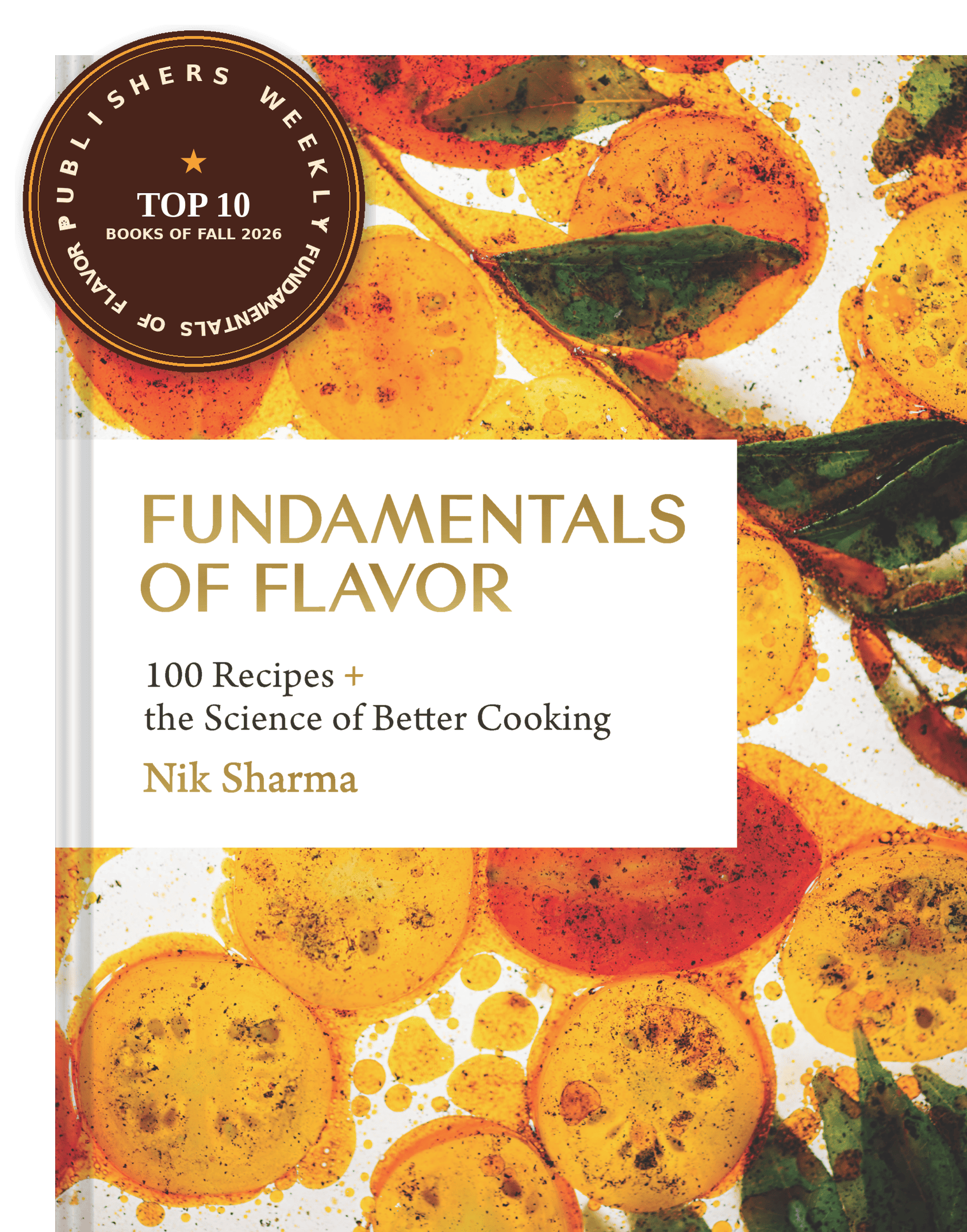
- The Flavor Equation: The book that started it all. If the polyphenol and lactone science here resonated, this is where to go next.
- Aloo Gobi: A completely different dish, but the same principle applies: contrast between textures is what makes food satisfying.
- Homemade Naan: For when you want to balance a rich dessert spread with something warm and simple.
- Kachumber Salad: If you’re building a dinner spread that ends with these bars, the acid and crunch here sets the table perfectly.
FAQ
What chocolate should I use for rocky road bars? 70% dark chocolate gives the best result. It has enough bitterness to keep the bars from tasting flat and enough cocoa butter to set to a clean, sliceable texture after chilling. Anything lower in cacao percentage will produce sweeter, softer bars.
Can I use mini marshmallows instead of large ones? Yes. Mini marshmallows can go in as-is. If using large marshmallows, halve them so the pockets of chew distribute more evenly through the slab.
Can I substitute the dried fruit? The dried apricot and pineapple are doing specific flavor work here, providing acidity and concentrated sweetness to cut through the chocolate’s richness. Dried cherries or dried mango are good substitutes. Avoid fruit that is very sweet without much acidity, like raisins or dates, as the bars will taste heavy.
Why do the bars need to chill for a full hour? The chocolate needs time to crystallize into a stable fat network. Under-chilled bars will be soft, sticky, and won’t cut cleanly. An hour in the refrigerator is the minimum. Overnight is better.
Are these rocky road bars gluten-free? The base recipe is gluten-free, but check your chocolate and marshmallow labels, as some brands include gluten-containing additives.
How long do rocky road bars keep? Stored in an airtight container in the refrigerator, they keep well for up to 2 weeks.
Can I freeze them? Yes. Wrap the bars tightly and freeze for up to 2 months. Thaw in the refrigerator before serving.