

Za’atar Onion Rings with Buttermilk Caraway Dipping Sauce: Flavor, Science & Crunch
There is a very specific kind of joy in biting into a perfectly fried onion ring. The shatter of the crust, the soft-sweet onion beneath, the contrast of temperatures when you dip it into something cold and herby. These za’atar onion rings deliver all of that, and then some.
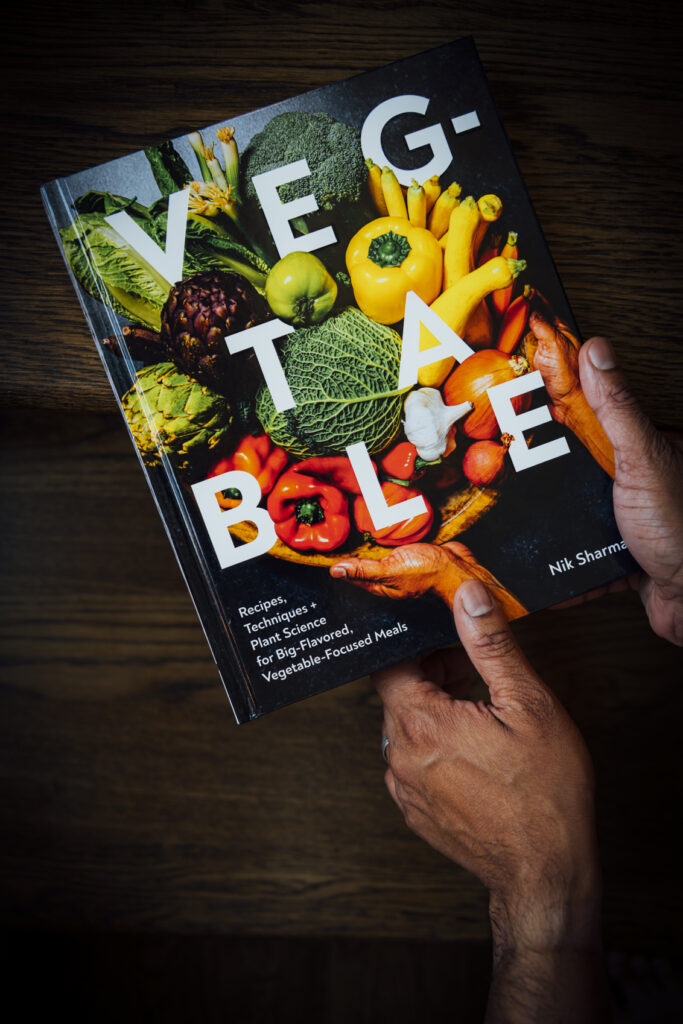
This recipe comes from my cookbook Veg-Table, where I explore the full flavor potential of vegetables through the lens of science. The combination here is deceptively simple: a double-dredge batter seasoned with turmeric, fried until golden, then tossed in za’atar while still hot. The buttermilk caraway dipping sauce served alongside is kept cold on purpose. That temperature contrast is not a stylistic choice — it is a sensory principle, and it makes every bite more satisfying.
What Is Za’atar?
Za’atar is a Middle Eastern spice blend built on dried thyme, sumac, sesame seeds, and salt. The sumac contributes a citrusy tartness through its malic and tartaric acid content. The sesame seeds add fat and nuttiness. Together, they give these onion rings a layered aromatic quality that plain seasoned flour cannot replicate.
Look for za’atar at Middle Eastern grocery stores, well-stocked supermarkets, or online. You can also make your own — the ratios are forgiving and the results are worth it.
The Science Behind the Perfect Crunch of These Za’atar Onion Rings
Why salt the onions first?
Salting the onion rings and letting them rest for one hour is the first critical step. Salt draws moisture from the onion cells through osmosis, softening the pectin in the cell walls just enough without turning them mushy. The result is a drier surface that the batter adheres to more effectively — and better adhesion means the crust stays on during frying instead of sliding off into the oil.
Do not salt for more than one hour. Extended salting breaks down the texture too far.
Why does the double-dredge matter?
The coating process here — flour, then buttermilk, then flour again — builds a thicker, more textured crust than a single dip ever could. Each pass creates a new bonding layer. The first flour coat gives the buttermilk something to grip. The buttermilk then acts as a binder, and its acidity slightly softens the outer starch layer so the second flour coat adheres more tightly. What comes out of the oil is a crust with real structure.
What does cornstarch do in the batter?
The batter uses both all-purpose flour and cornstarch. Cornstarch absorbs less oil than flour during frying and gelatinizes at a higher temperature, which means the crust sets faster and stays crisper longer. It is the difference between onion rings that hold their crunch and onion rings that go soft within minutes of leaving the oil.
Why does turmeric go in the batter?
Beyond color, turmeric contains curcumin, a fat-soluble compound that disperses through the oil in the batter, distributing its earthy warmth evenly across the crust. It also contributes to the golden color of the finished rings, which deepens as the Maillard reaction — the browning reaction between amino acids and reducing sugars — accelerates in the hot oil.
Why add za’atar after frying, not before?
Za’atar goes on the onion rings immediately after they come out of the oil, while they are still hot. This timing matters. The volatile aroma compounds in the dried thyme and the acidity in the sumac are heat-sensitive — adding them to the batter before frying would burn off much of what makes za’atar distinctive. Tossing while hot means the residual surface oil helps the blend adhere while preserving its brightness.
The Buttermilk Caraway Dipping Sauce
The sauce for the za’atar onion rings is built in a blender: buttermilk or kefir, fresh cilantro, dill, jalapeño, garlic, and whole caraway seeds, blended until smooth and kept cold until serving.
Caraway seeds carry carvone, a terpene compound that gives them their characteristic mild anise-like warmth. Blending the seeds whole releases those volatile compounds into the buttermilk, and the fat in the buttermilk carries them across your palate more efficiently than water-based liquids would. The result is a sauce that tastes herbaceous and cooling simultaneously; exactly what the hot, crispy rings need.
Buttermilk and kefir are interchangeable here. Both are cultured dairy products with similar acidity and fat content. If using kefir, choose a brand that isn’t especially thick, such as Lifeway or Green Valley Creamery.
The sauce can be made a day ahead and refrigerated in an airtight container for up to three days. Making it in advance actually improves flavor — this way the caraway has time to fully infuse.
Tips for the Crispiest Za’atar Onion Rings
For extra crunch, whisk 2 tablespoons of fine semolina into the flour mixture. The coarser particle size adds another layer of texture that becomes especially noticeable in the first bite.
Use tongs or two forks for dredging and not your hands. Hands transfer warmth to the batter, which starts activating the starch prematurely, and uneven coating leads to uneven crisping.
Fry in batches and let the oil return to 350°F (180°C) between each one. Adding too many rings at once drops the oil temperature, which slows moisture evaporation and allows the batter to absorb more oil before it sets — the opposite of what you want.
Can You Make These Za’atar Onion Rings in an Air Fryer?
Yes. Follow the same salting and double-dredge steps exactly for the za’atar onion rings. Before air frying, spray the coated rings generously with neutral oil on both sides — this step replaces the submersion in hot oil and is essential for browning. Air fry in a single layer at 400°F (200°C) for 10 to 12 minutes, flipping halfway through. Keep finished batches warm in a 250°F (120°C) oven on a wire rack while the rest cook. The semolina addition is especially worth doing in the air fryer version, where every advantage in crust structure counts.
Serving Suggestions
Serve these za’atar onion rings as a starter with cold ginger ale or beer. In Veg-Table, I pair them stuffed into a bun with the Masala Veggie Burgers (page 330) and this same buttermilk caraway sauce — a combination that works particularly well because the acidity in the sauce cuts through the richness of both the fried batter and the burger.
More Recipes You Might Enjoy
Matar Paneer — another vegetarian showpiece with a spiced sauce. Readers who loved the science behind blooming spices in the onion rings will find the same thinking at work here.
Chana Masala Pumpkin Pots — Roasted sugar pie pumpkins filled with deeply spiced chickpeas, served over forbidden rice. The tomato paste browning technique here is worth understanding — it is the same Maillard chemistry that gives the za’atar onion rings their color and depth.
Chai-Spiced Jaggery Candied Sweet Potatoes — spice-forward, vegetable-centered, and likely to appeal to the same audience. The jaggery angle gives you another ingredient education moment, consistent with your brand voice.
This recipe is from Veg-Table: Recipes, Techniques + Plant Science for Big Flavored, Vegetable-Focused Meals by Nik Sharma, published by Chronicle Books.

Golden Za’atar Onion Rings with Buttermilk Caraway Dipping Sauce
Sample the Golden Za’atar Onion Rings from my new cookbook, Veg-Table
I love fried food and herby dips, but there’s a more profound message embedded here: The combination of hot and cold temperatures is a joyful experience. The concept of contrasting temperatures works elegantly when hot, crispy onion rings kissed with turmeric and za’atar are dunked into the cold herby buttermilk dipping sauce. This makes a worthy appetizer; these rings are also great stuffed into a bun with the Masala Veggie Burgers (page 330 of Veg-Table) and the buttermilk caraway sauce. Serve with chilled ginger ale or beer.
- Yield: 4 to 6
Ingredients
For the Onion Rings
2 extra-large white or yellow onions, sliced into ½ in [13 mm] thick rings
2 cups [280 g] all-purpose flour
½ cup [70 g] cornstarch
1 tsp ground black pepper
1 tsp fine sea salt
½ tsp ground turmeric
3 to 4 cups [710 to 945 ml] neutral oil with a high smoke point, such as grapeseed
2 Tbsp za’atar, homemade or store-bought
For the Buttermilk Caraway Sauce
1 cup [240 ml] plain unsweetened buttermilk or kefir
½ cup [20 g] chopped cilantro
½ cup [5 g] chopped dill
2 garlic cloves, roughly chopped
1 green chilli such as jalapeño, stemmed and roughly chopped
1 tsp whole caraway seeds
Instructions
- To prepare the onion rings, toss the onion rings , separated, with 1 tsp fine sea salt in a large mixing bowl. Cover and let sit for 1 hour at room temperature.
- Meanwhile, prepare the buttermilk caraway dipping sauce. In a blender or a food processor, blend the buttermilk or kefir; cilantro, dill, garlic, green chilli, and caraway until smooth, 30 seconds to 1 minute. Taste and season with fine sea salt. Transfer to a small serving bowl, cover, and keep chilled until ready to serve. The sauce can be made a day ahead of time and stored in an airtight container in the refrigerator until ready to serve, up to 3 days.
- Put the onions into a fine mesh sieve, let the liquid run off, and rinse with cold water. Pat dry with a lint-free kitchen towel or paper towels.
- When ready to fry, line a baking sheet with a layer of absorbent paper towels or a wire rack.
- In a large mixing bowl, whisk together the all-purpose flour, cornstarch, ground black pepper, 1 tsp fine sea salt, and ground turmeric.
- In a second large bowl, whisk until combined buttermilk or kefir, ½ tsp fine sea salt, and turmeric.
- Work with a quarter of the onions at a time to avoid overcrowding. Set up an assembly line with the onions, your two bowls of coating mixtures, and a large unlined baking sheet or tray. Using a pair of kitchen tongs or two forks, add the onions to the flour mixture, toss to coat well, and tap the onion rings against the side of the bowl to remove excess flour. Dip the rings in the buttermilk mixture, toss to coat well, then tap them on the side of the bowl to get rid of any excess liquid. Return them to the bowl with the flour, toss to coat well, and again tap to remove excess flour. Place the coated rings on the baking sheet.
- In a large, deep frying pan, warm over medium heat the oil. Fry the onions in the hot oil, stirring to separate the rings, until they are golden brown and crisp, 6 to 7 minutes. Transfer the onions to the prepared baking sheet. In batches, fry the remaining onions, letting the temperature return to 350°F [180°C] before adding the next batch. Toss the hot, fried onion rings with za’atar. Serve immediately with the buttermilk caraway dipping sauce on the side.
Notes
- Salting the onions helps draw out their moisture through osmosis, softening the cells’ tough pectin just enough (do not soak for more than 1 hour), creating a crisper texture and more uniform taste.
- Avoid dredging the onions using your hands; it is messier, it leads to an uneven coating on the fried onions, and you might end up with not enough dredging mixture (most of it ends up sticking to your fingers). Two forks or a pair of kitchen tongs are your friends here.
- For an extra-crispy texture, whisk 2 Tbsp fine semolina into the flour.
- Buttermilk and kefir are interchangeable in this recipe; they are both tangy and creamy, and help bind the breading mixture to the onions. If using kefir, opt for a brand that isn’t particularly thick (Lifeway and Green Valley Creamery are two of my favorites).

4 Responses
Have you tried this recipe in an air fryer? Thanks for any feedback!
I haven’t but try this after coating, give the rings a good spray of neutral oil (avocado or grapeseed in a pump sprayer) on both sides. This is the most important step — it’s what gives you the golden color and crunch that the oil bath otherwise provides.Temperature & time. Air fry at 400°F (200°C) for 10–12 minutes.
These sound so good but I try not to fry with lots of oil. I wonder like the woman above if the air fryer or oven baking them would work. If I give it a try, I’ll let you know.
Try the method I listed in response to the comment and let us know if the air fryer worked for you! I’d love to know.