

This peri peri chicken roast starts with a marinade I first fell for on walks to Nando’s when we lived in Washington, D.C. This version leans into that same idea with a homemade peri peri dressing built from smoked sweet paprika and cayenne, and a full sheet pan of potatoes and cherry tomatoes that roast underneath the bird and soak up every drop of the drippings.
Peri peri chicken traces back to Mozambique, where African bird’s eye chilies (piri piri) met Portuguese colonial cooking and eventually became a full-blown flavor tradition across Southern Africa and Portugal. My version doesn’t chase an exact replica — it uses what’s easy to find in a US grocery store while keeping the vinegar-forward heat and smoky red color that make the original so recognizable.
Why This Peri Peri Chicken Recipe Works
- Butterflying the chicken (spatchcocking) removes the spine so the bird lies flat, which means the breast and thighs cook through at the same rate instead of drying out the breast while you wait on the legs.
- A two-part marinade and dressing from a single blended base means you’re not making two separate sauces — half goes on the raw chicken to season it deeply, half stays fresh and bright to spoon on right before serving.
- Boiling the potatoes before roasting with a pinch of baking soda breaks down their surface starch, which is what gives them that craggy, deeply browned exterior once they hit the oven.
- Roasting the chicken on a rack over the vegetables lets the rendered fat and juices baste the potatoes and tomatoes from above, so the vegetables end up doing double duty as both side dish and flavor base.
What Is Peri Peri Chicken?
Peri peri (also spelled piri piri) refers to both the African bird’s eye chili and the sauce built around it. Portuguese traders brought the chili back from their colonies in Mozambique and Angola, and the sauce that developed — vinegar, garlic, paprika, chili — became a staple of Portuguese and later South African cooking. Nando’s popularized a version of it globally starting in South Africa in the 1980s, which is likely where most Americans first encountered the flavor. My take swaps in smoked sweet paprika alongside cayenne for accessibility, but the marinade still carries the vinegar tang and chili heat that define the dish.
Flavor Science: Why the Marinade Works
The red wine vinegar in the per peri marinade does two jobs. First, its acidity partially denatures the proteins at the surface of the chicken, which helps the meat hold onto moisture during the long roast. Second, that same acid extracts and blooms the fat-soluble color compounds in the smoked paprika, which is part of why the marinade turns such a vivid red once blended.
Smoked paprika itself gets its color and aroma from capsanthin and other carotenoid pigments concentrated during the drying and smoking process. Because these pigments are fat-soluble, blending the paprika into an oil-based marinade (rather than a water-based one) pulls more color and flavor out of the spice than a plain vinegar solution would on its own.
The optional MSG in the marinade supplies free glutamate, which binds to umami receptors on the tongue and amplifies savoriness without adding a specific “flavor” of its own; it works alongside the natural glutamates already present in the garlic and roasted vegetables rather than replacing them.
Print
Peri Peri Chicken Roast
When we lived in Washington, D.C., I loved walking over to Nando’s Peri Peri for the famous chicken. This recipe makes enough dressing for four servings. Peri peri or piri piri chillies originated in Mozambique, and eventually, the dish made its way to Portugal via colonization; my version uses a mixture of smoked sweet paprika and cayenne to replicate that flavor and bright, vibrant red color.
If you prefer more dressing, I recommend doubling the marinade/dressing ingredients and saving more for the dressing. I cook the potatoes twice because they turn creamier from the boiling step and, when roasted, turn out extra special. If you’re short on time, skip the boiling step. I love serving this with mashed potatoes (Recipe in The Flavor Equation cookbook) and kachumber salad.
- Yield: 4
Ingredients
For the Marinade + Dressing
1/2 cup/120 ml extra-virgin olive oil
1/3 cup/80 ml red wine vinegar plus extra if needed
4 garlic cloves
2 Tbsp onion powder
1 1/2 Tbsp ground smoked sweet paprika
1 Tbsp dried thyme
1 /2 tsp ground cayenne or jalapeno
1/8 tsp MSG (optional)
One 3 1/2 to 4 lb/1.6 to 1.8 kg roasting chicken
2 Tbsp extra-virgin olive oil
1.5 lb/680 g new potatoes, halved
1/4 tsp baking soda
12 oz/340 g cherry tomatoes
Instructions
- Place the olive oil, vinegar, garlic, onion powder, paprika, thyme, cayenne, and MSG in a blender. Pulse until combined. Divide the mixture into half. Reserve one for the marinade and the other for the dressing. Add 2 tsp salt to the marinade. Taste and season the dressing with salt as needed. This dressing can be made a day ahead in advance and stored in the refrigerator in an airtight container.
- Place the chicken on a cutting board, breastside down. Pat dry with paper towels and cut along the backbone using a pair of sharp kitchen shears or a knife. Open the chicken, flip it over, and press it firmly to flatten. At this point, you can cut out the spine or leave it. Separate the skin from the bird’s flesh with your fingers to create a pocket. Make deep gashes with a knife across the thighs and breasts.
- Place the chicken on a large plate or tray. Apply the marinade over the chicken and into the gashes. Refrigerate the chicken for an hour, preferably 6 hrs. If you don’t have time, skip marination (I do this in the video).
- Preheat the oven to 400F/200C.
- While the chicken marinates, cook the potatoes. In a large saucepan over medium-high heat, bring 1 L/1000 ml of water to a rolling boil. Stir in 1 tsp salt and the baking soda. Add the potatoes, reduce the heat to medium-low, and cook until they turn fork-tender, 8 to 10 minutes. Drain the potatoes in a large roasting pan or deep baking tray (at least 3 in/7.5cm deep).
- Add the tomatoes to the pan. Drizzle 1 Tbsp olive oil over the vegetables. Season lightly with salt.
- Place a large wire rack over the pan. Place the marinated chicken breast-side on top of the rack. Drizzle any juices left on the plate over the chicken. Place the pan in the oven. Add 1 cup/240ml water to the pan. Cook the chicken until the internal temperature reaches 165F/74C, 1 to 1 hour and 20 minutes. After 20 minutes of cooking, baste the chicken with the liquids from the pan every 15 minutes. The potatoes should be golden brown and the tomatoes split. Remove the pan from the oven, cover loosely with foil, and let sit for 10 minutes before serving.
- Transfer the chicken to a serving platter with the vegetables. Drizzle any liquids from the pan over the chicken and vegetables. Serve with the dressing on the side. Leftovers can be stored for up to 4 days in an airtight container in the refrigerator.
Notes
- The MSG is optional, but it amps up the umami level.
- I prefer lightly seasoning the vegetables with salt because the marinade will drip over them and season them during cooking.
- Try stacking as many of the potatoes and tomatoes as possible under the chicken so that they can absorb the flavors.
- Adjust the amount of cayenne according to your heat preference.

From the book
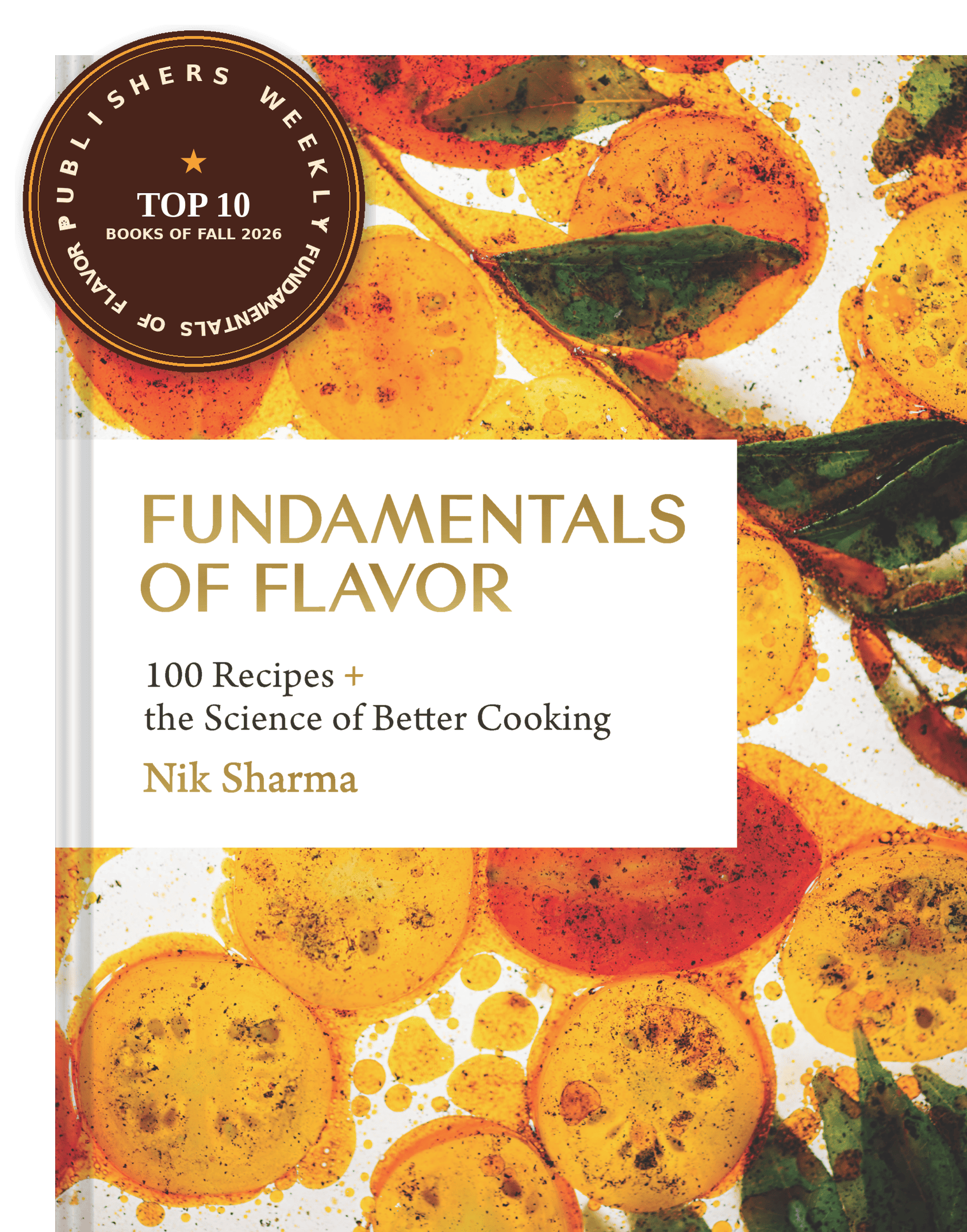
Fundamentals of Flavor: Preorder Now
If you’ve cooked through The Flavor Equation and want to go deeper, my next book arrives September 22, 2026.
Where The Flavor Equation explored the science behind specific dishes, Fundamentals of Flavor goes further: 100 recipes organized around the elemental building blocks of flavor, with the techniques and principles behind each one explained in full. It’s a book about learning to cook, not just following instructions.
Preorder Fundamentals of Flavor →100 recipes · Science-backed techniques · September 22, 2026
A Few Notes on Key Ingredients in This Peri Peri Roast
Smoked sweet paprika: Not the same as regular or hot paprika — the smoking process adds a depth that plain paprika can’t replicate. Don’t substitute here if you can help it.
MSG: Optional but recommended. It’s a shortcut to the umami depth that a longer-marinated or slow-cooked peri peri sauce would develop naturally.
New potatoes: Their thinner skins and lower starch content compared to russets means they hold their shape through both the boil and the roast.
Make-Ahead, Storage & Reheating
The dressing (the unmarinated half of the sauce) for the peri peri chicken roast can be made up to a day ahead and stored in an airtight container in the refrigerator. The chicken can be marinated up to 6 hours ahead, though even a short marination will still give good flavor. Leftovers keep for up to 4 days in an airtight container in the refrigerator.
What to Serve with Peri Peri Chicken Roast
This peri peri chicken roast pairs naturally with a starchy side to soak up the pan juices.
- Salad: A bright, acidic kachumber salad balances the richness of the roasted chicken and vegetables.
- Starch: Mashed potatoes are a natural pairing here (recipe in The Flavor Equation).
Complete Your Meal
Why does acid come before roasting?
Acid partially denatures surface proteins ahead of time, helping the chicken hold onto moisture through a long roast.

One Response
This recipe was 10 out of 10. The chicken was juicy and delicious with perfect crispy skin and the potatoes were the best home roasted potatoes I ever made.
Some changes I made which worked well:
I didn’t have tomatoes so I had a tray of onions, carrots and red peppers with a second tray of just potatoes. The vegetables were fantastic,
I added an extra clove of garlic, a pinch of oregano and a pinch of brown sugar to the marinade to adjust for my own taste.