
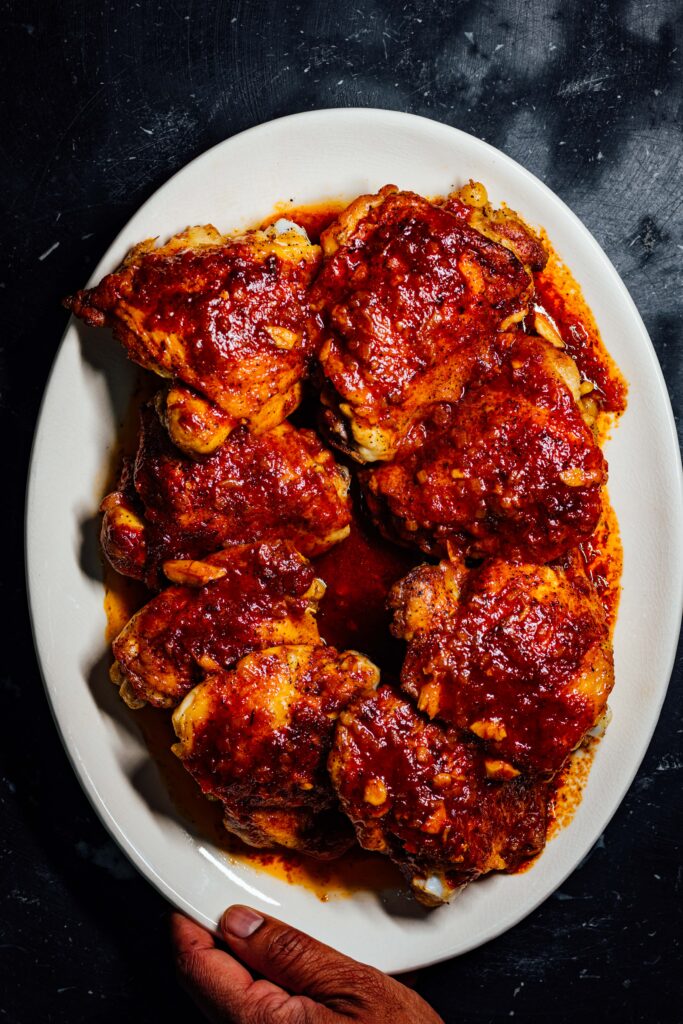
A French Classic with a Tangy Twist: Poulet Sauté au Vinaigre
This french vinegar chicken, known in France as Poulet Sauté au Vinaigre, is one of the most deceptively simple dishes in the French repertoire. Bone-in chicken simmers in a bright, tangy sauce built on vinegar, wine, garlic, and tomato. The result is something extraordinary: a sauce that is simultaneously bold and refined, with the kind of depth that makes you wonder how so few ingredients can deliver so much flavor.
The dish is closely associated with Fernand Point, widely regarded as the father of modern French cuisine, and later popularized for American home cooks by Julia Child. What makes it last is not its association with those names but its fundamental soundness as a recipe. It works because the science works.
The full recipe and the detailed food science behind it are available exclusively in The Flavor Files, my paid newsletter. Subscribe here to unlock the complete recipe and technique notes.
French Vinegar Chicken: The Science, History & Flavor of a French Classic
Why This French Vinegar Chicken Recipe Works
The technique at the heart of Poulet Sauté au Vinaigre is not complicated, but it rewards precision. A few principles explain why the dish performs so reliably:
Acidity tenderizes. Vinegar is primarily acetic acid. When it comes into contact with collagen in bone-in chicken, the acid weakens the protein bonds and helps the meat yield a more tender texture during the braise. This is not dramatic (vinegar is not a marinade in this application, it cooks off significantly), but it contributes to the dish’s characteristic tenderness.
Reduction concentrates and mellows the acidity. One of the most important things that happens during cooking is that the sharp, raw edge of the vinegar transforms. As the liquid reduces, volatile acetic acid molecules escape with the steam and the remaining sauce takes on a rounder, more nuanced flavor. What starts aggressive finishes bright.
Tomato adds body and balance. The tomato here is not decorative. It contributes pectin, which helps the sauce achieve its light coating texture, and its natural sugars balance the acidity. The combination of reduced vinegar, wine, and tomato creates a sauce that clings to the chicken without being heavy.
Bone-in chicken builds depth. As in Butter Chicken and other braised chicken dishes, bone-in pieces release gelatin as they cook. That gelatin enriches the braising liquid and gives the finished sauce a slightly silkier body than boneless pieces would produce.
What Is Poulet Sauté au Vinaigre?
Poulet Sauté au Vinaigre translates literally to “chicken sautéed in vinegar.” It belongs to the tradition of French country cooking, specifically the cuisine of Lyon, where the combination of vinegar and chicken was a practical solution to the constraints of peasant cooking. Good wine vinegar was always available, and the acidity helped extend the shelf life of prepared dishes.
Fernand Point served a version at his restaurant La Pyramide in Vienne, near Lyon, and it became one of his signature preparations. Julia Child introduced it to American audiences, drawing attention both to its simplicity and to the way it exemplified the French approach: a small number of carefully chosen ingredients, each one doing real work.
This is not a saucy braise in the style of coq au vin. The liquid reduces to a glossy, concentrated sauce. The chicken should be fully cooked and deeply flavored, with the skin crisped during the initial sear contributing textural contrast against the braised meat.
The Role of Vinegar in French Cooking
Vinegar has been central to French cuisine for centuries, used not just as a condiment but as a cooking acid. Unlike lemon juice, which is added most often at the end of cooking for brightness, wine vinegar is integrated early in French braises and sauces, where its acidity is tempered by heat and time.
The best vinegar for this dish is a good red wine vinegar with real depth, not the harshest, cheapest bottle. The character of the vinegar has an audible presence in the final sauce. Tarragon vinegar, if you can find it, adds a herbal dimension that is very much in keeping with the dish’s Lyon origins.
Ingredients That Define This French Vinegar Chicken Dish
Bone-in chicken pieces: Thighs and drumsticks hold up best in a braise. The bones contribute gelatin to the sauce and the skin, when properly seared, adds a layer of rendered fat and browning that drives flavor.
Red wine vinegar: The non-negotiable acid. Use a vinegar you would taste on its own. The quality matters here in a way it might not in a vinaigrette that’s competing with other flavors.
White wine: Dry white wine deglazes the pan after searing and carries aromatic compounds from the fond into the sauce. It also introduces a different type of acidity, softer than the vinegar.
Garlic: Used generously in the traditional preparation, either whole cloves that soften and mellow over the braise or minced into the sauce. Both approaches work. Whole cloves produce a sweeter, more concentrated garlic flavor.
Tomato: Often tomato paste or crushed tomatoes. Tomato paste, browned briefly before the liquid goes in, adds umami and a richer base. This is the same principle at work in the Butter Chicken recipe, where tomato paste over fresh tomatoes produces a deeper, more concentrated sauce.
Herbs: Thyme, bay leaf, and sometimes tarragon are the classic choices. Tarragon, with its anise-like brightness, has a particular affinity for chicken and vinegar.
Make-Ahead and Storage
Make-ahead: The French vinegar chicken can be seared and the sauce built a day in advance. Store them together in an airtight container in the refrigerator. The flavors improve overnight as the aromatics continue to infuse. Reheat gently over low heat.
Leftovers: Store in an airtight container in the refrigerator for up to 3 days. The sauce will thicken when cold. Add a small splash of water or chicken stock when reheating to loosen it.
Freezing: The braised chicken freezes well for up to 2 months. Thaw overnight in the refrigerator and reheat gently. Avoid boiling, which can cause the sauce to break.
Get the Full Recipe in The Flavor Files
The complete step-by-step recipe for Poulet Sauté au Vinaigre, including exact measurements, timing, and technique notes, is available exclusively in The Flavor Files.
Subscribe to unlock the full French Vinegar Chicken recipe.
Frequently Asked Questions
What vinegar should I use for French vinegar chicken? A good-quality red wine vinegar is the traditional choice. The vinegar’s flavor is present in the finished sauce, so quality matters. Tarragon vinegar, if you can find it, is particularly well-suited to this dish. Avoid balsamic, which is too sweet, and distilled white vinegar, which is too sharp.
Can I use boneless chicken thighs? You can, but the dish will be noticeably different. Bone-in pieces release gelatin as they braise, which enriches the sauce’s body and adds depth. If you use boneless, reduce the braising time to avoid overcooking.
Does the vinegar make the sauce sour? Not if you let it reduce properly. The sharp acidity of raw vinegar mellows significantly during cooking as volatile acids escape with the steam. The finished sauce should be bright and tangy, not harsh.
What does Poulet Sauté au Vinaigre mean? It translates from French as “chicken sautéed in vinegar.” Poulet is chicken, sauté refers to the initial high-heat pan sear, and au vinaigre means “in vinegar” or “with vinegar.”
Is this the same as Julia Child’s vinegar chicken? Julia Child’s version in From Julia Child’s Kitchen is closely related and draws from the same Lyon tradition. The core technique is identical: sear the chicken, deglaze with vinegar, braise with wine and tomato, and reduce to a concentrated sauce.
Complete Your Table
If you enjoyed learning about the science behind French Vinegar Chicken, here are a few more dishes from my European collection:
- Saffron Chicken Fricassée: A French fricassée technique with an Indian spice inflection, using saffron and Aleppo pepper to build a warm, layered sauce.
- Peach Tarte Tatin: The classic French upside-down technique applied to ripe summer peaches, with a naturally occurring peach glaze.
- Peach and Thai Basil Clafoutis: A simple French baked custard made with seasonal stone fruit and the anise-bright lift of Thai basil.
- Butter Chicken: A different tradition, but the same principle at work: marinated and charred chicken folded into a deeply reduced, spice-forward sauce.