
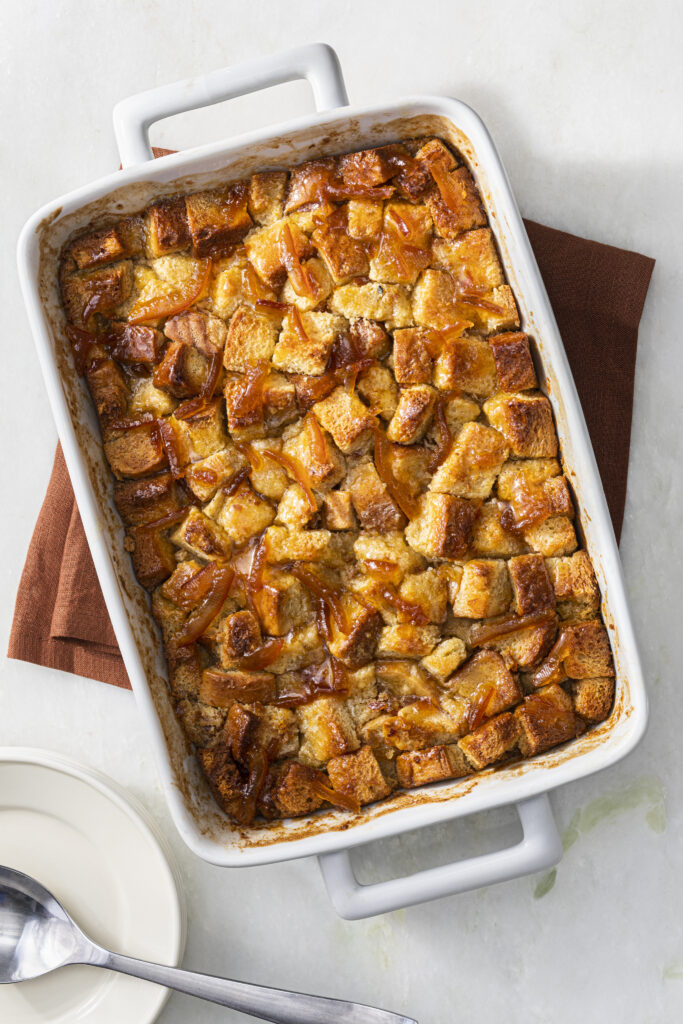
CUSTARDY ORANGE BREAD PUDDING WITH BRIOCHE: A WINTER DESSERT THAT SHINES
If there is a dessert that embodies comfort, it is bread pudding. Soft, custardy, warm, and fragrant with winter spices, it is one of those dishes that manages to feel nostalgic and indulgent at the same time. This Orange Brioche Bread Puddingtakes all of those classic cues and brightens them with layers of citrus: bold orange marmalade, fresh orange zest, and candied orange. The result is a pudding that’s rich and velvety, but never heavy, and filled with a multidimensional citrus flavor that cuts through the sweetness in the best way.
I developed this recipe with the team at America’s Test Kitchen, and you can find the full recipe on their site. Below, I’m sharing the story, the technique, and the science behind why this bread pudding works so beautifully.
Get the full recipe for the Orange Marmalade Bread Pudding here
What Makes This Orange Marmalade Bread Pudding Special
1. Using Brioche for the Perfect Custardy Texture
Brioche is naturally rich, buttery, and tender, which makes it ideal for soaking up custard without falling apart. While bread pudding has historically been a way to use up stale bread, using fresh brioche and drying it in the oven offers better control. The bread dries evenly, and the drier it is, the more efficiently it absorbs the custard mixture—leading to a pudding that’s creamy inside but never soggy.
Drying the cubes at 325°F [160°C] gives them structure while preparing them to drink up all that orange-scented custard.
2. Building Deep Orange Flavor
This pudding layers its citrus flavor from multiple sources:
- Orange marmalade for sweetness and bitters
- Fresh orange zest for bright aromatics
- Candied orange for texture and concentrated citrus notes
Using bitter orange marmalade provides a tempered sweetness, balancing the richness of the cream and milk. But you can absolutely swap in your favorite marmalade—Seville, blood orange, or even a mixed citrus blend all work well.
3. The Science of Custard Absorption
A bread pudding rises or falls on how well the bread absorbs the custard. Letting the bread soak for at least one hour, and ideally overnight, ensures:
- A perfectly even texture throughout
- No dry pockets in the center
- More stable custard setting as it bakes
The mixture of heavy cream, whole milk, eggs, vanilla, and allspice creates a fragrant, silky custard that bakes up tender but firm enough to slice.
4. Gentle Baking for a Tender Pudding
Bread pudding should never curdle or scramble. Baking at 325°F gives the custard ample time to set gradually. The pudding is done when it reaches 170°F in the center—this is the sweet spot where the custard is set yet still creamy.
5. A Glossy Orange Finish
Just before serving, warm orange marmalade is brushed over the top. This step:
- Reinforces the citrus aroma
- Adds a glossy shine
- Provides a subtle sticky-sweet glaze that ties everything together
It’s a simple finish, but it transforms this orange marmalade pudding from rustic to elegant.
Ingredient Notes and Substitutions
- Brioche: Pre-sliced brioche makes prep easy, but bakery brioche works beautifully too. Challah is another great option but I don’t use it here as it doesn’t get as crusty as brioche.
- Vanilla or Cardamom: Feel free to use vanilla extract instead of a vanilla bean. Use 1 tablespoon for full flavor. Use 1 teaspoon freshly ground green cardamom.
- Candied Orange: Optional, but highly recommended if you enjoy texture and bursts of citrus.
- Marmalade: Choose one you enjoy eating by the spoon. Bitter marmalade gives the best balance. Bon Maman’s marmalade is a good option too.
Serving Ideas
Serve this Bread Pudding with Orange Marmalade:
- Warm with softly whipped cream
- With a scoop of vanilla ice cream
- Alongside hot tea or coffee
- With a drizzle of crème anglaise for extra elegance
- And of course, with extra marmalade
It’s a stunning dessert for holiday tables and cozy winter evenings.
Make It Tonight
This Custardy Orange Marmalade Bread Pudding captures everything I love about winter citrus: brightness, aroma, and balance. If you’re a fan of creamy desserts or citrus-forward baking, this one deserves a spot in your rotation.
👉 Get the full tested and perfected recipe at America’s Test Kitchen: