
One of the most frequent questions that we all ask ourselves at some point in the kitchen; “why won’t my onions caramelize?“. You’ve stood over the pan for forty-five minutes. The onions have gone soft, then gold, then a deep amber-brown. You call them caramelized. Everyone does. It’s on menus, in recipes, in the name of the dish you’re making right now.
But here’s the question I want you to sit with: were they ever actually caramelizing?
Why Won’t My Onions Caramelize, Exactly?
Caramelization, in the strict chemical sense, happens when heat breaks sugar down on its own. No protein required. For sucrose, most sources put that threshold around 320°F (160°C). Fructose caramelizes at a lower temperature than glucose or sucrose. That matters more than you’d think for onions specifically.
Here’s the part most people (and most recipes) skip. Onions don’t store their sugar mostly as sucrose, glucose, or fructose sitting around free and ready to react. Instead, they store it largely as fructans, long chains of linked fructose molecules. The onion holds them in reserve, the way a plant banks energy. For those chains to actually behave like the “sugar” we picture melting and browning in a pan, they first have to be broken apart. Chemists call that process hydrolysis, and it’s what releases free fructose.
Enzymes, Heat, and the Fructose That Gets Released When Onions Caramelize
But like most plant enzymes, it denatures at a fairly low temperature, well under boiling. Once the pan heats up, that enzyme goes quiet fast.
Some of that breakdown may already be underway before the pan is even hot. Onions carry an enzyme, fructan exohydrolase, that breaks fructans apart. Cutting or bruising the bulb can nudge it into action.
From there, heat takes over. Working alongside the onion’s naturally acidic pH, heat keeps splitting fructans apart into free fructose. Chemists call this form of fructose a reducing sugar. That just means it has a reactive carbonyl group, free to take part in browning reactions.
That reactive fructose feeds both reactions responsible for the color in your pan. There’s the Maillard reaction, where sugar reacts with amino acids. And there’s caramelization, where the sugar breaks down on its own. Both work on that same fructose, at the same time. That happens well before you’d reach the extreme heat most people assume caramelization requires.
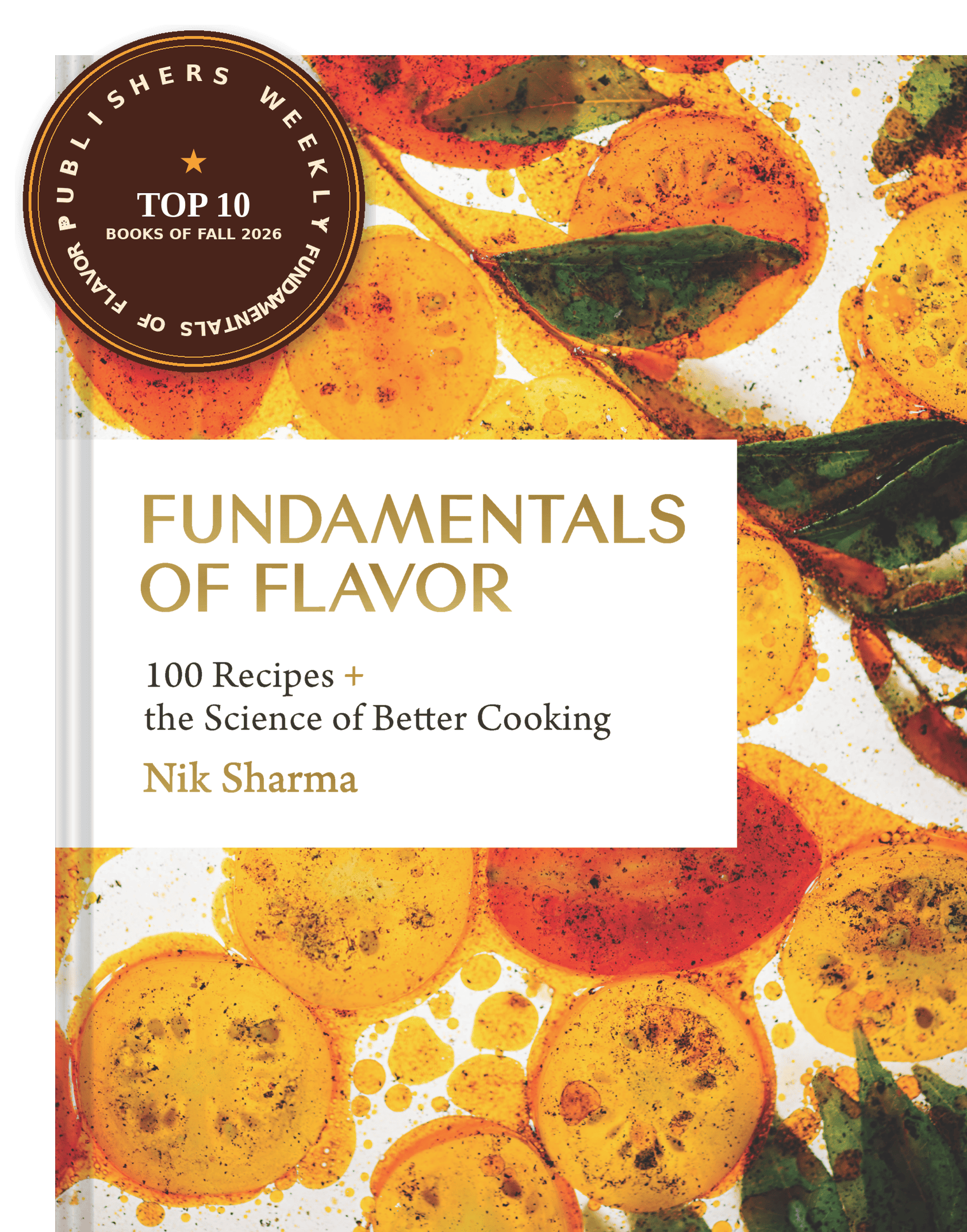
This is the kind of question that seems small until you realize how many kitchen mysteries trace back to it. That’s exactly the territory Fundamentals of Flavor covers: not more recipes, but the reasons recipes work, so you can fix them when they don’t.
Why Caramelizing Onions Take So Long
Onions are roughly 89–90% water. Most of that water has to leave the pan as steam before any browning reaction, Maillard or otherwise, can meaningfully proceed. That’s why the first fifteen to twenty minutes of “caramelizing” onions doesn’t look like browning at all. It looks like slow, wet cooking, because that’s what it is. The pan is essentially steaming the onions in their own released liquid, before it can do anything else.
This is also why turning up the heat to “speed it up” backfires. Cranking the burner doesn’t make water evaporate meaningfully faster in a way that helps you. It just scorches the onions touching the hot metal directly. Meanwhile, the rest of the pile is still sitting in liquid. The result is unevenly burnt-and-raw onions, not faster caramelization.
So Why Does This Distinction Matter?
Because it changes what you’re actually managing when things go wrong.
If you think you’re caramelizing sugar, the instinct when onions won’t brown is to add more sugar. Or crank the heat. If you understand what’s actually happening, the fix looks different. You’re managing water evaporation, sugar release, and two browning reactions working together. That means lower, patient heat, and enough time for the water to leave before you expect color.
It also explains a common frustration. The same onion, the same pan, the same stove can behave differently on different days. Onion moisture content varies by variety, storage age, and season. A drier onion has less water to cook off before browning starts, so it colors faster. Nothing wrong with your technique, just a different starting point.
The Real Question
“Why won’t my onions caramelize?” assumes caramelization is what you’re chasing, and that heat is the missing ingredient.
The better question is: has enough water left the pan yet? Because until it has, no amount of heat, sugar, or patience-adjacent Instagram tips will get you there.
What the Research Actually Shows
And once it has, don’t assume you’re only watching the Maillard reaction at work. A 2001 study by Ajandouz and colleagues, published in the Journal of Food Science, heated fructose alongside the amino acid lysine at 100°C (212°F) across a range of pH levels. They tested a range of pH levels. Some were close to an onion’s natural pH of around 5.3 to 5.8.
Caramelization of the fructose alone accounted for 10 to 36 percent of the brown color that developed. It also accounted for over 40 percent of the broader chemical changes they tracked. That’s a large enough share that the researchers issued a warning. It’s easy to credit the Maillard reaction for browning that caramelization is quietly doing at the same time.

From the book
Want to understand more than just onions?
The fructans, reducing sugars, and browning chemistry behind caramelized onions are part of a larger story. In Fundamentals of Flavor, I explore how the elemental forces of Fire, Water, Air, and Earth shape everything we cook, from onions and rice to vegetables, bread, meat, and desserts.
Preorder Fundamentals of Flavor →100 recipes · Science-backed techniques · September 2026
Why Caramelization of Onions Extends Beyond the Pan
The takeaway for your pan: the color you’re chasing isn’t the product of one reaction working alone. It’s Maillard and caramelization happening side by side, both fed by the same fructose your onions spent all that time breaking free.
It’s the same shift I write about in Why Understanding Cooking Principles Makes You a Better Cook. Knowing why something happens in the pan turns a recipe into something you can actually work with, instead of a set of steps you’re just hoping will go right.
This is one small piece of a much bigger set of questions Fundamentals of Flavor was written to answer — questions like:
- Why does chicken roasted in the oven taste different from chicken cooked over a grill, and can you recreate that flavor at home?
- Does salting zucchini before roasting actually change the result, or is it a myth?
- Why is fixing a recipe harder than following one in the first place?
Preorder now
This is one question out of hundreds.
Every recipe hides a question like this one. Fundamentals of Flavor is built to help you actually answer them, with the mechanisms behind the mistakes and how to fix them. Preorder now and get The Fifth Element: Time, a bonus digital chapter available nowhere else.
Preorder Fundamentals of Flavor →Publishes September 22, 2026 · Chronicle Books