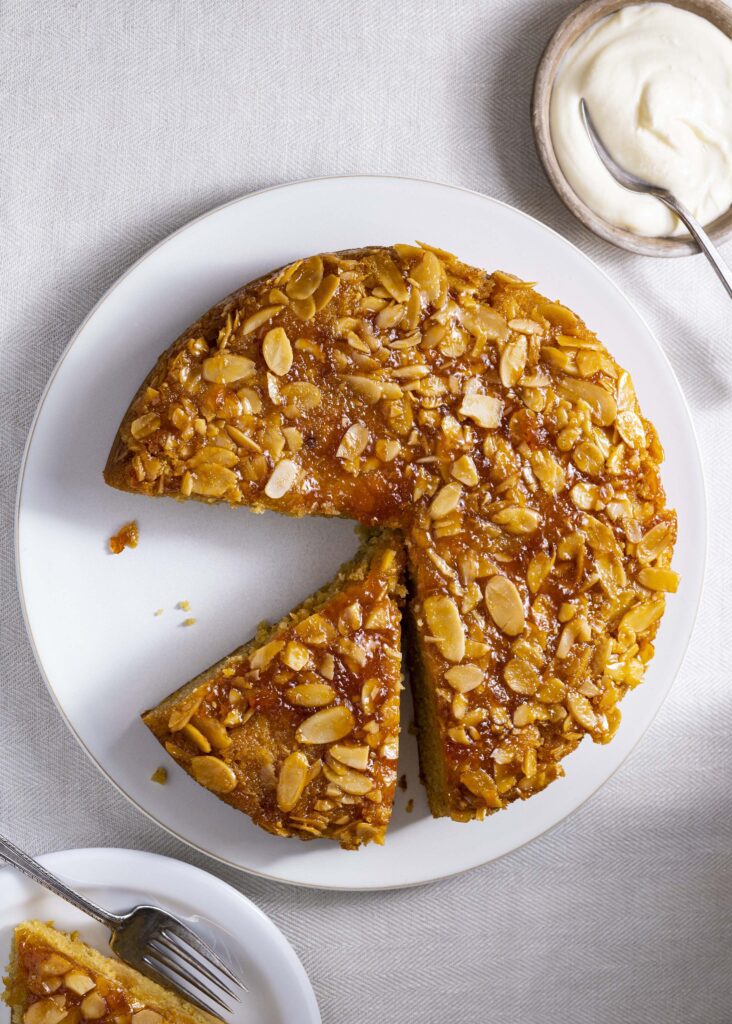
Almond apricot honey cake served on a white plate with a slice cut, showing the caramelized apricot and toasted almond topping, with crème fraîche on the sideStyled Food ShotAlmond Apricot Honey Cake: The Flavor Science Behind This Naturally Gluten-Free Upside-Down Cake
There are cakes that take all day, and there are cakes that look like they did. This one is the latter. When America’s Test Kitchen asked me to develop a naturally gluten-free cake, I wanted something that tasted genuinely layered and complex, not like a compromise. No butter, no mixer, one bowl, and done in under two hours. The result is this almond apricot honey cake: an upside-down cake with a glossy, caramelized apricot-almond topping, a tender crumb fragrant with orange zest and cinnamon, and a honey-driven lift that most people don’t expect from something this simple.
The full recipe lives at America’s Test Kitchen, but I want to walk you through the thinking behind it: what makes it work, what to know before you bake it, and why the science here is worth understanding.
What Makes Almond Apricot Honey Cake an Upside-Down Cake
The upside-down method is doing more than just looking dramatic. Spreading apricot preserves and sliced almonds on the bottom of the pan before you add the batter means they cook in direct contact with the hot pan the entire time the cake bakes. The fruit sugars in the preserves caramelize against the metal, turning glossy and jammy. The almonds toast in that same environment, picking up color and crunch they would never develop sitting on top of a cake.
When you invert it, you are revealing a topping that cooked independently from the crumb. Two textures built in one pan, with no extra steps.
Why Honey Is More Than a Sweetener Here
Most people reach for honey because it tastes good. In this almond apricot honey cake, it is also doing structural work. Honey contains gluconic acid, which reacts with the baking powder in the batter to create lift. That is why this cake rises without butter and without a mixer. It is a stir-together batter that behaves like something far more considered.
The honey flavor itself reads as subtle and rounded rather than sharp. A lot of its volatile aromatics bake off in the oven, leaving behind sweetness and a faint floral bitterness that threads through the orange and cinnamon without overwhelming either one.
The Role of Almond Flour in the Crumb
Almond flour has no gluten-forming proteins, which means the structure of this cake depends entirely on the four eggs in the batter. The fat content in the almonds is what keeps the crumb moist from the inside out. It is also why this cake holds up beautifully a day after baking, better than most wheat-based cakes do.
One important note: almond flour is denser by volume than by weight. The difference between a loosely scooped cup and a packed one can significantly change the texture of the finished cake. Weighing it at 13 ounces/364 grams is the most reliable path to a consistent result.
Ingredient Spotlight: Orange Zest and Cinnamon
These two ingredients are doing quiet work that is easy to underestimate. Orange zest is where the citrus aroma lives. The oils in the zest contain volatile compounds that travel retronasal as you eat, making the cake smell and taste more fragrant than the amount used would suggest. The orange juice in the batter adds brightness and feeds the baking powder reaction. Zest and juice together give you both perfume and lift.
Cinnamon at just half a teaspoon reads as warmth rather than spice. Its primary aromatic compound is fat-soluble, so it dissolves into the vegetable oil and disperses evenly through the crumb. It bridges the honey‘s bitterness and the orange’s brightness without announcing itself. It is one of the quieter reasons this almond apricot honey cake tastes more complex than the ingredient list suggests
What to Know Before You Bake
A few things that will make a real difference when baking this almond apricot honey cake:
- Weigh the almond flour. Volume measurements vary too much. 13 oz/364 g gives you the most consistent crumb.
- Use good preserves. The apricot topping is front and center. A high-fruit-content or reduced-sugar preserve with a slightly tart finish works better than something overly sweet.
- Do not cut early. The recipe calls for at least one hour of cooling after inverting. The crumb continues to set as it cools. Cut too soon and the texture collapses.
- Serve with something tangy. Crème fraîche, mascarpone, or whipped cream with a little yogurt stirred in all cut through the sweetness of the topping. The recommendation is in the recipe for a reason.
Get the Full Almond Apricot Honey Cake Recipe at America’s Test Kitchen
The complete recipe with precise measurements and step-by-step instructions is available exclusively at America’s Test Kitchen.
Get the Almond Apricot Honey Cake recipe at America’s Test Kitchen
Quick Notes Before You Bake
- Total time is about 1 hour 30 minutes active, plus 1 hour cooling
- A standard 9 in [23 cm] round cake pan works; a springform pan also works
- Almond flour from most grocery stores in the US is already blanched
- The cake keeps well at room temperature, covered, for up to two days; refrigerate after that
- The topping will soften over time, so it is best the day it is made or the morning after
More from My Kitchen
If this cake resonates with you, here are a few more worth exploring:
Chocolate Hazelnut Praline Cake — a birthday cake built on food processor efficiency and a hazelnut praline that does double duty
Apricot Coconut Semolina Cake — fragrant and golden, with coconut woven through every bite and apricot doing double duty throughout.